In Iranian mythology, Arash the Archer represents the highest form of sacrifice for one’s homeland. His story is not merely the story of an archer, but of a man who gave his life to preserve the independence and territorial integrity of Iran.
After years of war between Iran and Turan, Afrasiab of Turan invaded Iran and besieged Manuchehr of the Pishdadian dynasty, the King of Iran, in Tabarestan for 12 years. Eventually, both sides agreed to make peace. At Manuchehr’s suggestion, it was decided that Afrasiab would withdraw by the distance that an Iranian archer’s arrow could travel, returning all the occupied lands to Iran.
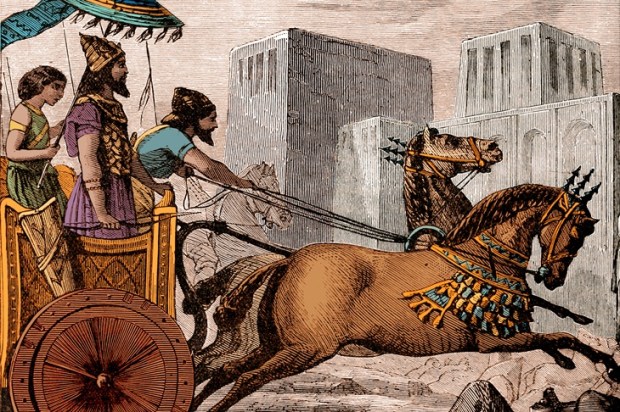
At that moment, Spandarmad, the divine guardian of the Earth, greenery, fertility, birth, growth, humility, patience, and kindness, appeared to Manuchehr by the command of Ahura Mazda, the wisdom and intelligence of existence. She instructed him to prepare the bow, the bowstring, and the arrow from special sacred materials. Arash, who is described in Iranian sources as an unrivalled archer, a noble, righteous, and wise man, was then chosen to shoot the decisive arrow from the summit of a mountain in Royan.
Before releasing the arrow, Arash removed his clothes and addressed the people:
‘People, look at me. My body is healthy and bears no sign of injury. But once I release this arrow from my bow, all my strength and life will leave me, and my body will fall apart.’
As the sun rose, Arash drew the bow with all his strength and released the arrow. At that very moment, he gave his life and fell to the ground. By the will of Ahura Mazda and with the help of the Divine Wind, the arrow continued its miraculous flight. After travelling a thousand farsakhs, it landed at sunset on the trunk of a walnut tree in the land of Kholm, in Balkh, on the banks of the Jeyhun (Oxus) River.
The arrow was then taken to Afrasiab. When he recognised his own mark upon it, he feared breaking the treaty and withdrew his forces as far as the Jeyhun River. Thus, the border between Iran and Turan was established. From that day onward, Arash the Archer became the eternal symbol of sacrifice, patriotism, and the defence of Iran.
The Earliest Historical Sources on Arash
The oldest reference to Arash appears in the Avesta, the oldest book in existence, dating back more than 8,000 years, particularly in the Tishtar Yasht.
In contrast to some commonly repeated claims, many academic studies date the oldest sections of the Avesta to the second and first millennia BCE rather than 8,000 years ago.
In verses 7 and 38 of the Tishtar Yasht, the flight of Tishtrya, the divine star and bringer of rain, toward the Vourukasha Sea is compared to the flight of Arash’s arrow. In this account, Ahura Mazda grants divine power to the arrow, Mithra clears its path, while Ashi, the goddess of reward, justice, and prosperity, and Parendi, the guardian goddess of wealth and abundance, accompany it until it reaches its destination. These passages show that the figure of Arash has very ancient roots within Iranian tradition.
The story is also mentioned in Middle Persian literature. The Pahlavi text Mah Farvardin Ruz Khordad states that on the Day of Khordad in the month of Farvardin, Manuchehr and Arash restored Iran by reclaiming it from Afrasiab. Likewise, Minooye Kherad, without mentioning Arash by name, refers to the recovery of Iranian lands stretching from Tabarestan to Bun Guzag.
Arash on Parthian Coins
One of the most fascinating scholarly discussions concerning Arash is the identity of the seated archer depicted on the reverse of Parthian coins.
For more than a century, most numismatists identified this figure as Arsaces, the founder of the Parthian dynasty. However, several scholars, including Jeffrey D. Lerner, have suggested that this archer may actually represent Arash the Archer, a figure whose image was shaped during the Parthian period through Iranian traditions associated with Mithra and Tishtrya together with Hellenistic and Macedonian artistic influences.
The bow itself was one of the principal symbols of Achaemenid kingship and the Scythian warrior tradition. If this interpretation is correct, it suggests that the Parthians deliberately presented themselves as the legitimate heirs of the Achaemenid Empire by adopting the image of Arash.
It should be noted, however, that this interpretation remains the subject of scholarly debate and has not reached universal acceptance.
Arash and the Festival of Tirgan
The memory and sacrifice of Arash have never been confined to ancient texts and legends. They continue to be honoured and celebrated in Iranian culture through the ancient Festival of Tirgan, one of the oldest festivals of Iran and a symbol of sacrifice, covenant, rainfall, life, and the protection of the homeland.
In Persian, the word Tir carries a dual meaning. It is both the name of the fourth month of the Iranian calendar and the Persian word for arrow. This gives the Festival of Tirgan a profound symbolic connection to both the month in which it is celebrated and the legendary arrow of Arash.
According to Iranian tradition, on the Day of Tir in the month of Tir, corresponding to the tenth day of Tir in the Khayyam calendar, people celebrate the ritual of the Tir and Wind Bracelet. During this ceremony, a bracelet woven from seven coloured threads, symbolising the rainbow, is tied around the wrist and worn for ten days. On the Day of Wind, the nineteenth of Tir, it is released into the wind or flowing water.
This custom commemorates the flight of Arash’s arrow, carried across the mountains of Iran by the wind until it reestablished the country’s borders. For this reason, Tirgan is not simply a celebration of an ancient legend, but a tribute to a man who willingly sacrificed his life for his homeland.
Like many ancient Iranian festivals, Tirgan celebrates joy, hope, unity, and the connection between humanity and nature. It reflects the Iranian tradition of honouring great acts of sacrifice through hope, resilience, and the continuity of national identity rather than through mourning alone.
Today, Arash the Archer remains one of Iran’s greatest legendary heroes and continues to symbolise patriotism, self sacrifice, righteousness, and responsibility toward future generations.
By Leila Naseri: Author | Composer | Social Cultural Analyst