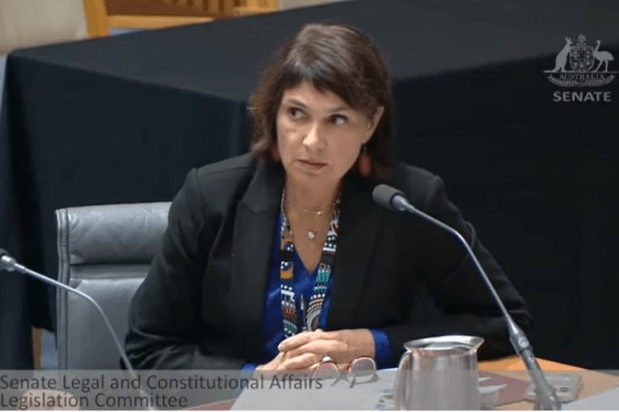
A few weeks ago, Senator Dave Sharma used Senate Estimates to question why a government-appointed fuel security coordinator was being paid the equivalent of almost $1 million a year.
Most Australians had probably never heard of the role. Many would struggle to explain what a fuel security coordinator actually does. Yet instinctively, they understood something else: whatever this is, it isn’t ordinary life.
That reaction says something important about modern Australia.
For most of history, societies had aristocracies. Kings, nobles and landed elites occupied a world far removed from the people they governed. They enjoyed privileges unavailable to ordinary citizens and exercised influence over institutions that shaped national life.
We like to think we abolished all that.
In reality, we may have simply reinvented it.
The old aristocracy wore crowns, inherited titles, and lived in palaces. The new aristocracy wears lanyards, holds postgraduate qualifications, and works from government departments, regulatory agencies, universities, publicly funded organisations and sprawling bureaucracies.
The old aristocracy justified its authority through birth.
The new aristocracy justifies its authority through expertise.
Both depend upon public trust.
And that trust is beginning to fray.
Australians have never objected to success. This is one of the most aspirational societies on Earth. We admire entrepreneurs who build businesses, tradies who start companies, migrants who arrive with nothing and create prosperity for their families. We respect people who take risks and succeed.
What Australians have always distrusted is privilege.
Particularly privilege that pretends not to be privilege.
The owner of a successful construction company who earns a fortune rarely attracts much resentment. He built something. He employed people. He took risks. Australians understand that bargain.
But a growing number of people look at modern institutions and see something very different. They see departmental secretaries earning salaries most taxpayers can scarcely imagine. They see agency heads, regulators, university executives, consultants, and publicly funded administrators occupying positions of extraordinary comfort while presiding over outcomes that appear to be getting worse rather than better.
Housing is less affordable.
Infrastructure is under strain.
Energy costs are rising.
Government is larger than ever.
Yet the managerial class continues to expand.
In Australia, almost one in five workers is now employed directly by government. Around that sits an even larger ecosystem of consultants, regulators, policy advisers, university administrators, NGO executives, and publicly funded professionals. Together, they constitute a class that exercises enormous influence over public life while often remaining insulated from the consequences of the decisions they make.
That is not an attack on individuals. Most are hardworking and well-intentioned.
It is an observation about systems.
The people deciding housing policy generally own homes.
The people advocating population growth rarely compete for rental properties in outer suburbs.
The people designing energy policy seldom worry about whether they can afford next month’s power bill.
The people making decisions increasingly inhabit a different Australia from the people living with those decisions.
And ordinary Australians know it.
That is why comparisons with the monarchy are more instructive than many realise.
The British monarchy never pretended to be ordinary. Its legitimacy was built upon distance. Kings did not claim to understand the daily struggles of farmers and labourers. Aristocrats did not pretend they were simply average citizens temporarily entrusted with power.
The divide was obvious.
Modern elites often ask for something far more ambitious. They seek the authority that comes from expertise while simultaneously demanding the trust that comes from relatability.
Increasingly, they enjoy neither.
Politicians tell voters they understand housing stress while owning multiple properties. Bureaucrats explain the necessity of policies whose consequences they rarely experience firsthand. Institutional leaders speak constantly about community while living lives increasingly disconnected from the communities they govern.
The problem is not that elites exist.
Every successful society has elites.
The problem is that modern elites frequently deny they are elites at all.
They speak the language of equality while occupying positions of extraordinary privilege. They present themselves as representatives of ordinary Australians while inhabiting professional and economic worlds that bear little resemblance to ordinary life.
The old aristocracy inherited privilege.
The new aristocracy invoices for it.
That is why public trust is deteriorating across the Western world.
The rise of populist movements, the collapse of confidence in institutions and the growing hostility toward experts are not random developments. They are symptoms of a widening gap between those who exercise authority and those expected to accept it.
Democracies ultimately depend upon legitimacy. Legitimacy depends upon trust. And trust becomes difficult to sustain when large numbers of people conclude that those making decisions no longer understand the country they are governing.
The old aristocracy ruled from palaces.
The new aristocracy governs from institutions.
Both are insulated by distance.
The difference is that one was honest about it.