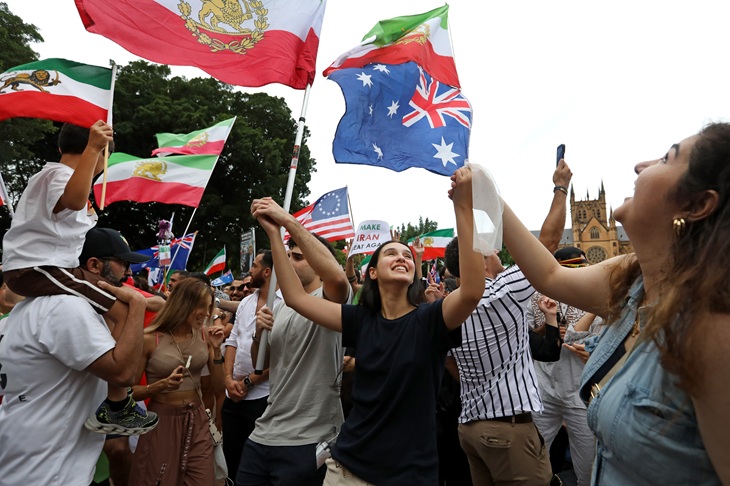
I am certain you have heard enough from the experts. Between the news cycles and the strategic analyses, there is no shortage of commentary on the war in Iran or what might unfold in the coming weeks.
I don’t intend to add to that technical noise.
Instead, I want to share something more personal: the quiet, heavy weight of this conflict on the ordinary Iranians living right here in Australia.
To put it simply, I haven’t been able to speak to my mother for two months. I haven’t heard the reassuring voices of my sisters or shared a laugh with my brothers. I haven’t had the chance to simply catch up with old friends. My mother and five siblings, along with their entire families, are in Iran. Every day that the silence continues, the distance between Sydney and Tehran feels immeasurably wider.
When the war erupted on February 28 following Israeli air strikes, the internet and international phone lines were severed instantly. It may surprise you to hear this, but this military intervention is something many Iranians have been praying for since the regime’s brutal crackdown on protesters. We found ourselves in the impossible position of hoping for intervention because the regime had proven it would stop at nothing, even mowing down its own people with machine guns, to stay in power.
The turning point came in early January. When the exiled Prince Reza Pahlavi called for peaceful protests, millions took to the streets. The regime’s Supreme Security Council, realising their hold on power was slipping, gave a ‘shoot to kill’ order. In a single 24-hour window, over 40,000 innocent protesters were massacred with a brutality that marks one of the darkest chapters in modern history.
For those of us watching from afar, life has become an emotional rollercoaster. We felt a surge of hope when we heard that the Supreme Leader and top officials had been eliminated by precision strikes. It felt like the beginning of the end for a regime that has spent decades stifling our people. But that hope was quickly tempered by fear as the IRGC began blockading the Strait of Hormuz, attacking neighbouring nations and sending shockwaves through the global economy.
Living in Sydney, I feel the physical safety of Australia, yet I carry the weight of the destruction back home. It is a profound internal conflict: How can I feel relief about an attack on my own homeland?
The truth is that for 47 years, Iran has been ruled by a force that feels like an occupying power. The regime lacks even a shred of true patriotism; they treat Iran not as a country to be protected, but as a host to be exhausted. It is like the Nazi occupation of France, or a parasite feeding on a host until there is nothing left. While they spent billions on regional chaos, the Iranian people saw yearly inflation soar to 80 per cent. Today, a single kilogram of red meat costs nearly a tenth of an average monthly salary.
This is why so many of us support this intervention, despite the pain it brings. We see the regime as unreformable. We want to oust the ‘parasite’ and reclaim our dignity, even if it requires the intervention of the US and Israel.
I have met people here who oppose this military action simply because of their distaste for Donald Trump. While he is certainly a polarising figure, many Iranians see him as the only leader with the resolve to confront a regime fuelled by a 7th-Century apocalyptic ideology.
I know that Australians, like everyone else, are feeling the economic sting of this war. I know you want it to end. But we must remember that the world is being held hostage by a regime that blockades global trade routes to ensure its own survival. We must ask ourselves: if they are willing to do this now, what would they do if they possessed nuclear weapons?
I hope this provides some clarity on why we feel the way we do. We are sorry for the hardship this causes the world, but for us, this is a desperate final hope for a country we haven’t been able to call home for far too long.