Recently, I came across a post from The Australian on X with the headline: Lost boys need a leg-up as women set the pace in higher education. As a male university student, I could not help but feel that part of the explanation is something many commentators avoid discussing.
I replied to the post saying:
‘Who would have thought that hyper-feminising institutions and teaching kids about the patriarchy might not appeal to young men?’
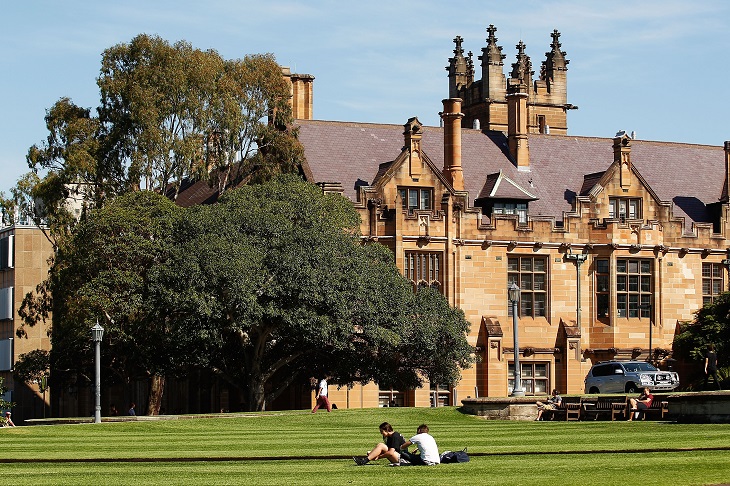
That may sound blunt, but it reflects an experience many male students quietly recognise. In nearly every class I attend, women significantly outnumber men. The same pattern appears across campus – in lecture theatres, study areas, and libraries.
The question many people ask is why young men are either underperforming academically or not attending university in the same numbers as women. In my view, the issue is not necessarily ability. Instead, it may have more to do with the cultural messaging young men encounter within the education system.
If you repeatedly tell young men that the patriarchy is the primary reason women face barriers in society, it should not be surprising if some feel alienated from the conversation.
This narrative does not only appear at universities. In high school, I remember business and economics teachers attempting to convince classrooms largely filled with young men that the gender pay gap explained why women struggle in the workforce. At one point, I asked a simple question: ‘Are you personally being paid less at this job because you’re a woman?’
The answer was no.
Yet the broader narrative remained unchanged. For many students, explanations like this begin to feel less like open inquiry and more like ideological framing.
Universities are supposed to encourage debate, evidence, and critical thinking. Yet in some cases they appear to promote a particular worldview instead.
One lecture in particular stands out in my memory. In a lecture theatre of around 200 students, the lecturer asked everyone to stand up. He then instructed students to sit down if they had never thought about their safety moving from one place to another – whether walking from a car park, getting off a train, or travelling on a bus.
After several students sat down, he said: ‘As you can see the people that have sat down are by and large the blokes.’
He continued by explaining that women often have to think strategically about their safety because of the potential harm posed by men. According to him, these considerations demonstrated one of the ways in which patriarchy operates.
Imagine sitting in that lecture as a young male student and hearing that explanation – effectively being told that the broader problem under discussion is men themselves.
Two thoughts came to mind. First, if the patriarchy supposedly structures society so thoroughly, why was a man standing at the front of the lecture theatre presenting himself as an authority, explaining it? Second, the analysis itself seemed incomplete. Of course, people should think about personal safety. But removing context, such as location, time of day, or crime risk, turns a complex issue into a simplistic narrative.
If young men are repeatedly told they represent a social problem, it should not be surprising if some disengage from institutions delivering that message. Likewise, if young women are taught to see men primarily as potential threats, it risks creating distrust rather than understanding.
The statistics surrounding education and gender suggest the issue is more complex than ideological explanations allow.
Data from the Australian Bureau of Statistics shows that 22.4 per cent of males and 14.7 per cent of females do not complete secondary schooling, suggesting male disengagement begins well before university.
By the time students reach higher education, the imbalance is already clear. Men now make up roughly 38-42 per cent of university enrolments, while women account for around 62 per cent.
If universities genuinely want to address the growing gender imbalance in higher education, the solution is unlikely to be found in more political messaging. Instead, institutions should focus on encouraging open debate, analysing evidence, and developing independent thinkers.
Universities should not function as training grounds for political identities. They should produce thoughtful, informed citizens, young men and women alike, capable of engaging with complex social issues in a constructive way.