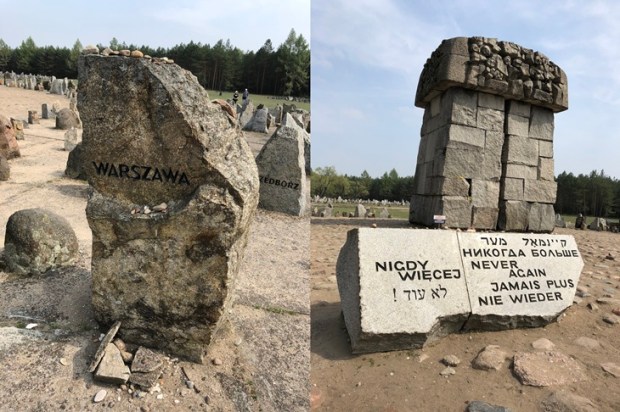
A fortnight ago, Jewish communities across Australia and the world paused for Yom HaShoah, a solemn remembrance of the six million Jews murdered in the Holocaust. Days later came Yom HaZikaron (Israel’s Memorial Day), honouring Israel’s fallen soldiers and victims of terror, followed immediately by Yom Ha’atzmaut (Israel’s Independence Day), a celebration of resilience and modern statehood. These days sit together in uneasy proximity: grief, memory, and survival intertwined – a reminder of the price of freedom.
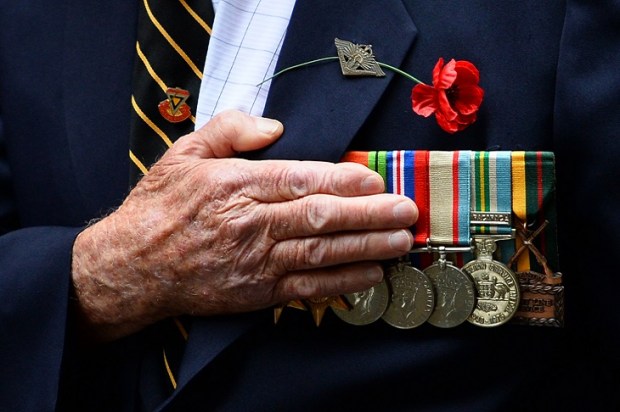
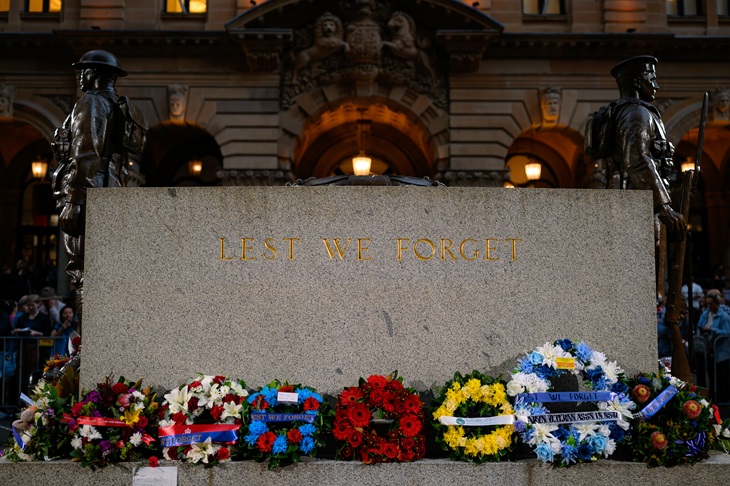
Then, this weekend, Australia marked Anzac Day, another sacred moment of national reflection. A day that, like Yom HaZikaron, binds loss to identity. A day when we say, with quiet conviction, that sacrifice should never be forgotten.
And yet, in the shadow of these commemorations, something deeply unsettling has emerged.
Graffiti has appeared on RSL clubs, places that stand not just as social venues, but as living memorials to those who served and died. Some of the slogans scrawled across their walls are not merely offensive; they are chilling:
‘Gallipoli – do it again.’ ‘Death to the ADF.’ ‘ANZACs = Colonisers.’ ‘Kill the troops.’
These are not expressions of protest or political critique. They are explicit endorsements of violence and a desecration of memory, a wish not only to erase history, but to repeat its bloodiest chapters.
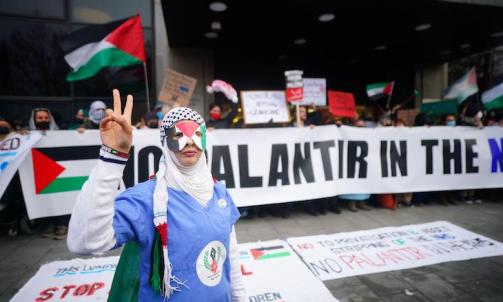
It is impossible to ignore the parallel. These slogans sit disturbingly close to chants we have heard elsewhere: calls to ‘globalise the intifada’ alongside phrases like ‘death to the IDF’, ‘From the river to the sea, Palestine will be free’ and ‘Israel = Colonisers’. In practice, such rhetoric has often translated into hostility toward civilians far removed from any battlefield. The pattern is the same: language that blurs the line between political grievance and the dehumanisation of entire groups, making violence easier to justify.
We are told, often, that context matters. That some forms of hatred are political, while others are unacceptable. But this selective framing has consequences.
In Australia today, antisemitism is too often treated as a secondary concern – something to be explained away, contextualised, or tolerated under the banner of political expression. Antisemitism today lives as anti-Zionism, a way to legitimise the modern-day Jew hatred. This has allowed a broader culture to take hold, one where extreme rhetoric is softened, excused, or ignored until it escalates.
And escalation is exactly what we are witnessing.
Because when hatred toward one group is permitted to fester, it does not stay contained. It mutates. It spreads. It finds new targets. The same permissiveness that allows antisemitic graffiti to be dismissed as ‘fringe’ is what allows vandalism of war memorials to be minimised as mere ‘property damage’.
But these are not ordinary properties.
RSLs, cenotaphs, and memorials are sacred civic spaces. They are repositories of collective memory. Defacing them is not simply vandalism, it is an attack on the very idea of shared history and sacrifice.
So why, then, are the consequences often so often so mild?
If someone were to damage critical infrastructure, the legal response would be swift and severe. If someone incited violence against certain protected groups, there would be widespread condemnation and likely prosecution. Yet when memorials are defaced, when the symbols of national remembrance are violated, the response is too often procedural, not moral.
We should be asking harder questions.
Why is there not a stronger legal framework that recognises the unique status of war memorials? Why are penalties for their desecration not elevated to reflect the gravity of the act? And more broadly, why do we continue to tolerate rhetoric from any side that glorifies violence against civilians, whether in Gallipoli, Jerusalem, or anywhere else?
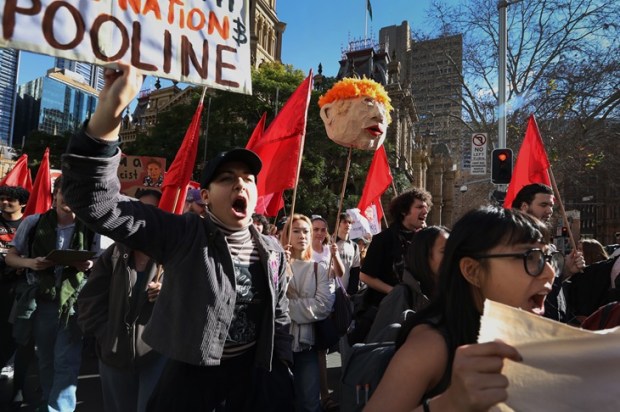
As we saw at the Sydney Opera House protest on October 9, 2023, where mobs chanted ‘gas the Jews’ and ‘F*** the Jews’, a lack of consequences and moral clarity from our leaders has only emboldened such behaviour. What followed was not an isolated incident but the start of a pattern: weekly protests, attacks on Jewish institutions, and intimidation of individuals. When there is no clear line, it keeps moving. If the graffiti on Anzac Day is met with the same absence of consequence, we should expect not less of it next year but more.
Freedom, as history repeatedly reminds us, is never abstract. It is earned, defended, and too often paid for in blood. It demands not just rights, but respect – for the institutions, the memory, and the people who secured it. Australians know this story well. From the shores of Gallipoli to the charge at Battle of Beersheba, where Australian light horsemen rode into history in one of the last great cavalry assaults, these moments are not relics. They are reminders of the cost of the freedoms we now debate so casually.
And beyond Australia, the value of freedom is not theoretical. It is being contested, right now, in the lives of ordinary people. In Iran, men and women continue to risk imprisonment, violence, and even death for basic liberties – to speak freely, to live without coercion, to determine their own futures. Their struggle underscores a truth that comfortable societies can forget: freedom is fragile, and when it is eroded or disrespected, it is not easily regained.
At the same time, there are communities whose suffering rarely commands sustained global attention. In parts of Sudan, Nigeria, and Democratic Republic of the Congo, Christian populations have faced violence, displacement, and severe restrictions on their freedom to worship and live safely. These realities are complex and often underreported, but they raise an uncomfortable question: Why do some human rights abuses ignite global outrage, while others pass with comparatively little notice?
A society’s values are revealed not only in what it celebrates, but in what it refuses to tolerate.
Yom HaShoah teaches us what happens when hatred is ignored until it becomes policy. Yom HaZikaron reminds us of the cost of defending against that hatred. Anzac Day tells a similar story in a different national language, one of sacrifice, loss, and the enduring responsibility of remembrance.
These are not separate narratives. They are part of a shared moral framework: that human life is sacred, that memory matters, and that incitement to violence, whether coded as politics or protest must never be normalised.
If we fail to draw clear lines now, we risk eroding not just the dignity of those we remember, but the integrity of the society that claims to honour them.
In the adaptation of the poem written by German pastor, Martin Niemoller, after the second world war as he reflected on the dangers of remaining silent:
First they came for the Jews, and I did not speak out
Because I was not a Jew.
Then they came for the Anzacs, and I did not speak out
Because I was not an Anzac
Then they came for me, and there was no one left to speak for me.
If we fail to draw clear lines now, we risk eroding not just the dignity of those we remember, but the integrity of the society that claims to honour them. Don’t be one that does not speak out because there will be no one left later to speak for you.