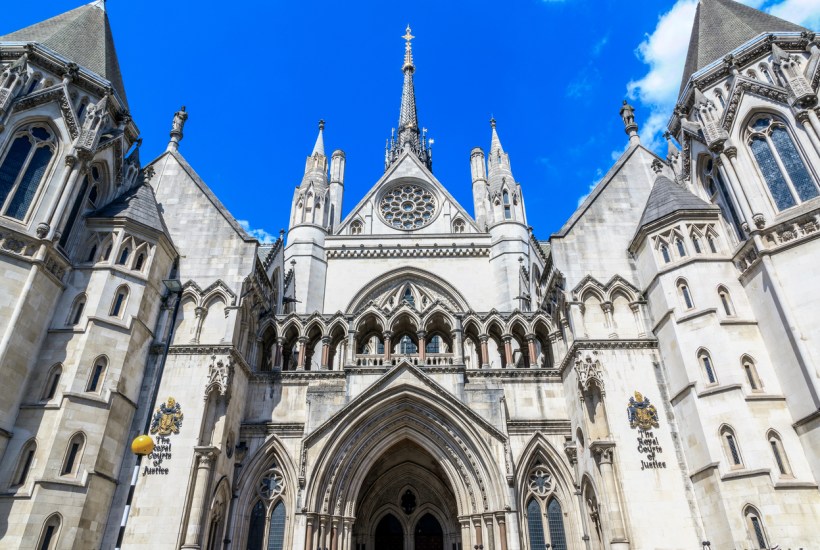
The British high court is currently preparing to hear a case that will be conducted in accordance with Filipino law. While this may seem strange, increasingly disasters in far off lands are being litigated in British courts – and because of an obscure inherited piece of EU law, Rome II, the law of the country where the damage took place applies, rather than British law.
Surely, except in the most exceptional circumstances, a tragedy that occurs abroad should be litigated in the courts of that country?
In the Filipino case, Shell is the defendant, a company which provides around a fifth of the fuel used in the Philippines. In 2021 there was a typhoon which killed around 400 people in the country. This was tragic, but not unusual by historic standards; the 1912 Philippines typhoon killed over 15,000.
Yet rather than geography, poor infrastructure or the tropical typhoon season being blamed for the disaster, the finger has been pointed at Shell. Why? Because according to the claimants, the company is to blame for accelerating climate change, making the typhoon more deadly.
On its face, the case makes little sense. Shell may provide the Philippines with oil, but that it is because the country needs fuel to have a properly functioning modern economy. It also seems ridiculous to blame a single company for global warming and a one off weather event. But that has not stopped the case from being heard in London.
Some 67 survivors have brought the case. They will ‘seek damages for [typhoon related] losses and [seek] relief in relation to the violation of their constitutional right to a balanced ecology.’
It is hard not to be sceptical about this. Did these Filipinos really decide to blame a company that sells them fuel for this terrible tragedy? And was it their idea to begin legal proceedings in a court 6,000 miles away?
In my view, it seems more likely that these poor people are being used as pawns in a wider weaponisation of lawfare, encouraged by green activists and enabled by Environmental, Social, and Governance (ESG) funds.
Law firms have taken to trawling the globe, searching for suffering people to act as claimants in multi-billion-pound class action lawsuits in British courts. The claimants simply sign on the dotted line, often with their costs fully covered and a payout if their litigators win.
The Shell case is being brought by Hausfeld, a firm which celebrates its commitment to reducing global emissions. Hausfeld have not revealed their fee for this case. However, as a profit seeking company it seems unlikely that they are motivated purely by goodwill.
Another similar case recently concluded that BHP mining group is liable to pay out up to £36 billion to claimants. This relates to a 2015 dam disaster in Brazil in which 19 people died and entire villages were wiped out, a genuine tragedy. In this case, the law firm and its financial backers plan to take up to 30 per cent of the payout. The dam was managed by a joint venture, half of which was owned by BHP. There is little doubt that BHP holds a share of the blame for what happened and should be held to account. Nonetheless, it is odd both that the legal proceedings taking place in London should be held under Brazilian law and that the English high court agreed to take the case, despite there being ongoing legal proceedings in Brazil.
Surely, except in the most exceptional circumstances, a tragedy that occurs abroad should be litigated in the courts of that country? Not only do these major cases occupy a huge amount of Britain’s court resources, but it arguably undermines the sovereignty of other countries. And it seems strange to believe that British judges can more effectively administer Brazilian, or Filipino law than the courts of those countries.
The rise in this kind of litigation has not happened organically. These proceedings have become a refuge and cash cow for the faltering ESG movement. One large asset manager has provided a legal firm with a £450 million investment in order to pursue climate litigation. They describe this deal as aligning with ‘our ESG and impact investing objectives.’
The cases I mention are not unique. In fact, despite the 655 million class action claimants awaiting a decision from the British courts, this year is expected to see an acceleration of environmental and climate litigation. The majority of British legal departments see ESG issues as a strategic priority.
Britain’s reputation as a legally secure place to do business and as a hub for arbitration should be protected. It is the reason that so many multinationals have headquartered in London. But the law should protect wealth creators. Instead, it is increasingly becoming a tool for nefarious wealth extractors who are given moral cover by the language of ESG and sustainability.
A political solution must be found. It would not diminish British law’s global standing, nor abandon corporate accountability, to stop this country from becoming the world’s environmental grievance tribunal.