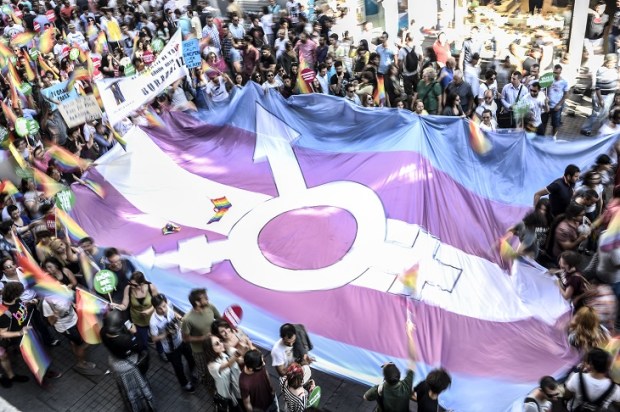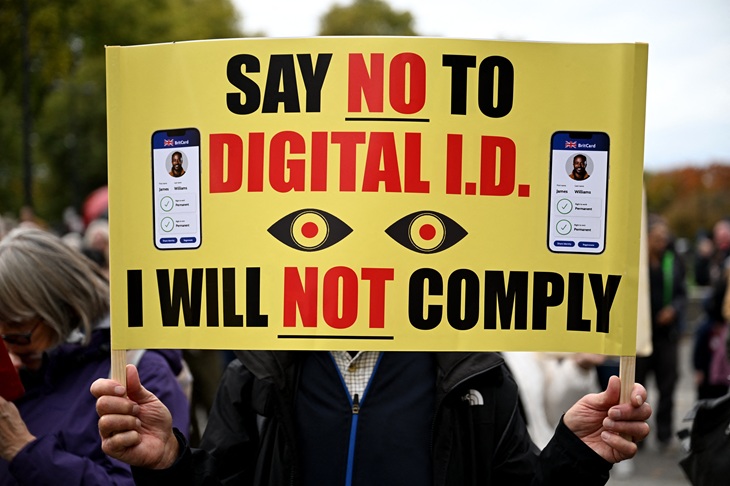
Last weekend, UK streets filled with thousands of people opposing Digital ID. The rally was prompted by their Labour Prime Minister, Keir Starmer, declaring that Digital ID would be made mandatory by 2029.
His excuse?
Digital ID stops illegal migrants from working.
It was a claim that no one, not even left-leaning TV broadcasters, believed. Keir Starmer was grilled for days on end and never managed to make a single coherent argument about why Digital ID would ‘solve’ any of the major problems facing the UK.
Digital ID has no ability to stop the zodiacs full of illegal migrants washing up on British beaches. Nor can it resurrect the manufacturing industry and give desperate working-class towns back their industries which have been gutted by Net Zero policy. It also won’t stop their Chancellor of the Exchequer, Rachel Reeves, threatening to raise income taxes on the poorest of Brits.
…sounds like Australia.
What Digital ID might do is allow the government to control what people think, write, and say online.
Indeed, many joke that you’re more likely to be jailed in the UK for political speech than serious criminal activity. Currently, the UK is making more than 30 arrests per day for ‘offensive social media posts’ and over 12,000 across the year.
The bulk of these offences relate to politically-contested ideas that ‘offend’ people.
It is much the same in Australia, where high-profile takedown notices show no attempt to apply an equal level of ‘safety’. The stabbing of a religious figure in Australia and the murder of a woman in the US were targeted for censorship by the eSafety Commissioner, although not the thousands of violent images and videos coming out of foreign accounts aimed at radicalising Australian users.
We believe it is undeniable that politics plays a role in digital censorship and that destroying privacy will only make people more afraid to speak their minds.
Just as ‘child safety’ was used to implement widespread social media censorship, many rightly fear that Digital ID will give the government excessive visibility and control over the actions of citizens.
Privacy was a valued asset in democracy because it was recognised as necessary to limit the power of government.
Suspicions are raised, for example, when official UK Labour press releases started calling Digital ID ‘a boarding pass to government’.
As the director of civil liberties group Big Brother Watch said:
‘[Digital ID] is fast becoming a digital permit required to live our everyday lives. Starmer has sold his Orwellian Digital ID scheme to the public on the lie that it will only be used to stop illegal working but now the truth, buried in the small print, is becoming clear. We now know that Digital IDs could be the backbone of a surveillance state and used for everything from tax and pensions to banking and education. The prospects of enrolling even children into this sprawling biometric system is sinister, unjustified, and prompts the chilling question of just what he thinks ID will be used for in the future.’
Today, politicians are exploiting public fears – Covid, terrorism, migration, crime, child safety – to coerce citizens into giving up essential privacy protections.
‘If you accept Digital ID now, it may be the last real choice you ever make.’ – UK protest sign.
‘The systems involved are profoundly dangerous to the privacy and fundamental freedoms of the British people,’ said Sir David Davis.
Digital ID is the very definition of ‘mission creep’ where earlier calls to online safety and an upgrade to ailing government computer systems has been jumped on by data-hungry entities within the government.
The UK have used mass migration as their excuse – what of Australia? Our Labor-Liberal uniparty has decided to use children.
As we approach the December Under 16 social media ban, the widespread implementation of Digital ID is beginning to take effect.
Already, social media companies are taking steps to verify the identity and age of users – a necessary step if they are to avoid the crippling fines proposed by the Labor government.
Regardless of the specifics for each platform, the escalation of ID verification and near-total collapse of anonymity online has changed the relationship citizens have with the online world and – perhaps – the reach of the law.
Anonymity online has been used as a protection for political speech.
Australians have used their online accounts to add to the digital political conversation without fear that their employer might sack or demote them for something as simple as disagreeing with ‘pronouns’ or ‘Net Zero’.
This is necessary, given the rise of ‘Woke’ puritanical speech obsessions implemented by many employers.
The use of Digital ID and other forms of verification dramatically increases the risk for those Australians who wish to continue engaging politically.
We have seen how frequent data hacks have become and there is now a real possibility that people might be blackmailed for what they say.
Gmail confirmed that 7 million of its email accounts had been compromised. (People often use email to verify their identity for social media.) This was part of the enormous data link that involved 183 million accounts across Google and Apple. Earlier this month, Discord reported its proof-of-age ID data had been breached. These are the very same pieces of sensitive personal information that government wants all social media companies to collect.
Proof-of-age ID data is some of the most sensitive and can include a driver’s licence or passport.
Forcing this data into the hands of more organisations is a public safety and privacy issue that has not been properly considered by the government as it rushed into so-called ‘child safety’ protections.
The only reason Discord was holding this proof-of-age data was, as they state, to satisfy UK and Australian age verification laws.
According to Proton, ‘Typically, Discord required a user’s selfie and then used software to scan the photo and estimate their age. Discord would then delete the photo at the end of the process. The system that was allegedly hacked was part of its appeals process.’
Essentially, when the photographs failed to correctly guess an age, users could back up their claim with government ID.
Everyone is talking about the Discord hack because it is a warning – a real-world ramification of rushed age verification laws that, without explicitly stating, require the widespread use of Digital ID.
It’s this under-handed spread of Digital ID via online safety rules that deeply concerns us.
Effectively, adults are being told that if they want to keep engaging online, they have to sign up to some form of Digital ID. We are social creatures. We have friendship groups online. Australian businesses rely on social media to operate and compete. Interfering in this space turns Digital ID from ‘optional’ into a heavily coerced requirement.
It’s like saying the Covid vaccines were ‘optional’.
Optional … but the government will ruin your life if you say no.
This article was first published on Malcolm Robert’s Substack