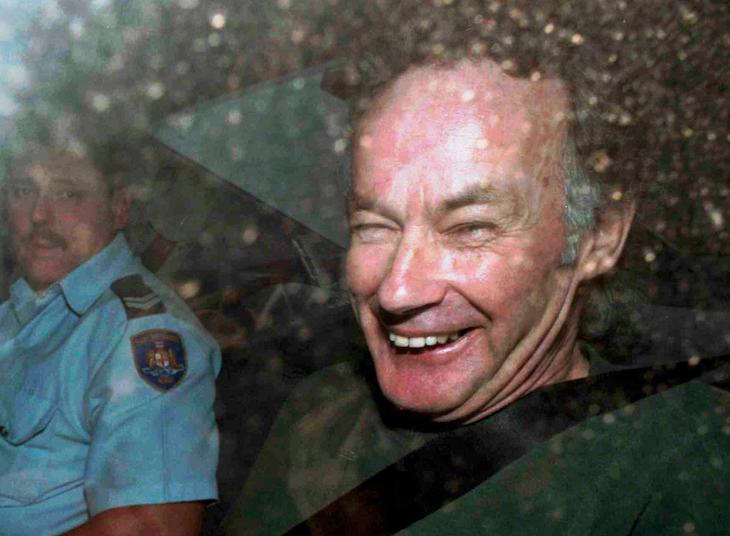
Australians are known for world-class performances in many fields. Mostly, our achievements are a source of national pride, but one field of achievement causes us only horror and shame. Our serial killers are some of the most prolific and brutal anywhere. And none are more brutal or prolific than the late, unlamented, Ivan Robert Marko Milat.
Milat took his victims into the forest bound, terrified and subjected them to unspeakably sadistic torture
The facts of Milat’s known killing spree are gruesome and horrific. In the late 1980s and early 1990s, Milat turned the Belanglo State Forest, a bushland reserve off the main highway to Melbourne, and eighty miles from Sydney, into his personal killing field. A labourer who worked the area for the New South Wales roads authority, Milat used his time off to cruise the nearby highway. There, he abducted female and male hitchhikers, including British backpackers Caroline Clarke, 21, and Joanne Waters, 22. He took his victims into the forest bound, terrified and subjected them to unspeakably sadistic torture. Their remains, and the crime scenes, reveal that they were viciously beaten, stabbed and mutilated with hunting knives, and shot both before, and after, death.
Police concluded Clarke’s body was used for target practice, and that she may have been alive when the shooting began. Other victims suffered as awfully as Clarke and Waters; one was beheaded, her skull never found. For Milat’s victims, death cannot have come too soon. Even three decades on, it is sickening to even contemplate the bestial, despicable and inhuman violence inflicted on those young, innocent women and men, alone and beyond help, their prolonged agonies witnessed silently by Belanglo’s beautiful natural bushland.
For years, the ‘Backpacker Murders’ horrified Australia. The disappearances of Clarke, Waters and several other foreign backpackers ensured unwanted international attention. Women, especially, stopped hitching lifts. But although the police task force investigating the murders identified other unsolved murders similar to the Belanglo killings in the course of its investigations, no suspect was identified.
It took one of Milat’s intended victims, Briton Paul Onions, to catch the killer. Onions barely escaped abduction when picked up by Milat in 1990, and was able to reach another motorist before it was too late, but not before Milat, who called himself ‘Bill’, shot at him in pursuit. Onions reported his harrowing experience to police at the time but, several years later, he contacted police again after their appeals for help were broadcast in Britain. His description of ‘Bill’ led to Milat, who was known to police through his long history of petty crime and violence.
Onions’s lead was enough for Milat to be arrested and charged with his attempted abduction. Police raided Milat’s home and those of family members, discovering not only a Ruger rifle matching that used in the Belanglo killings, but clothing and other items belonging to Milat’s victims. In July 1996, Milat was convicted of the murder of his seven known Belanglo victims. For each murder, he was sentenced to life imprisonment, without parole. He died in prison, of cancer, in 2019 – a death far less painful than those he inflicted on those who suffered and died at his hands.
The suspicion that the Belanglo murders were just the tip of Milat’s murderous iceberg, has never gone away in Australia. It’s been canvassed in books, newspaper columns and, more recently, true crime podcasts. Now it’s also the subject of a New South Wales parliamentary inquiry, which is determined to reopen cold cases, even if it also means reopening wounds for victims’ loved ones, and for the community at large.
The inquiry is into unsolved murders and missing persons cases in NSW between 1965 and 2010. It is not strictly for addressing Milat’s crimes. Its terms of reference name other cases of interest, including five-year-old British-born Cheryl Grimmer, who vanished from a Wollongong beach in 1970 and whose then 17-year-old suspected killer’s 1971 confession was ruled inadmissible. That alleged killer’s identity was never released publicly, even when the confession was read in parliament last year.
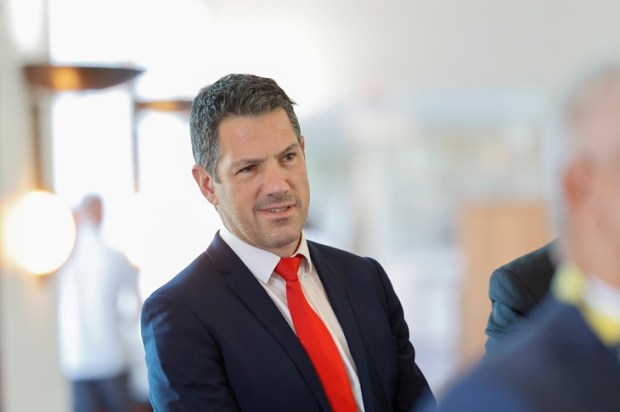
But the Backpacker Killer is the inquiry’s undoubted focus. Its proposer and chairman, the otherwise obscure state MP Jeremy Buckingham – the MP who invoked parliamentary privilege to read the Grimmer confession into Hansard – is convinced that Milat didn’t act alone, an assumption supported by the fact that most of Milat’s known victims were overpowered in pairs, as were Waters and Clarke.
‘Milat was not a thrill killer operating as a lone wolf,’ Buckingham said. ‘He was a member of an organised criminal enterprise that was abducting people and murdering them.’
He may or may not be right, but Buckingham is determined to find ‘his’ truth and, as he sees it, give closure to those who lost loved ones in unsolved disappearances and cold cases. Already, his inquiry has drawn plausible testimonies from people who believe they were picked up by Milat, or by someone fitting his description, well before the years of the Belanglo murders. Its terms of reference also specifies locations across New South Wales consistent with where Milat was known to live and work in the 1970s and 1980s.
It’s hard to see a formal parliamentary inquiry, lacking judicial or police powers, achieving now what police could not three decades ago. If it trawls for new evidence that may give police a lead in even one cold case that leads to an arrest and conviction, just perhaps it may be deemed worthwhile. But this exercise also remains a politician’s vanity project, a taxpayer-funded imitation of a true crime podcast. For the families of Milat’s known British and other victims, isn’t this merely a prurient, publicity-seeking true crime obsessive using his parliamentary soapbox to reopen deep and traumatic wounds, and inflict needless fresh pain and grief after all these years?