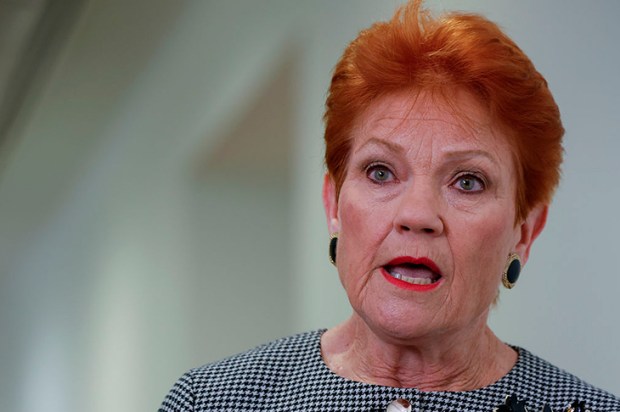
Last week I wrote that Robert Menzies would never have built One Nation. That was not a criticism of Pauline Hanson. Few Australian politicians have identified emerging grievances as early as Hanson. Fewer still have survived the ridicule, hostility and repeated attacks that have followed her for years. She has earned her place as a significant political figure of modern Australia.
The point I made was different. Menzies built the Liberal party from the bottom up with a view not merely to winning elections, but to creating an institution suited to our Westminster system of government. He understood that parties in Westminster systems are not just electoral vehicles. They are part of the machinery through which democratic government is conducted, authority is dispersed and political disagreements are managed. We move on this week to why that matters.
Conservatives, of all people, should be sceptical when asked to place their faith in a personality rather than an institution. That was one of Edmund Burke’s great insights. Human beings become enthusiastic and sometimes angry. They become carried away by events. Institutions exist not to suppress those instincts but to channel them into something more durable than the passions of the moment. For the better part of two decades the left has sought to undermine our institutions, conventions and norms. Conservatives resist that temptation because we have understood that free societies depend upon institutions which disperse power rather than concentrate it. It would be a curious moment indeed if the right now joined the left in abandoning those inheritances.
This is a reason I have been sceptical of so-called National Conservatism when applied to Australian circumstances. The attraction of strong leaders, concentrated authority and the abandonment of subsidiarity may make a little more sense in a presidential system. Ironically, the United States Constitution embeds a king-like executive and we now see Donald Trump testing the limits of that feature. Yet Westminster systems evolved very differently. Their genius lies not in concentrating authority but in deliberately dispersing it. Power flows through cabinets, party rooms, parliamentary caucuses and countless formal and informal institutions, norms and conventions that constrain and check one another. There is simply no avoiding the proposition that while prime ministers matter enormously, they must govern through institutions rather than around them.
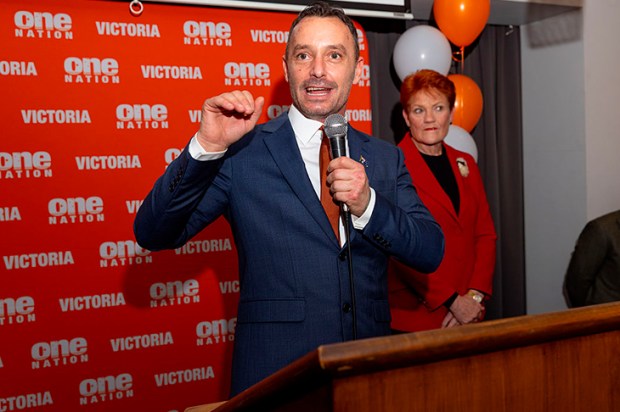
One Nation is not National Conservatism. Its instincts are patriotic rather than nationalist and it does not advocate a hierarchical society; nor does it seek to impose religious morality from above. But the party remains Pauline Hanson’s One Nation. This reflects the extraordinary role Hanson has played in creating and sustaining the movement. Yet it also raises the questions about the founder being larger than the movement.
As One Nation’s support expands, it is now a so-called broader church – the very thing it deploys to indict the Liberals and Nationals. A party polling near thirty per cent is no longer an insurgent outsider movement. It attracts former LNP voters, former Labor voters, libertarians, social conservatives, progressives, economic nationalists and free-market liberals. Good luck holding that coalition together.
Conservatives would do well to look to the mother country rather than to the United States to see where this goes. Reform UK has benefited from many of the dynamics that have assisted One Nation. Most clearly, it has benefited from a leader who identified a major grievance – mass immigration – before the political establishment was willing to do anything about it. Yet as its support has grown, the questions directed at Reform have changed. The debate has moved to how Reform solves Britain’s broader economic and cultural problems, and now includes questions about readiness and capacity to govern.
Reform has recognised that if it wishes to be taken seriously, it cannot remain merely the Nigel Farage show. It has attracted figures such as Danny Kruger, Robert Jenrick and Suella Braverman – and many more – who bring heft and experience from the Tory front bench.
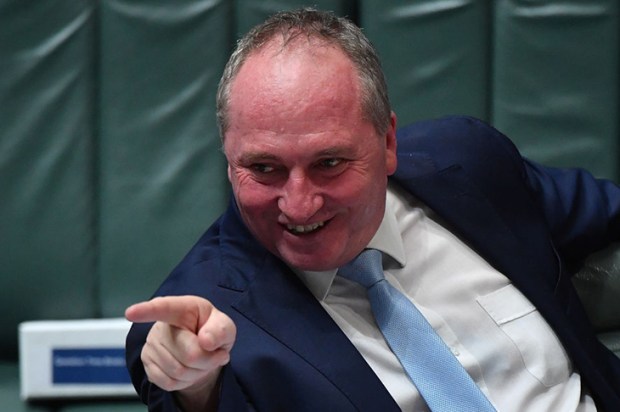
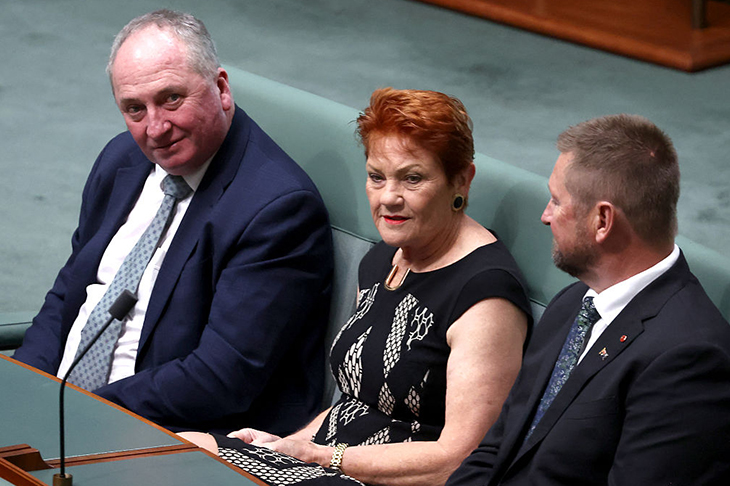
One Nation has nothing remotely comparable beyond Barnaby Joyce. Barnaby is one of Australia’s most gifted retail politicians – and biggest personalities – and a former deputy prime minister. Yet that illustrates the scale of the challenge. Modern governments are not built around one experienced figure but require teams capable of developing policy under fiscal constraint, corralling departments, negotiating legislation and making difficult trade-offs in the national interest. One Nation frequently points to its published policy suite as evidence that it is ready to govern. In truth it demonstrates the opposite. Even as the One Nation policy platform develops to copy major coalition economic and tax policies (because previously it had none), the broader package has evidently been assembled without any serious sense of budgetary or unintended consequences.
In the UK, some Reform figures have recently said they intend to destroy the Conservative party. They have rightly attracted the ire of those who can see that the destruction of conservative institutions – in this case the party itself – in a fractured world in the hope that something better will emerge from the rubble is a grave mistake. Michael Gove has instead argued that the objective for conservatives must be to reform and renew, and to make conservative institutions more reliably conservative, rather than to destroy them.
Back to personalities. A number of opinion-makers who now urge Australians to place their faith in Pauline Hanson once encouraged faith to be placed in Malcolm Turnbull. Readers will remember the brief experiment in elevating Turnbull’s personal brand above the Liberal party. We were assured that the ‘Turnbull Coalition Team’ would transform Australian politics through the force of one man’s popularity and his evident capacity to solve all our problems. The Coalition limped back into office with a one-seat majority and the entire experiment eventually collapsed under the weight of its flawed assumptions. Boris is Exhibit A in the UK. The notion that another big personality will save us from outside the true conservative tent is almost provably bonkers.
The question confronting true conservatives in Australia today is not whether Pauline matters or is a necessary disrupter. That argument has been settled. The question is whether we still understand why institutions matter. If we do not, we will discover too late that the constraints on power – including big personalities – that we find so frustrating are also the foundations upon which stable, free and democratic government ultimately depends.
Got something to add? Join the discussion and comment below.
You might disagree with half of it, but you’ll enjoy reading all of it. Try your first month for free, then just $2 a week for the remainder of your first year.