For nearly 250 years, France has experienced a succession of short-lived regimes: a directoire, a consulate, two empires, two monarchies, and five republics. Political ideals have frequently collided. But the threats now confronting the Fifth Republic are potentially more existential than any in the past. What was once the greatest country in Europe has become a nation in decline, beset by destructive and competing interest groups.
Even France’s national identity is under attack. The far left’s Jean-Luc Mélenchon’s regularly equates patriotism with racism. His LFI deputy, Antoine Léaument, argues France was only born in 1789 at the end of the Revolution, denying more than a thousand years of French history. Syrian-born member of the European parliament, Rima Hassan Mobarek, quotes French philosopher, Frantz Fanon, that, ‘For the colonised, life can only emerge from the decomposing corpse of the colonist.’ Such is the contempt the left has for la France.
That said, the founder of modern France, Napoleon Bonaparte, still influences French political thought. He created the administrative structures that still exist, particularly regarding the role of the state and leadership style. The principles of equality before the law, meritocracy and efficient administration, while strictly practised by Napoleon, are, today, simply guiding principles. Family background and ethnicity now play a major role. Double standards abound. Indeed autocracy and identity politics are making the modern democratic model extraordinarily fragile.
Ten years ago, Emannuel Macron, was hailed by pundits as the nation’s saviour. No more. Today, a recent poll found 85 per cent of French respondents believe France is in decline.
Rather than being the saviour, Macron’s renamed ‘Renaissance’ party, is regarded as being driven by a large and corrupt Parisian bureaucracy who stifle initiative and are a brake on growth and productivity.
French government spending has total debt running at 116 per cent of national income. This year’s 5.4 per cent deficit is the largest among all eurozone countries. Unemployment has climbed to 8.3 per cent. Ten per cent of the population live in poverty.
In a speech to the European Central Bank, Nobel Prize-winning economist Paul Krugman recently foreshadowed a French debt default within five years. He asserted France would be too big to save, citing high pension costs, a low statutory retirement age and political paralysis as core drivers. He warned the entire euro area is exposed to an explosive debt crisis.
As with most Western societies, including Australia, the French multicultural experiment has failed. Instead of a united nation, a number of parallel societies have evolved, eroding France’s traditional values. Decades of segregated neighbourhoods and limited interaction with mainstream society have created cultural enclaves where national laws are alien and where religious or traditional practices are paramount. France is damned as an oppressive, structurally racist, former colonial power.
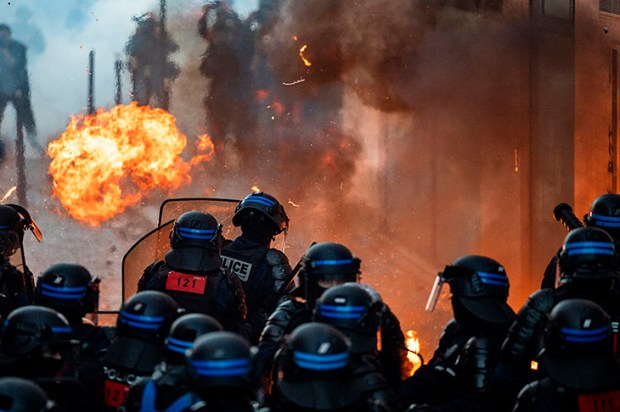
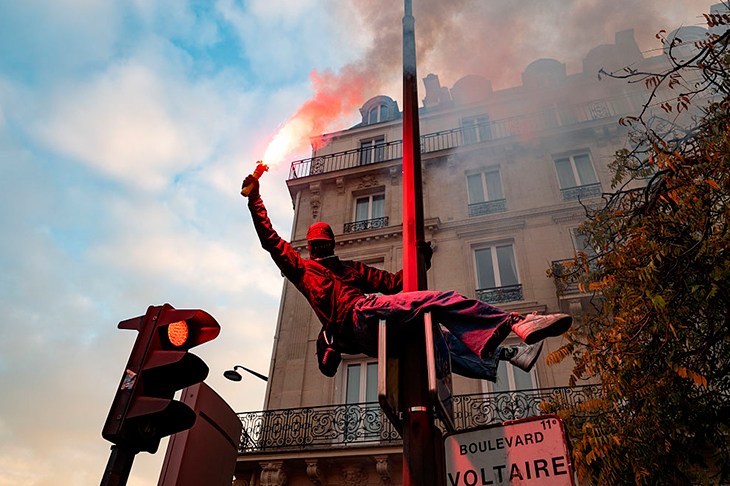
Ominously, second and third-generation French Muslims identify more strongly with their religious identity than their parents did, rejecting an inheritance of national respect and social cohesion. Today, over a quarter of young Muslims are either unemployed or not in training. Many align with left-wing extremists, taking to the streets in violent protest. France accuses Russia of fanning this discontent.
In its zeal to accommodate diversity, France has increasingly embraced secularism. Using ‘inclusivity’ as its justification, the socialist left, in a majority of French cities, downplay Christian celebrations in government institutions, city councils and schools. Critics claim this initiative is really aimed at stigmatising Muslims. Last year anti-Christian incidents were up nine per cent from the previous year.
What is playing out in in this once proud nation, is also being experienced in other Western countries, including Australia. It is leading to a growing realisation that some migrants from different cultures and religions are uncompromising and have no intention of integrating.
In France, as in other Western countries, including Australia, suburbs around major cities are experiencing rapid increases in crime rates. These communities have become breeding grounds for home-grown terrorism and radicalisation, particularly among disaffected young Muslims. This is despite government assistance with job training and language courses and subsidies for cultural organisations, religious schools and places of worship.
This targeted spending is placing additional burdens on public finances for little return in increased social mobility.
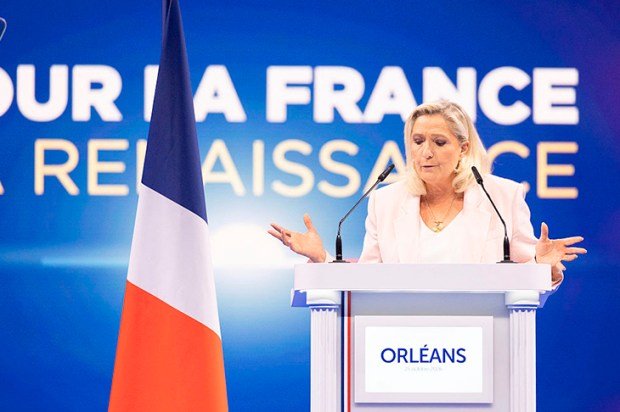
Next May, a despairing and increasingly polarised French electorate will vote for a new president. Right-wing candidate Marine Le Pen is currently expected to win. Her Rassemblement National party presents as fiscally responsible, promising to bring the deficit back under three per cent of GDP by 2030.
Australians should hope for a Le Pen victory.
Le Pen is broadly aligned ideologically with Italy’s Giorgia Meloni, Britain’s Nigel Farage and Australia’s Pauline Hanson. All are patriotic and pro-migrant assimilation. They favour smaller government, support small business and oppose renewable energy subsidies. Le Pen, like Pauline Hanson, is her party’s dominant leader but lacks experience in government.
If elected, all confront crippling fiscal realities. Should France default, the shock waves will not be confined to the eurozone.
An unprepared Canberra, burdened with inherent structural rigidities, deteriorating terms of trade and declining household savings, not to mention, total government debt likely to reach $2.0 trillion by the end of next year, is at risk.
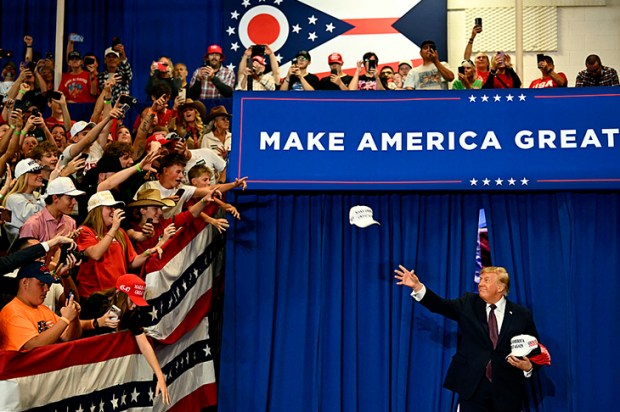
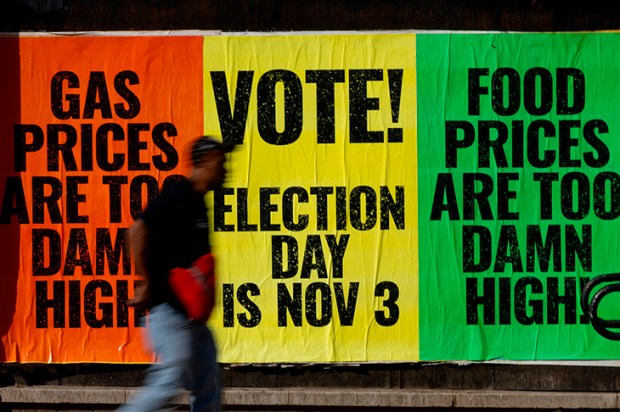
Meanwhile the US midterms have given a morale boost to the world’s radical left who will exploit the totalitarian pendulum they sense is swinging their way. Little do those in the West realise their current predicament is potentially existential. This is precisely because citizens have unwittingly allowed the left to consolidate its executive power, limit public debate and ignore accountability. The left preaches equality but its policies promote inequality because they demand more policy intervention through which the power of the state is enhanced.
France could well be the last canary in the coalmine for Western civilisation. Indeed, it remains to be seen whether Marine Le Pen can become the role model who joins the dots to persuade voters everywhere that for the sake of future generations, fighting for existential freedom is worth the inevitable short-term pain.
Vive la France.
Got something to add? Join the discussion and comment below.
You might disagree with half of it, but you’ll enjoy reading all of it. Try your first month for free, then just $2 a week for the remainder of your first year.