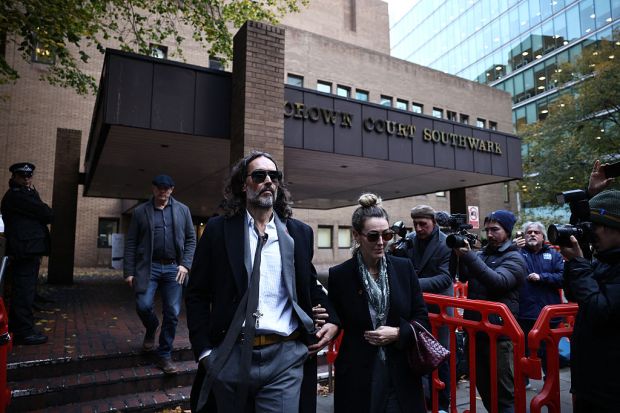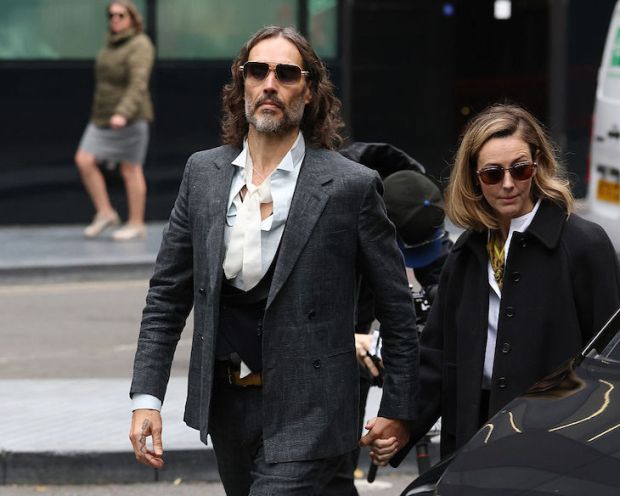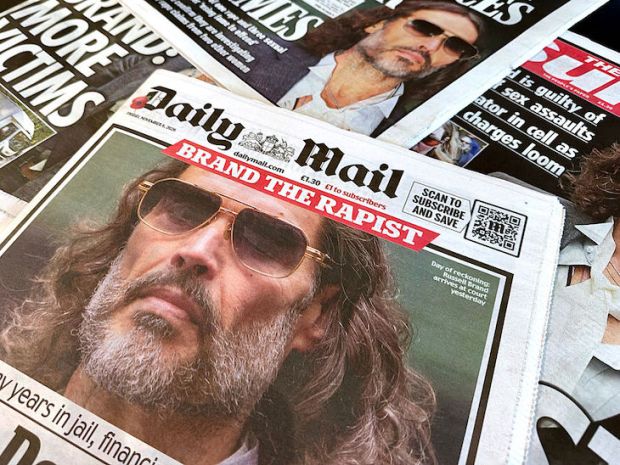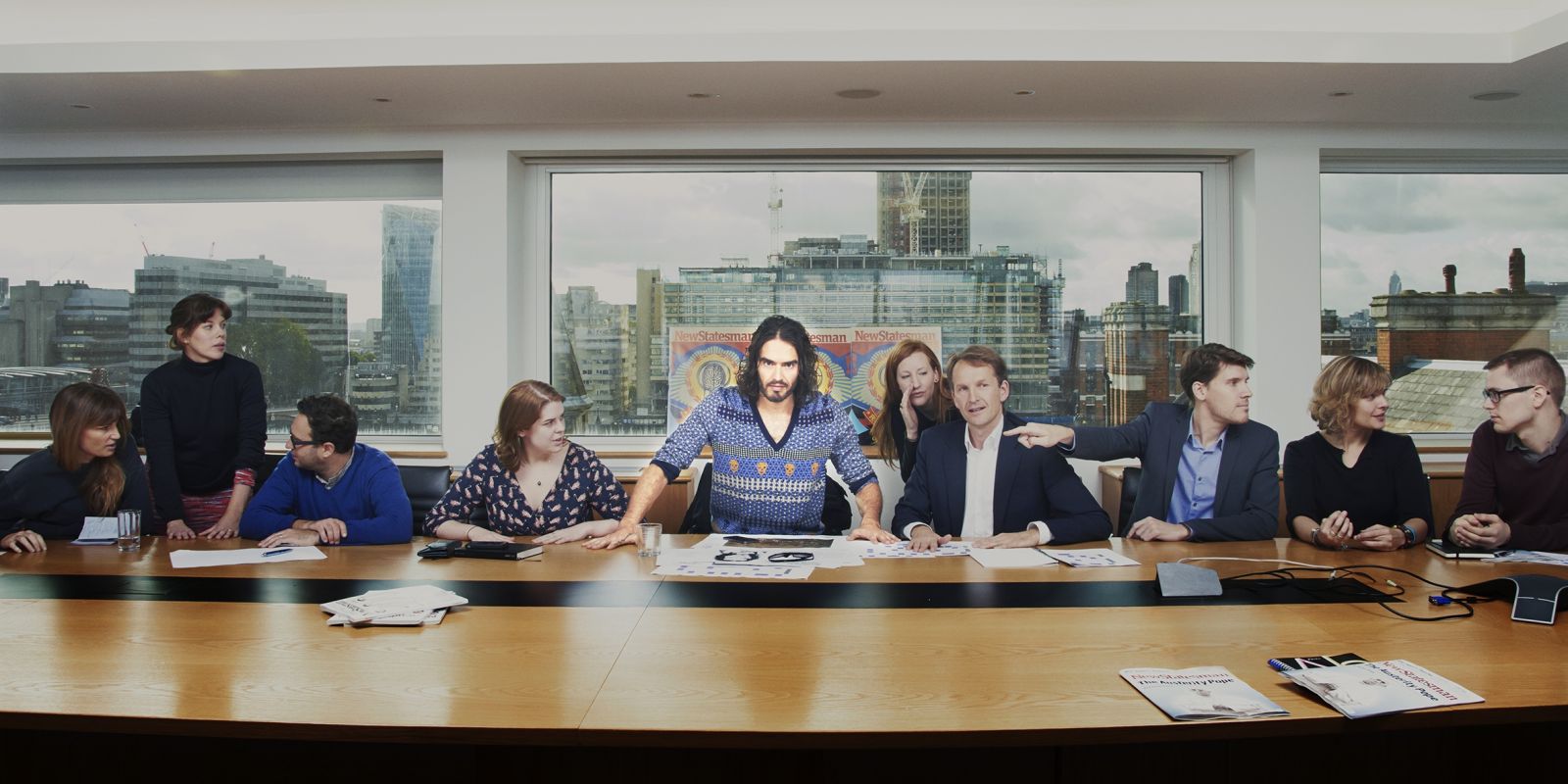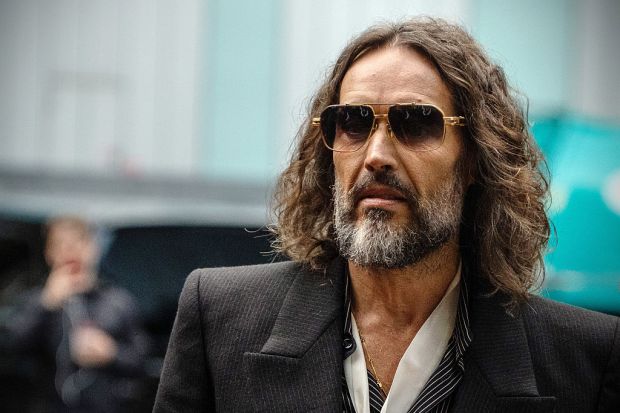
Following the conviction of Russell Brand – the jury found him guilty on one count of rape and three counts of sexual assault – the BBC, home to Brand in his imperial pomp, was swiftly out of the traps trying to puzzle out what exactly had enabled him. Their own encouragement of him? No, don’t be silly.
Turns out that it was the ‘lad culture’ of the noughties. This piece on the BBC website explained how that awful laddism ‘helped Russell Brand to hide in plain sight’.
You will also note that nobody on the progressive left is currently beating themselves up for how their culture might have enabled Brand
The poor old BBC, eh? Always learning lessons from decades ago, and neglecting to mention their own key part in whatever bad thing happened back then. It was the times, you see. This is the defence known to teachers as ‘but everybody else was doing it, miss’.
But there is something particularly odd about it this time. The height of ‘lad culture’ had passed before Brand’s pomp, and he was very evidently not a lad. As one X account pithily put it, ‘“2000s lad culture” was not in fact wearing high heeled boots, skinny jeans, jewellery, eyeliner, and hairspray while trying to start a global love revolution based off having skim read Noam Chomsky. Brand was of course specifically supported as an alternative vision of manliness to lad culture by the Sensibles of the day.’
And there certainly were people in public life pointing out that Brand was a wrong ‘un. The 2008 incident where Brand and Jonathan Ross phoned the actor Andrew Sachs and left a voicemail singing about how Brand had ‘shagged’ his granddaughter was a flashpoint, and conservatives including Peter Hitchens, Melanie Phillips and Charles Moore were full-throated in their estimations of Brand’s character. But they were baddies, you see.
In fact, I remember being shouted at by an acquaintance for objecting to it. The same acquaintance later went on to fall in line with gender nonsense, Brexit derangement, and so on. Rather like a human version of the BBC, in fact.
I tire of this guff about ‘it was a different time’. Unsurprisingly, rape and sexual assault were crimes 20 years ago. And you will note that nobody ever says this about any other types of serious offence. ‘Well, you have to remember that everybody was strangling people in underground car parks back in 2002…’
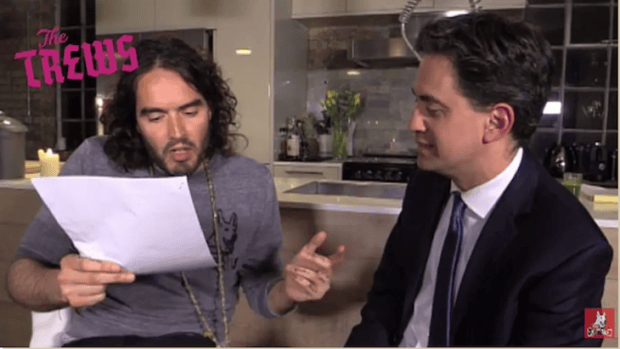
You will also note that nobody on the progressive left is currently beating themselves up for how their culture might have enabled Brand. Miliband, Burnham, and Owen Jones have taken much the same line as the Beeb. But their fawning over him was excruciating. This was not a lapse. The reason Ed Miliband fell at Brand’s feet is because he always falls at the feet of rubbish.
Of course, as the net tightened on him, Brand shifted to another target, suddenly becoming a right-wing evangelical Christian. Some figures on the right fell for that too, to their eternal shame.
I want to mount a defence of the cultural noughties. No, it was not a paradise – but in many ways, it was a lot better than what came afterwards. Plenty of people made crude and tasteless jokes and said off-colour things, and they were not rapists or abusers. I hate to break it to the nation, but there are bad men in nicely spoken circles too. Huw Edwards behaved immaculately correctly, in public.
Would Brand really have behaved any differently, ten years before or after? The BBC seems to be grasping at straws, the usual displacement activity of public bodies and politicians when something disturbs them. ‘It was lad culture’ comes from the same place as ‘it’s the manosphere’ and ‘it’s online anonymity’; anything to avoid confronting thorny issues squarely in the face. The issue here is surely the control mechanisms a given society and culture puts up, or fails to put up, around male sexuality. We dismantled many of ours for a laugh, and how’s that going?
Because there will always be a percentage of bad men. The balancing act is to make it as difficult as possible for them while not interfering with other people’s freedoms. The attempt to standardise male and female sexuality as the same is nuts, and for women it is dangerously nuts.
It is very easy for the BBC to narrow their focus on one particularly famous rapist. There are plenty of non-famous rapists. The Beeb can comfortably face Russell Brand, but they can’t face the rape gangs. I await the hand-wringing BBC column about that culture.
Similarly, not long after Sachsgate, the BBC jumped feet first into gender, packing its schedules with content approving of the ludicrous idea that men can become women, and simply ignoring dissenting voices and silencing any very obvious objections. We are hopefully not far from the BBC article bemoaning how ‘everybody’ got caught up in that.