In the late 1920s, George Orwell lived in poverty in Paris. His savings stolen, he worked as a dish pig in the kitchens of glamorous Paris hotels. The hours were long, working in filthy conditions, with an overbearing hierarchical structure. On returning to London, his temporary job was unavailable. He lived as a tramp, moving between workhouses and Salvation Army locations. He concluded that poverty is systemic rather than the result of laziness or moral failure.
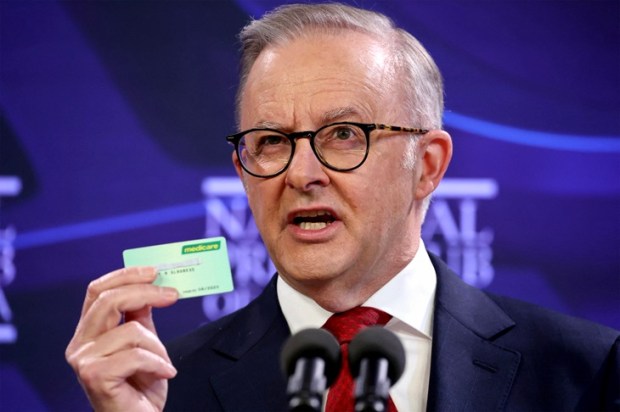
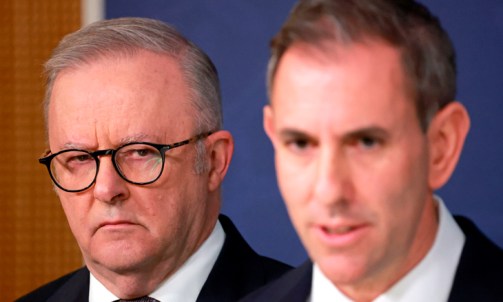
Anthony Albanese is sleepwalking Australia into systemic poverty. Ordinary Australians are already feeling the squeeze, with mortgages forfeited and small businesses collapsing.
The second world war helped with the rebuilding of Paris and London, but largely because of the United States. Neither France nor Britain regained their former glory.
France is the most relevant modern example of where Australia is heading under Albanese’s leadership.
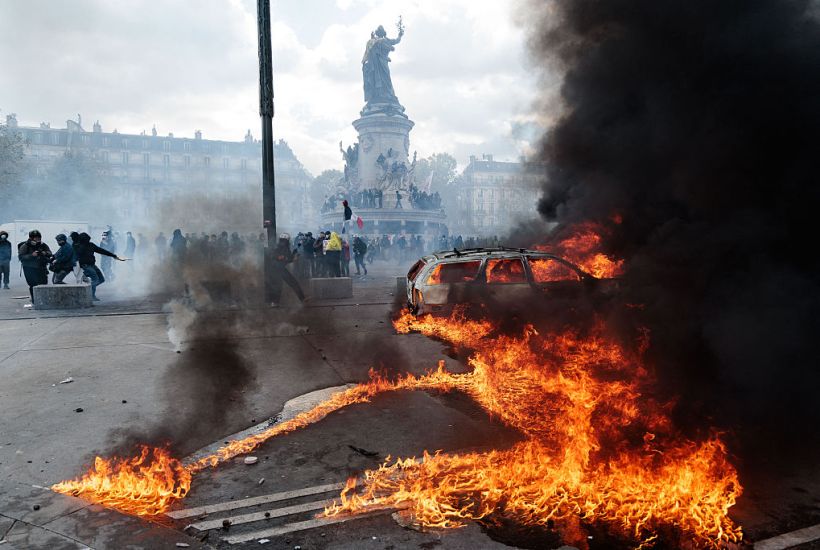
The French government has not balanced its budget since 1974. Whenever hard decisions are called for, the French riot. As they are doing now. This means that France has been spending more than it earns for half a century.
Unemployment sits at 8.5 per cent, above the Eurozone average, with youth unemployment almost 22 per cent. Public debt is now 119 per cent of GDP (about €3.6 trillion) and the 2025 deficit was still 5.1 per cent of GDP. For reference, Australia’s youth unemployment for September was 11.1 per cent. (‘Youth’ in this context refers to 15-24-year-olds.)
The UK is not far behind. Historically, however, Margaret Thatcher ignored the whingers and got on with the job. So there is at least a glimmer of hope there.
Thatcher faced down the unions and forced structural change. Britain’s debt-to-GDP is still materially lower than France’s (at around 94 per cent versus 119 per cent), its unemployment rate is roughly half, and it retains some of the market discipline Thatcher reintroduced.
France’s permanent high spending financed by ever-rising debt has no such historical corrective. Which means France has no hope.
The French government, fearing voter backlash, continues to spend on social programs and generous conditions it cannot afford. The people refuse to accept the reality of their economic situation, and the vicious cycle of debt and generous social spending spirals France into the abyss.
Just like France, Australia, under Labor’s leadership, and previously the Coalition, has not seriously confronted the political cost of restraint.
The public service has ballooned under Albanese. The number of public servants increased from around 159,000 in mid-2022 to nearly 199,000 by mid-2025. That’s an increase of almost 40,000, or roughly 25 per cent, much faster than population growth.
National debt has blown out of all historical proportions with Australia’s gross debt at 33.2 per cent of GDP in 2025-26. Nowhere near France, but still heading past $1 trillion and unlikely to be reduced in the foreseeable future.
Inflation appears to be untameable, with headline inflation at around 3.9 per cent. The RBA is projecting it will stay above 3 per cent (outside its target range) until late 2027. Expect more interest rate increases from the RBA.
Labour productivity fell 0.7 per cent in 2024-25 after collapsing 3.7 per cent in 2022-23. Multifactor productivity declined another 0.5 per cent in 2024-25, sitting below the long-term average. The non-market sector, where much of the public-service expansion has occurred, has been especially unproductive. This has helped eat away the gains from the hard work that once drove Australia’s living standards.
Immigration makes things worse. Net overseas migration was still running at about 292,000 in the year to March 2026. This is more, in absolute terms, than France’s net migration of around 176,000. (The French are no longer increasing their population through new births and are in decline.)
Britain has at least managed to drag its figure down to 171,000, but it may be too little too late if current events are anything to go by. Still, at this rate, Australia can expect to be living the full ‘multicultural’ nightmare we are seeing in Paris and London in the near future.
Meanwhile, hospitality and construction insolvencies, casual work, and mortgage stress among the self-employed are all going the way of Orwell’s dish pig. (Insolvency practitioners love Labor governments.)
Orwell said he had only seen the fringe of poverty and could leave. Australia still has that option, but France has largely closed it. Under Albanese, modern Australia risks creating systemic dependence on public spending and low-productivity service jobs that make it harder to turn back.
If Australians choose not to make the hard decisions now, we risk sleepwalking into Albo’s Desolation Row. Imagine being down and out in Paris, London, and Melbourne?
Dr Michael de Percy @FlaneurPolitiq is the Spectator Australia’s Canberra Press Gallery Correspondent. If you’d like to support his writing, please shout him a drink over at Donorbox.