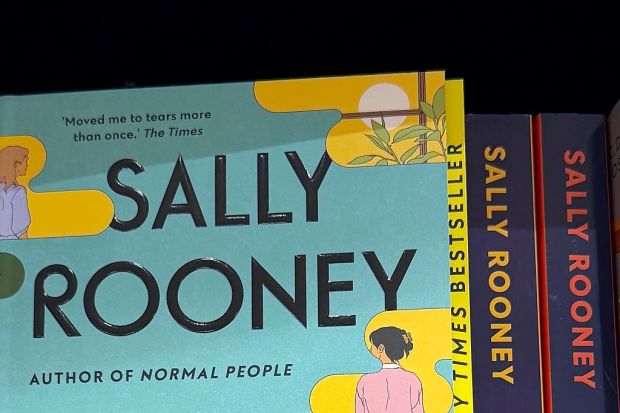
There have been a lot of bad takes about the Sally Rooney controversy after the Irish author withdrew her novels from sale in the United Kingdom due to her decision to pledge her royalties to Palestine Action (PA). (Given PA is now a proscribed terrorist group in Britain, giving money to it is illegal.) But likening her to Salman Rushdie? That really takes the biscotti. If I were Supreme Leader, I’d issue a fatwa against such fatuous comparisons.
The New Statesman (NS) has published an open letter railing against the ‘censorship’ of Rooney ‘on the basis of ill-conceived and draconian anti-terror legislation’. It is signed by ‘leading authors, artists and public figures’, which apparently includes Kneecap, those Irish rappers who wave Hezbollah flags on stage, and Jolyon Maugham, the patron saint of mad, lost causes. To go alongside it, NS culture editor Tanjil Rashid has penned a – frankly – risible piece arguing Rushdie and Rooney now have more in common than their initials, because both have seen their novels pulled from the shelves.
I’d kindly advise Rooney’s defenders to take Rushdie’s name out of their mouths
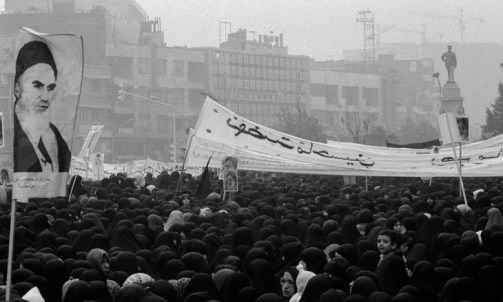
Where to start with this? I must have missed the bit where an Islamist tyrant called on Muslims the world over to murder Rooney, as Ayatollah Khomeini did to Rushdie in 1989 when he declared The Satanic Verses ‘blasphemous’. I must have missed the protests, from Bolton to Bombay, where Rooney’s books and likeness were burned by baying mobs. Rooney’s publishers may no longer be selling her paperbacks to Daunt Books, but I don’t think their employees have to live in fear of being shot, stabbed or killed – as happened to Rushdie’s Norwegian publisher, his Italian and his Japanese translators respectively. Rushdie himself lost the sight in one eye and the use of one hand after an Islamic Republic fanboy stabbed him on stage in New York in 2022: a fate that Rooney – Inshallah – is unlikely to suffer at the hands of those dastardly Zionists.
‘The circumstances of the withdrawal of books by either author have in each case their nuances’, concedes Rashid, ‘the causes and consequences are different’. You think? Rushdie’s books were pulled from sale because retailers feared they would be firebombed. Rooney pulled her own books from sale because she wished to continue to fund a group that has been attacking RAF bases, breaking into Israeli defence firms and swinging sledgehammers into the spines of police officers as it goes. These cases are not separated by ‘nuance’ – these are entirely different things.
Reasonable people can disagree on the proscription of Palestine Action as a terror group. As much as I loathe PA, I don’t think it belongs in the same bucket as Isis and al-Qaeda, either. Certainly, the police shouldn’t be carting off thousands of activists – many of them pensioners – for holding up placards saying ‘I oppose genocide. I support Palestine Action.’ Almost half of all terror arrests in Great Britain since 9/11 have taken place in the past year, because under the Terrorism Act merely expressing support for Palestine Action is now a serious criminal offence. But Rooney’s books were not ‘banned’ because of her opinions or removed from sale because of fear of violent reprisals. I’d kindly advise her defenders to take Rushdie’s name out of their mouths.
I’m a free-speech absolutist. I don’t want Sally Rooney or Kneecap or radicalised OAPs locked up for saying horrific things or praising dodgy causes. Still, there is a bright line to be drawn between expressing support for terrorists or politically motivated vandals and funding their activities. Indeed, it is the distinction between words and action, between vocal support and material support, that freedom of speech rests on. The British state obviously has an interest in stopping foreign millionaires from financing organised criminality here, even if draconian terror legislation is not the way to do it.
Sally Rooney is not a terrorist. On this, Jolyon and I agree. But she is not a free-speech heroine, either. She certainly shouldn’t be mentioned in the same breath as an author who almost paid the ultimate price for hurting the precious feelings of Islamic zealots. The bigger scandal here is not that Normal People cannot be bought in Britain today, it’s that another book like The Satanic Verses would never be published in Britain today. I look forward to the literati taking that one up.