There are moments in the life of a nation when a man must step forward and offer whatever expertise he possesses.
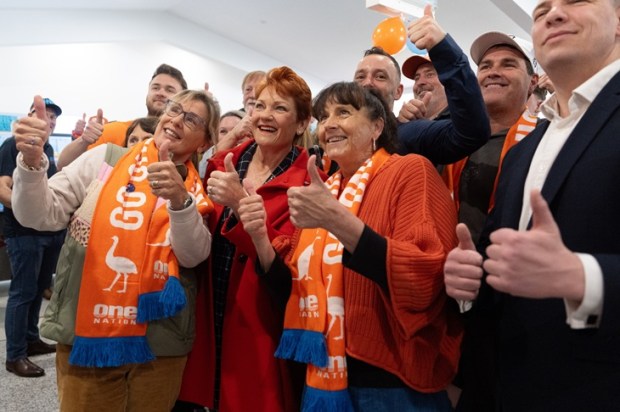
As a former editor-in-chief of Penthouse Magazine, I may, in fact, be the best-qualified political commentator in Australia to address Pauline Hanson’s cartoon about Jacqui Lambie’s vaginal prolapse. This is not a sentence I expected to write, but public service rarely announces itself in advance.
The offending episode of One Nation’s Please Explain series was ostensibly about Labor’s proposed Digital Duty of Care. Cartoon Lambie demands that Hanson’s videos have ‘gotta go’, before announcing that she cannot laugh because of her prolapsed vagina. She coughs. A sound effect follows. Subtle it was not. If satire were surgery, this was performed in a Bunnings car park with a whipper snipper.
Lambie called the cartoon nasty and spiteful. Hanson told her to get over it, have a laugh and lighten up. (Hanson later apologised for the cartoon.) Politicians from every side promptly condemned the video, achieving that rarest of democratic miracles: bipartisan agreement that something was so appalling everyone should immediately watch it.
So, did Hanson take it too far?
I confess I am torn. I cannot decide what is more confronting: that vaginal prolapse is now a matter of national political debate, or that I was required before breakfast to contemplate Jacqui Lambie’s vagina. Democracy asks many things of its citizens. Surely this is not one of them.
That said, Lambie raised the condition publicly for a serious reason. She had undergone surgery after a vaginal and bladder prolapse linked, she says, to injuries from her Army service. She wanted women suffering similar conditions to know they were not alone. Fair enough. It was candid, useful and, given the national tendency to turn any mention of a bodily function into a parliamentary inquiry, brave.
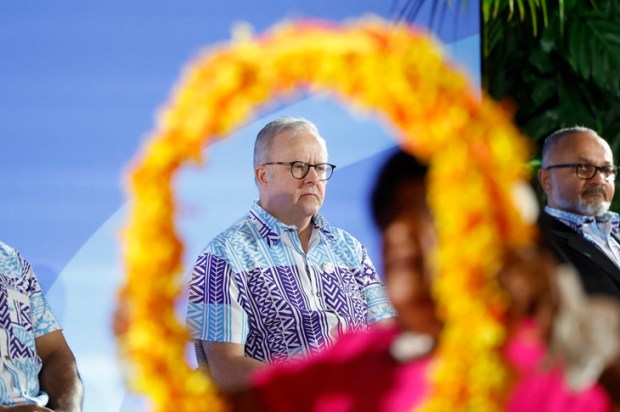
But public disclosure is not a deed of surrender. Discussing a medical condition does not convert the relevant organ into Commonwealth property. If Anthony Albanese announces a colonoscopy, sovereignty over his bowel does not pass to the electorate.
Nor, however, does speaking about something serious place it forever beyond humour. Almost nothing should be beyond satire. The moment the state begins deciding which subjects may be joked about, every comedian requires a compliance officer, and every punchline arrives with a product disclosure statement.
The distinction is not between jokes that are permitted and jokes that are offensive. The distinction is between a joke that is forbidden and a joke that is rubbish.
Free speech protects Pauline Hanson’s right to make an appalling joke. It does not require the rest of us to laugh. There is no constitutional right to a supportive audience, much as several people in Canberra appear determined to discover one.
And this was not offensive because the subject can never be funny. It was offensive because the gag did almost no work. ‘Prolapsed vagina’ is not, by itself, a punchline. It is a medical diagnosis wearing a novelty hat.
Good satire exposes hypocrisy, punctures vanity, or reveals something its target would prefer concealed. This cartoon revealed mainly that someone at One Nation had found the sound-effects folder.
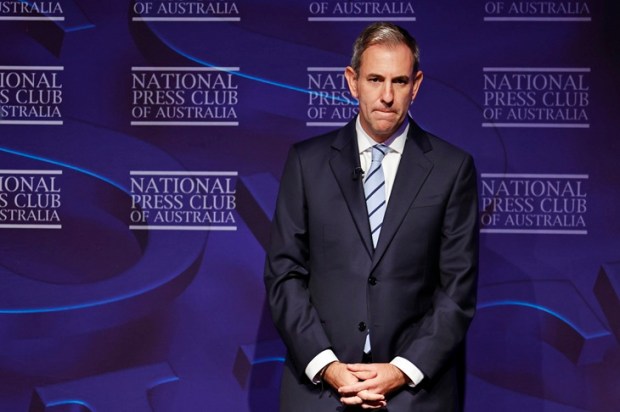
The irony is that the episode contained a serious argument worth making. Labor’s Digital Duty of Care risks turning government into the internet’s human-resources department: humourless, intrusive, and forever asking whether everyone feels safe. A free society must tolerate bad taste, cruelty, and stupidity because the alternative is giving politicians power to define all three. Anyone who has watched Question Time knows this would be like putting the termites in charge of the building code.
But if you are defending the freedom to offend, producing something that resembles the censor’s opening submission is an eccentric strategy. Hanson did not merely argue that offensive speech must remain legal; she attached a demonstration.
Her defence would also carry more weight had she not previously demanded that the ABC remove a satirical sketch about Gina Rinehart. Apparently everyone needs a thicker skin, although only when Pauline is holding the knife. Free speech cannot be a seasonal garment pulled from the wardrobe whenever your own cartoonist has gone too far.
So yes, Hanson took it too far as a matter of taste. No, she did not take it too far as a matter of law. That distinction is the whole point. The remedy for ugly satire is not censorship. It is criticism, ridicule and, in extreme cases, the remote control.
Lambie had every right to discuss her condition. Hanson had every right to mock her. The public has every right to conclude that one showed courage and the other merely showed poor judgment.
That is what an adult culture looks like: nobody is protected from offence, nobody is protected from criticism, and nobody gets to order a laugh.
Pauline Hanson’s cartoon did not cross the line into speech that should be banned. It merely crossed the much older line between being outrageous and being funny. On this occasion, the only thing in urgent need of repair was the punchline.