Britain’s economy has surprised again. GDP grew 0.1 per cent in August, according to the Office for National Statistics (ONS). That’s obviously not much – but after 0.4 per cent growth in both June and July, pretty much every forecaster had expected a contraction.
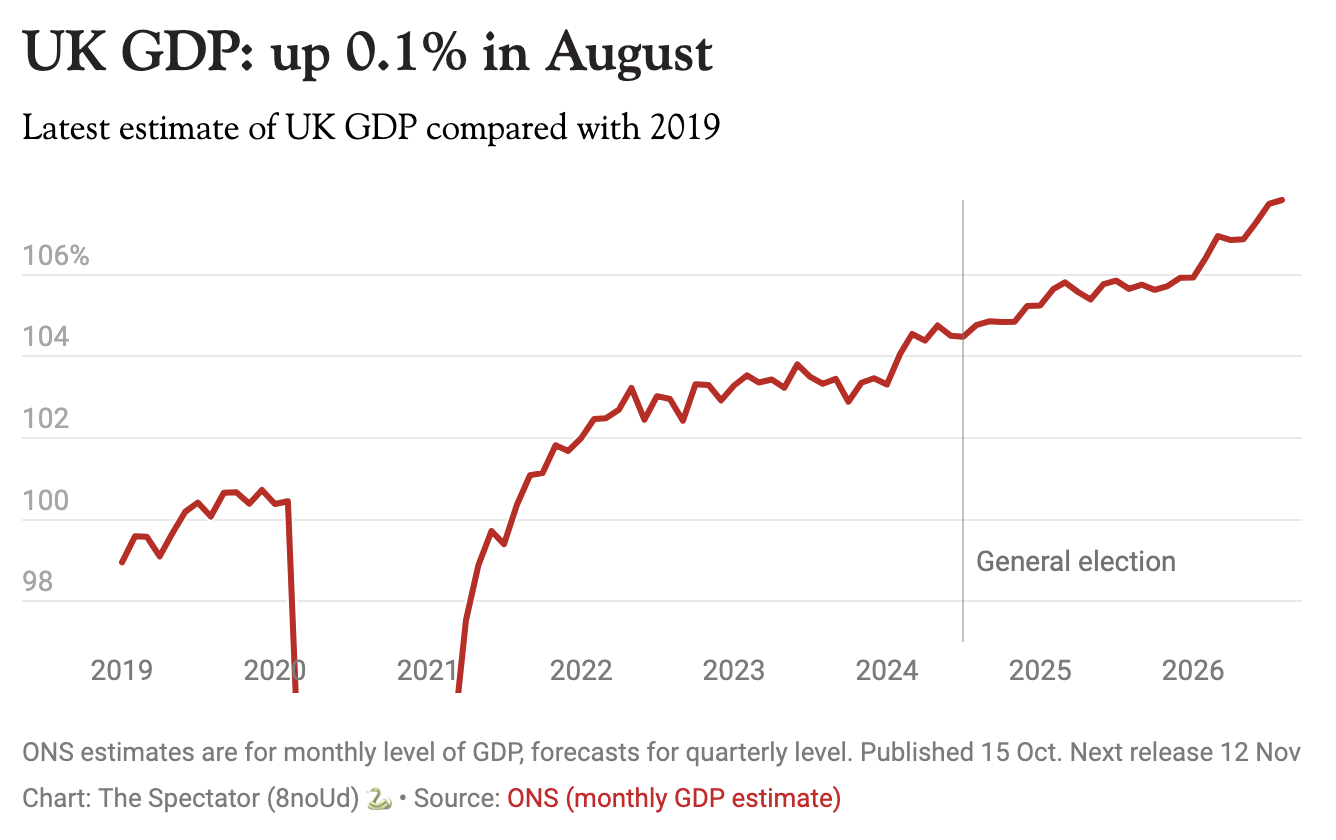
All of August’s growth came from production, which was up 0.8 per cent, while services were flat and construction continued its slump. Growth in AI, the ONS said, was driving things along with the legal and advertising sectors. Taken together, the surprisingly resilient growth figures – by the stagnant standards we’ve grown used to – we’ve had means that so far, at least, we are the fastest-growing economy in the G7.
Even more surprisingly, because HMRC data suggests we’ve lost 95,000 jobs this year while the economy has grown by 1.8 per cent, then productivity growth must have returned. It’s of course possible the jobs data is dodgy, but if it isn’t, that’s pretty great news (unless you’re one of the 95,000, obviously).
The characteristically British slowdown in the second half of the year does seem to be coming, though. Just stop oils’ operatives in Hormuz and the Department for Energy Security and Net Zero continue to push energy costs up and, with inflation expected to peak at more than 4 per cent and more interest rates likely, it’s going to be increasingly difficult for the private sector to keep up the heavy lifting.
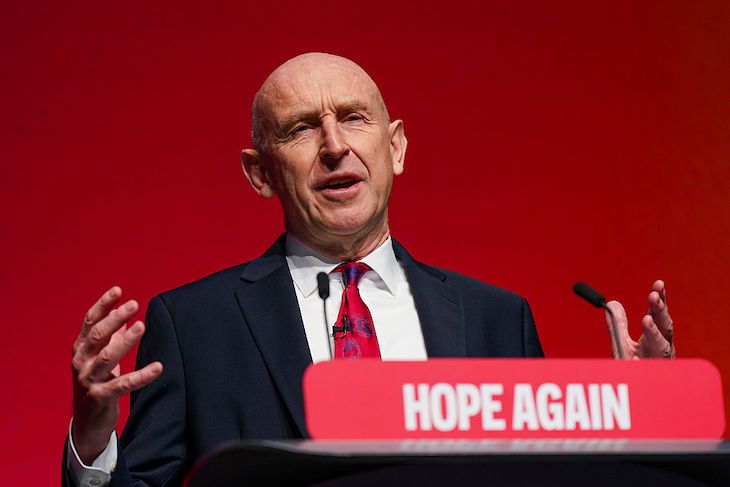
Imperative, then, that the Chancellor John Healey really does deliver a Budget on 28 October that avoids piling even more tax pressure on businesses and employers.