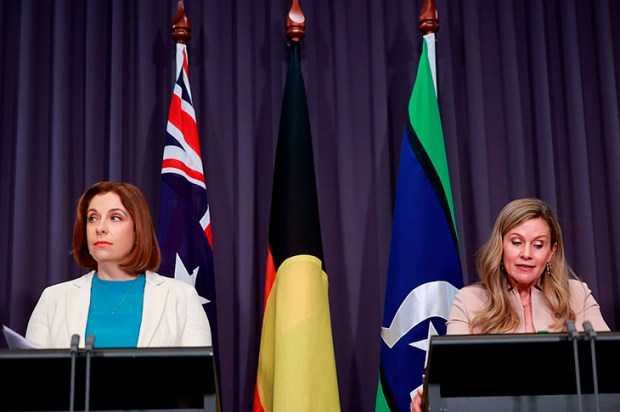
Standing beside Georgia Tree, Labor’s candidate for the safe Labor seat of Secret Harbour recently, West Australian premier Roger Cook alerted voters to the ‘incredibly toxic and poisonous social media activity coming from bots and trolls both on the East Coast and overseas’.
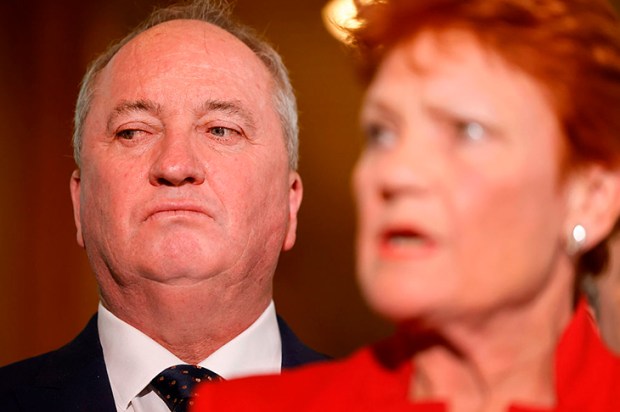
Alas, Premier Cooks’ caution fell on deaf ears and Secret Harbour’s voters elected Cook’s target, the dreaded One Nation candidate.
A panicked Prime Minister Albanese lamented the Secret Harbour result was ‘symptomatic of a global malaise’. He warned, ‘Across the world hard-right populists are on the march’. One Nation is ‘dangerous, divisive, and downright dishonest’. ‘They’ll say anything and do anything to win votes. Bend any facts. Peddle misinformation and disinformation. Turn Australian against Australian. ‘Imagine such a party in government. It makes one shudder.’
Clearly the irony was lost on a prime minister blind to this being the widespread perception of his own government.
After all, it’s his government which dishonestly talks up Australia’s ‘robust and resilient economy’ despite living standards falling and core inflation remaining among the highest rates in the developed world. It’s his government which has presided over lower productivity levels than when it first took office. According to the IMF, productivity is forecast to be the 18th-lowest among the 30 largest economies and 21st next year.
Also dishonestly hidden is how economic growth over the second half of last year was driven by government spending and migration. Private sector demand, such as it was, was concentrated in government-supported areas like the ‘care’ economy and education.
Deloitte Access Economics confirms that although household spending recorded some growth, government spending was the main factor.
Talk about ‘bending facts’.
On inflation, Mr Albanese and Treasurer Jim Chalmers are quick to point out that Australia’s problems are a global phenomenon driven largely by the wars in Ukraine and the Middle East. Perhaps? But at 3.5 per cent, Australia’s inflation is still higher than in the US, the UK, the Eurozone, Canada, Japan and China. As a consequence, Australia’s official cash rate ranks among the highest in the developed world.
Still, despite external headwinds, Australia’s unemployment remains relatively low, and below the OECD average. This is not least due to the Albanese government hiring 28 new public servants a day since taking office. The federal workforce is closing in on a record 200,000 employees (a 23-per-cent increase in just three and a half years).
While boosting employment in the short run, the rapid expansion of the public sector has added significantly to government outlays and, with prospective budget deficits totalling $265 billion over five years, pressure is building on Australia’s rapidly deteriorating financial position.
For example, under Labor, federal debt has increased to over one trillion dollars. Interest payments at $30 billion a year are now the second-fastest-growing major expense behind only the National Disability Insurance Scheme. By 2030, combined state and federal debt is on track to exceed two trillion dollars.
To give the illusion of GDP growth while hiding a decline in per capita growth, Labor stepped up its migration intake. Between 2022 and 2026 net migration totalled 1.5 million. Indeed, this migration surge also gave Labor the opportunity to branch stack on an industrial scale.
Despite Labor’s denials, the Ethnic Communities Council of Victoria strongly condemned the ‘exploitation’ of multicultural groups it claims Labor power brokers are using, without their knowledge, for internal ‘branch stacking’.
Immigration Minister Tony Burke’s greeting of Gazan refugees at the airport and his attendance at naturalisation ceremonies just before an election, are hallmarks of migrant exploitation for vote building. Political self-interest may also explain Mr Burke’s reluctance to single out ‘radical Islam’ as a driver of terrorism. This despite violent pro-Palestinian demonstrations, the firebombing of Melbourne’s Adass Synagogue, and the killing of 15 innocent people at Bondi. Following the massacre at Bondi, Labor’s reluctance to call for a royal commission strongly suggests that when politics demand, anything goes.
Mr Albanese accuses One Nation of ‘bending facts and peddling misinformation and disinformation’. One Nation could just as easily point to Climate Change and Energy Minister Chris Bowen’s record. Mr Bowen warns Australia faces disasters for ‘every community’, and that the ‘cost of inaction will always outweigh the cost of action’. Yet Arctic sea ice has not shrunk in twenty years. The Great Barrier Reef is in record good health and thousand of islands in the Pacific and Indian oceans are not sinking.
And even if Australia, at crippling cost, reached Mr Bowen’s net zero nirvana, with China adding new coal power capacity with emissions estimated to exceed Australia’s total every few months, any such achievement would be simply tokenism.
Still, when deception fails, there’s always coercion. Mr Bowen’s Climate Change Authority has launched a cross-agency working group to fight back against ‘climate misinformation’ which it considers undermines ‘informed public discussion and confidence in climate and energy policy’. Big Brother knows best.
The practice of silencing unwelcome commentary is manifest in Labor’s ‘hate speech’ and Digital Duty of Care laws which allow government elites to censor and imprison Australians for their political opinions and beliefs. It plans to force tech giants to protect uneducated Australians from certain online algorithms.
When Mr Albanese talks about turning Australian against Australian, he must be ignorant of overseas experience where these measures deepen cultural and political polarisation.
Of course Labor claims restricting what Australians can watch is well intentioned. Like Treasurer Chalmers’ ‘humanising capital’. He describes this as the transformation of the welfare state into a managerial utopia with the government, in collaboration with (industry) superannuation funds, acting as benevolent resource allocators through which autocratic technocratic elites will manage all aspects of society’.
Which means when Labor’s ultimate objective is achieved and most Australians are dependent on, or answerable to, the state, it will be too late to recover our democratic values and way of life.
That’s what should ‘make one shudder’, Mr Albanese. Nothing One Nation will do will top that.
Got something to add? Join the discussion and comment below.
You might disagree with half of it, but you’ll enjoy reading all of it. Try your first month for free, then just $2 a week for the remainder of your first year.