The Australian housing market overall peaked in March. By the time you read this, it will have been falling for five if not six, consecutive months. August’s decline was the sharpest since December 2022 – 1.2 per cent month-on-month across the five capitals, 3 per cent for the quarter overall; 4 per cent off the peak. Auction clearances are down from their peak in the low 70s to around 50 per cent now; and only because auction volumes have dried up. Sales are off 16 per cent in a year. Brisbane, Adelaide, and Perth – until now the strong markets – are joining the deterioration. Nonetheless, many people will still – even now – tell you, with absolute confidence, that Australian house prices never really decline over the longer-term.
The uncomfortable thing is: even if our current predicament and the reactive statement are both true, it is the gap between them which is important, where everything is determined – where exactly the next decade finds its place in Australian history.
Let me discuss two ledgers. The first ledger is the one on the sales board, the price in Australian dollars. It shows that the national median dwelling more than doubled from 2012 – up 120 per cent at the peak. In February this year, the capital-city median crossed 1 million dollars for the first time, rising at nearly 10 per cent YoY. It was a triumph, of a kind.
Until now these figures are the ones every leader, every vested market participant, reached for attempting to offer ‘perspective’. More recently, Plibersek has suggested that it’s ‘never been a better time to be a first-time buyer’.
The second ledger prices the same house in terms that take into account time or geography. In inflation-adjusted Australian dollars, the market price is quietly below a peak set four years ago; in these real terms Melbourne now sits about 21 per cent below its 2022 mark.
In American dollars – the median converted at the exchange rate of the day, then set against American consumer prices (CPI) – the Australian residence has gone essentially nowhere since 2012: a real return within the global context of roughly nothing over 14 years. If you were a foreigner, why would you have bought a house in Australia?
The decomposition is significant. In our own currency, the past gain has been tremendous. It has been the Australian dollar’s roughly one-third slide and the return of inflation that has confiscated it in the world’s balance of purchasing power.
Put the two ledgers side by side and you can assemble three clocks, all now running in the same direction but at different speeds. In American dollars: no gain in real estate price for 14 years – although, of course, the precise conclusion depends a little on the day. In real Australian dollars: values falling since 2022. In nominal Australian terms: prices falling since March. The question is then: how far does each clock have to run?
This essay will offer a range of numbers before it is done.
I am not exactly forecasting a crash – I’m not predicting something hard and painful like the GFC. The people who have predicted dramatic 40 per cent nominal collapses since the mid-90s fill a well-tended graveyard.
And yet the graveyard itself is instructive – perhaps just not in the way critics might think. The bears were rarely wrong about the domestic arithmetic. They were more often wrong about changes in the policy or global context.
Every time the arithmetic closed in, the Australian government found another lever – monetary, fiscal, or demographic – and pulled it. Or otherwise the global context helped out, treating Australia more kindly than elsewhere. As a result, the price on the sales board kept bouncing back to find new highs.
The questions that matter in 2026 are not whether the domestic arithmetic is wrong – it has produced convincing results on the data before – but whether the policy context has any levers left and whether world events can help out as before.
Let us start by auditing the Labor establishment’s armoury – its fiscal and demographic policy options, item by item.
Lever one: interest rates. The standard variable mortgage fell from around 17 per cent in 1989 to about 2 per cent in 2021, a 30-year disinflation that mechanically multiplied what anyone’s given income could borrow.
That lever is not merely spent; it is in reverse. The cash rate stands at 4.35 per cent after three increases this year. The RBA held in August, while its governor warned that inflation risks were sticky and skewed to the upside. No major commercial bank forecasts a rate cut before 2027.
Lever two: credit. Deregulation took household debt from a modest level then to roughly 185 per cent of income now, close to the highest figure ever recorded in a developed economy. Whatever the maximum is, we are near it.
And re-regulation is now in play. Burnham’s attack on Thatcher’s legacy in Britain as well as a resurgence of the socialist left in America both point toward future scenarios here.
Lever three – and this is a key one. In October 2025, the Commonwealth uncapped its five-per-cent deposit guarantee, layered a ‘Help to Buy’ scheme on top, and carved student debt out of serviceability tests. It was the purest demand subsidy in the toolkit, fired at maximum charge.
The result was a five-month melt-up – a ten-per-cent-annualised sprint to the million-dollar median house price – and then the March peak, and then the rollover. The government fired its last conventional shot, produced one final sugar rush, and the market rolled over anyway with the stimulus still running. When the strongest demand lever in the cabinet can buy you just five months, the effective armoury is nearly exhausted.
Worse, the lever will exacerbate outcomes on the downside more than it will help results, at this stage, on the upside. Those purchasing on the scheme’s five-per-cent deposits will carry loan-to-value ratios which readily tip into negative equity on a single-digit decline in house prices. In the current market, many of the latest purchasers already have – as the media point out and as friends have told me.
Lever four: tax privilege. For 30 years both negative gearing and capital-gains discount survived every assault, until this year’s budget trimmed them. Whatever your view of the merits, the direction has here, too, reversed. Others in The Spectator Australia magazine have made the case that this change betrayed the very buyers Labor’s scheme in October 2025 lured into the market. It is hard to argue against this conclusion.
Lever five: immigration. Net overseas migration (NOM) ran to 530,000 in the post-Covid surge; it is now around 301,000; still enormous by any historical standard, but capped by bipartisan consensus – the one genuine convergence Australian politics has produced this decade.
And for the first time in a generation the parties are bidding it down. One Nation – combined with trends overseas – has pressured the status quo and what is viewed as acceptable opinion. The state of play is worth detailing: Labor’s budget now targets 225,000 a year; the Coalition is offering a number somewhere between 170,000 and 180,000.
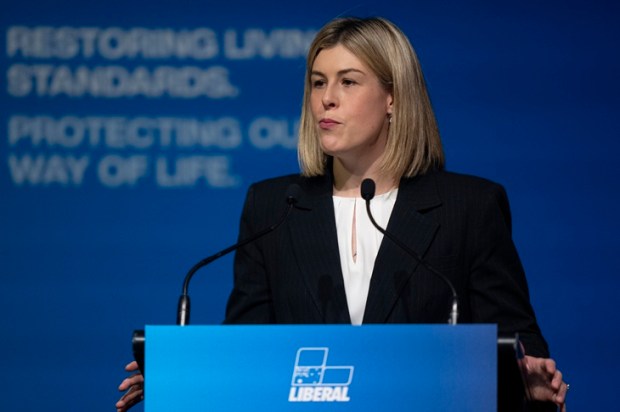
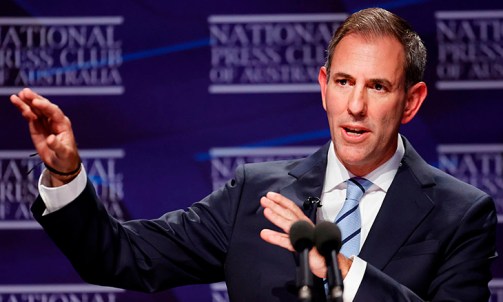
A Liberal frontbencher recently floated the higher figure at the National Press Club (NPC) but his leader disowned it and cautioned him within twenty-four hours. Labor has exposed something not dissimilar – that is policy disarray. Meanwhile, One Nation targets 130,000 visas and a net migration goal of minus one hundred thousand.
It is a race to the bottom and one run, I must note, in a currency that does not legally exist in Australia – the Migration Act allows the government to cap visas, not net movement. The established parties will almost certainly not achieve their announced or target cuts. Nevertheless, the direction of the auction is the point.
The umpire class is already briefing against the new policy trend. A former Treasury chief recently warned that immigration cuts would damage an already weakened economy. The almighty fight that is brewing and the Treasury official’s points – which are not invalid, all else being equal – do not so much complicate the forecast here, but rather confirm it.
If we consider all five policy levers, we can say that their utility is largely exhausted. Worse, many are now being pulled in the opposite direction.
The picture looks no better if we now consider the economic backdrop or expand our view to take into account the global context. The multiplying of income streams within Australian households is maxed out. In particular, the powerful transition from one wage to two, which drove growth during the eighties and nineties, is finished, and measurably so. Over the previous three censuses the full-time earning capacity of the median household in fact went backwards. There is no third adult to send to work.
Meanwhile, the delay in life stage decisions – which lets savings build up first – is almost complete. The median first-home buyer is now 36 years old, a decade older than their parents were. If the purpose is to have a family, buyers cannot wait too much longer.
And the coordination between generations is virtually played out. Data show that family money now assists 30 to 40 per cent of first-home buyers. The bank of Mum and Dad, counted among lenders, ranks ninth in Australia. We see reverse mortgages marketed explicitly to fund grandchildren’s deposits. Three-quarters of those retirees who still hold a mortgage now owe greater than their superannuation balance.
Looking outside the country, we note that the China boom which paid Australia’s way for two decades – a terms-of-trade escalator that turned iron ore into income and income into house prices – is over and is not coming back. There is no second ‘China’ industrialising on a scale or in a way which would have the same impact for Australia.
Citing India or Indonesia is to misunderstand the peculiar combination of timing, geography, baseline, economic structure, and resources that made China’s growth so impactful for our nation at that time.
Productivity is one thing which could help us to replace China as a driver for economic growth. However, here lies the historic charge against most of the developed world outside America. Most economies lack the combination of imagination, ingenuity, and implementation that sustains American growth and keeps its dynamism sui generis, whatever facile apologists for China might argue.
Productivity has gone precisely nowhere in Australia over the medium-term. The whole economy has now recorded zero productivity growth for six years. Multifactor productivity fell outright last financial year. Meanwhile, income per person has grown more slowly this decade than in any since the first world war.
Treasury’s famous three Ps – population, participation, and productivity – in practice collapsed long ago into just one P, population; and population growth is now facing political pressure. The Reserve Bank’s own August forecasts concede the challenge: GDP growth remains stuck below 2 per cent for the longest stretch since the early-nineties recession, productivity is heading backwards, and trimmed mean inflation, despite the triumphalism of 2025, will not return to the middle of the target band in the foreseeable future.
Which brings us to the fourth P: price. Australia’s price level has hit a structural floor which the Reserve Bank can no longer ignore or legislate away.
De-globalisation, mercantilism, newly desired redundancy along supply chains, the return of geo-strategic military competition, long-held regional grievances, unrelenting wars, global climate change, the energy transition and its build-out, AI and the construction of data-centres, housing’s own cost ecosystem, ageing populations, and the escalating burden of healthcare – everything here pushes in the same direction.
After 20 years in which the grasshopper handsomely won over the ant, third-party funding is unlikely to remain supportive in the face of the twin challenges – spending and inflation. Investment markets, so long co-conspirators, will eventually smell blood and adjust their target strategies accordingly.
The dynamics behind Situational Awareness and its fate in America are recognisable to most experienced market participants. Funds started raising pressure on the precocious hundred-billion-dollar AI investor – in the end forcing the highly-leveraged outfit into a fire-sale this July.
It recalls infamous episodes of the 20th Century like the bet against the pound, in which Bessent was involved, or the pain inflicted on Metallgesellschaft. There have been other cases this century. Catalonia and Valencia were priced out of markets forcing Madrid to assemble a rescue package. We should expect more scrutiny of financial robustness at every level of Australia’s economy going forward.
And over the horizon of every young graduate mortgage in the country sits the machine-intelligence threat, moving first on precisely those white-collar incomes that service the largest loans – a subject I have taken up separately in these pages.
The old Australian model for economic well-being was simple: cheap money for wealth, migration for growth, and China for income. Two switches have reversed polarity; the third is simply off.
Which leaves the lender of last resort, and here the trap is elegant. The Reserve Bank cannot ride to the rescue, since housing is no longer the collateral damage of inflation – it is driving the inflation itself. The housing group ran at 6.8 per cent in June, new dwellings at 5.8, rents at 3.6, against a headline of 3.8 and a trimmed mean of 3.6. The situation was better in July, but not significantly.
The Bank will struggle to disinflate the economy around its largest asset class when that asset class is generating the very price signal it is targeting. Property’s own cost ecosystem has jammed our RBA’s capacity to act supportively.
The census gives a record of what the interest rate lever did on its way down – and what it never did. In 2006, with the standard variable rate near eight per cent, over a quarter of mortgaged households were past the standard stress line of 30 per cent of income; by 2011, on bigger loans but at similar rates, nearly a third.
Then came the rescue: one in five stressed by 2016, one in six by 2021 – the share of mortgaged homes under pressure halved as rates fell, on balances that grew the entire way.
If we look at renters across the same 15 years – rates at 8 per cent, at 2 per cent, and everywhere in between – the share of households past the stress line never fell below 30 per cent. Cheap money rescued the mortgaged but it never reached the renter; because rents tracked the residential shortage, not the cash rate.
This asymmetry tells us in advance what the next policy cycle, when it comes, will do: relieve one side of the tenure ledger, but not both – and, as we shall see, it will attempt to save the side that votes, preferably the side that votes for the establishment.
New Zealand is the mirror here, and this is where honesty requires ranging the outcomes rather than asserting one. Japan is a template people often grab but it is the wrong one – a corporate balance-sheet implosion in a non-recourse-adjacent system.
Australia is a floating-rate, full-recourse country where households manage rate rises in real time and default is social death; which is similar to New Zealand’s architecture.
New Zealand has just run the experiment. Their median multiple for house prices has fallen from 11.2 times income to 7.7; their real prices are back at 2019 levels – and the nominal leg did actual work on the way down, falling by high-teen percentages before the political system responded. A new government restored landlord tax deductions, wound back the capital-gains bright-line, and the market found its base for now.
The lesson of New Zealand is not that prices can’t fall. They can and do. It is that when prices fall far enough, the owner-weighted electorate pushes for a floor to go under them.
Meanwhile, over the same window Australia went from 8.0 times income to 9.9 and now holds the developed world’s most expensive valuations on this multiple.
The perpetual objection to my argument here, almost creed-like in its conviction, is ‘but the housing shortage!’ It mistakes what price a shortage does, in fact, support. Rental vacancy of 1.0-1.6 per cent puts a hard floor under rents rather than values, even if it does rule out disaster scenarios. A 40 per cent nominal collapse in residential prices needs forced sellers meeting empty homes. This is Ireland in 2008. A country with one per cent vacancy rates will not, without recession, replicate any similar experience.
Scarcity cancels a market catastrophe; it does not cancel a correction. Australia’s current situation floors rents, not house prices. Overseas, Auckland and Toronto both had apparent shortages; both housing markets corrected.
Australia has already run the pattern once, which is worth pausing on, because it hints at the law that many are secretly depending on. Prices fell 9 per cent through 2022; before the system answered with the biggest migration intake in history and, eventually, October 2025’s uncapped guarantees. The government moved to arrest the fall and reverse it.
However, the existence of potential defenders for house prices will not prevent a fall – the government will arrive, if it does at all, afterwards, using whatever policy lever remains to build a floor. But I warrant levers are few and the yield on each rescue will inevitably shrink.
The 2009 first-home-buyer boost bought the market the better part of two years. The 2020 package, leveraging 2 per cent money, bought two years and a 30 per cent boom. Then October 2025’s uncapping – the strongest demand subsidy ever fired – bought just five months and 7 per cent. Each rescue has been capitalised into prices fast and then turned into the next buyer’s cost of entry.
The defender’s levers, not least because they are usually measures of political expediency, obey the law of every fast sugar hit. The questions this essay has been slowly circling are – what does the next floor in the market get built from and how long will it last? The answers are not comforting.
So here are the three clocks I mentioned earlier, now with numbers. In nominal Australian dollars: there is no immunity for Australia’s housing market, rather a series of steps down. The falls will be in stages; each occasion arrested at a lower floor by an increasingly frail defence. I expect the downturn to end in a full adjustment of between 25 and 30 per cent from this year’s March peak, varying by region.
The global history for Western markets – most cleanly US, Spain, UK, NZ – shows that property can fall harder than initially expected; commentators tend to stay behind the curve for a substantial part of the downturn. Perth alone fell about a fifth across its longest unwind. Of course, there should be significant fluctuations and long pauses along the way.
In real Australian dollars I might expect a repricing of 35 to 50 per cent at its worst point – New Zealand-shaped, grinding, volumes leading prices, which is precisely the sequence already on the tape. In constant American dollars: I predict an even deeper fall, since the currency is not a bystander to this whole process – it is one of its integral parts. I have lodged these bands, with dates and probabilities, where they can be scored against me.
So far, so structural. Now two further questions that turn this from an economics column into a political one. I talked a lot about government response. How will parties, in fact, respond; and will their response be useful?
I think established parties will try to defend house prices, rather than rent, and they will try hard. That is the forecast in my model. However, their efforts will prove costly and increasingly messy. Ultimately, the established parties will fail – for the reasons that I enumerated at the start of this article. The system needs a reset. Who does it and how will be the subject of my next article in this series on housing.
For now, suffice it to say that established parties are a lot more interested in house prices as a policy outcome than rent, however much they might protest otherwise.
If we look at renting in this country and pursue a chain of analysis, each link from the census, we note the following. Of total Australian households, a little over 31 per cent rent. If we restrict the data to adults – people over twenty, living in actual dwellings – the number falls slightly: to 29 per cent. If we further limit our focus to citizens, the ratio declines again – to 25 per cent.
If we then apply enrolment, turn-out, and survey reality, by the time we reach a weighted federal universe of active voters, the proportion of renters is just 17 per cent. Even though nearly one in three adults lives in a rental, barely one in six voters does. Foreigners account for about 12.5 per cent of adult renters and have no vote at all.
This is partly the by-product of every rich democracy running population-led growth behind a citizens-only franchise. However, differences exist. New Zealand quickly hands permanent residents a vote. The UK enfranchises Commonwealth citizens.
Australia, with one of the highest intakes in the developed world, does neither – so here, a growth model based on migration comes politically insulated from housing shortages. Canada runs a similar scheme but harder than we do.
The outcome is a voting world with a structural, long position in real estate – indeed a group which has made its wealth through property and maintains nearly 60 per cent of it directly in the asset class; even more indirectly. The electorate that will adjudicate every policy for the property market in the coming decade is one in which renters carry much less weight than in the population overall. And no conspiracy created this situation. Demographics, citizenship, and voter participation all contributed.
The government depends on the home-owning electorate not just politically but also financially. Over 20 per cent of state tax revenues derive from the real estate industry. If the market freezes both state ambitions and state fiscal health collapse.
So, we must not confuse sentiment with structure. The media might warn about soaring rents, and the newest generation may argue for cheaper houses. However, established parties, in fact, want to support home owners and the property cycle. Real, focused, loss-averse results will beat every day of the political week diffuse, mild, general population preferences.
Nevertheless, the policy defence is stuck and stuck hard. The context, whether political or economic, is turning from a tailwind to a headwind and will preclude tools that might work – like mass immigration, wholesale rezoning, currency devaluation – in favour of tools with increasingly little impact. Whatever is invented next to defend the nominal price of the asset – grants, guarantees, deposit schemes, or shared equity – is likely to cost us dearly. Future adventures supporting house values will, at the margin, sap public finances, boost inflation, or undermine currency.
So the politician tries, out of self-interest, to promise the electorate safekeeping: that the sales sign out the front maintains, if not increases, its value; on most days, in most suburbs. Yet every policy succeeds now by cheapening the measuring stick.
The real value will drain anyway, through inflation or the exchange rate, the way it has already drained away in US dollar-terms across 14 years in Australia – or the way Melbourne has already lost about 21 per cent over the last four years.
A legitimate retort is why should the real situation matter? For homeowners, their wealth appears intact. And it suits the government. There is the appearance of stability, even some growth. There is no sharp crash that anyone might decry or dissect, so no one who pushes to hold leaders to account.
Who is there to argue with any conviction, or with any impact, that the surface of stability is purchased with the substance of decline? Who is there to tell homeowners the price they are enjoying is simply domestic; that they are losing the global reality? Who is there to say that what appears a good result in fact hurts, taking certain electorates to the edge?
The defence of house prices is costly, and the country pays for it many times over – through the domestic inflation that erodes the savings of older generations and that undermines the wages of younger generations; through the FX that shrinks the country; and through the rent pressure that ensnares, above all, new entrants to society – whether adults leaving home or foreigners who have no vote.
And this cost may well come to bite the government, both politically and fiscally. It is a policy goal the country, or its states, can bear only so long without having to raise productivity or prioritise between their various policy dreams.
I could be wrong, and unlike the sales board out the front, I will say what wrong looks like: net migration sustained back above 400,000; the Reserve Bank cutting hard through 2026-27 without an inflation break; real national prices at a new high by 2028; the affordability multiple rising again next year; nominal prices regaining and holding the March peak within three years. I have lodged those expectations where they can be scored against me.
However, more urgent for politics than economic value, currency power, or fiscal health is that voter pain is building and reaching serious proportions. Where it sits is the part many get wrong. I say that having gotten parts of it wrong myself in earlier passes – before better data corrected me. The instinctive picture is a tide: when rates rise, stress rises everywhere at once, the way water rises to swamp all the dry land.
A tide would be politically simple – a national emergency, felt in every seat, demanding a national rescue.
What the data show instead are channels and pools. Pain enters through particular cohorts and focuses savagely in specific suburbs, while much of the country stays dry. A channel like this can prove invisible behind macro data, while the pools disappear behind national averages. The comfortable majority sees no emergency and provides no mandate for a broad-based rescue. In this scenario, the pain compounds in place, and the fury of minorities builds in critical addresses.
And while a tide changes governments, a channel breeds insurgencies. If we look first at cohorts, with the latest lever spent; the young appear more exposed than ever before – either as mortgagees, having bought at the top of the market with rates unlikely to head structurally lower, or as renters.
Between 2016 and 2021 the renter share at every age rose: from 49 to 53 per cent of people in their late twenties, from 41 to 45 per cent in their early thirties. As a result, among citizens in their late twenties and early thirties – those every housing policy claims to serve – more than two in five rent.
At the same time – through the years of free-money – young cohorts moved to ownership faster at every stage than cohorts five years ahead of them, against a baseline that had barely moved in a decade. The free money did not fix the generational ledger, so much as sprint one cohort across the line, at record prices, on record leverage: the younger generation. These are the borrowers now most exposed to asset repricing and rate increases.
Channels tend to focus the pain in some electorates more than others. If we look at the 2021 census – during the era of two-per-cent mortgages and the cheapest money in our history – we note that some suburbs already exhibited stress and, in several cases, for both home owners and renters. For example, about one in three mortgaged homes was past the stress line of 30 per cent of income in Blaxland, in Sydney’s south-west – and almost one in two renting households. The situation in Watson, Fowler, and McMahon was not dissimilar.
These are Labor-heartland seats in the migrant mortgage belt. What makes things worse is that they are also the seats whose housing stock is converting from owned to rented faster than almost anywhere else around the country. They have been exposed and suffering, and over time have increasingly less to gain from an unvoiced bias in government policymaking toward supporting house prices. Little surprise then that one of them – Fowler – already fell to an independent.
The one genuinely novel pocket the data surfaces is on the leafy side of Australian property: Bradfield, Cook, Menzies – blue-ribbon geography whose mortgaged minority seem to carry commitments their incomes don’t cover.
Two of the three are already gone: Bradfield to a teal by a margin best measured in votes, Menzies to Labor by a single point; only Cook still holds. The political risk is there, and it’s clearly playing out.
Tenure as a voting factor is confirmed in both Labor and Liberal heartlands. Which brings us back to the insurgency. Here, the census dating from 2021 and the latest polls tell two different stories, because they now deal with two different voting populations.
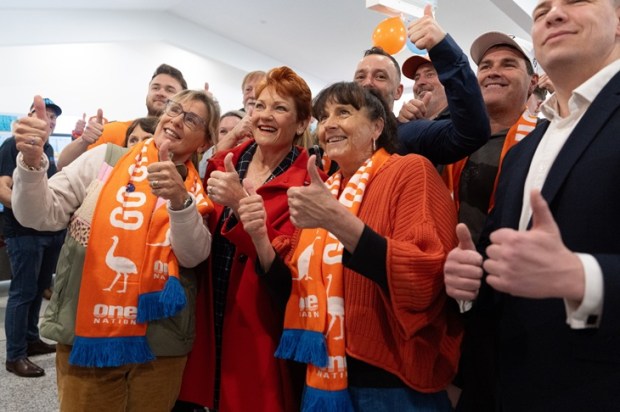
At the 2025 election, One Nation was a 6-per-cent-party with the most insulated base in the country: support concentrated among outright owners, under 4 per cent of renters, and, in the election-study sample, effectively no renters under 45.
Paid-off houses, low leverage, cheap regional land – on every ownership-side stress instrument we ran, One Nation country had nothing at risk in a housing downturn. That was the party’s core, and it still is.
But the party now frequently polling first on primaries, at four to five times its election vote, cannot arithmetically live inside that base: at current levels, at least three-quarters of its support arrived after May 2025.
Its support from millennials, a cohort almost two-fifths renters – now matches its national figure. The recruits, by arithmetic necessity, are among the exposed: the mortgaged, the renting, the under forty-five. Even if the housing unwind did not produce One Nation’s base, it is giving the party its majority.
What happens as a result of that majority – who, in the end, instigates a repricing that government self-interest and an electorate of home owners forbids; who has done so in six other democracies which are already running this experiment and why – is the subject of a second essay.
Here, it is enough simply to note the structure. The pollsters and the arrears data have found the same people that the census had already flagged as most exposed. And we should note that the insurgency is, overall, short the one vital asset, property, which the rest of the political system is structurally long.