There is something magnificently Australian about owing a trillion dollars and not being entirely sure to whom.
Other nations fret about their creditors. Americans publish monthly tables showing how much Japan and China hold of Uncle Sam’s paper, then stage congressional hearings about it. The French worry philosophically. The Greeks were made to worry by the Germans, who do not worry themselves because they refuse to borrow in the first place, which is its own form of neurosis.
Australia, by contrast, crossed the trillion-dollar threshold in 2026 with the quiet indifference of a man tapping his credit card at the pub without checking the receipt.
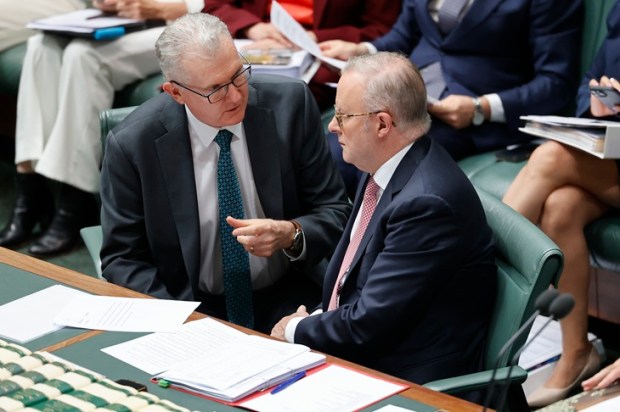
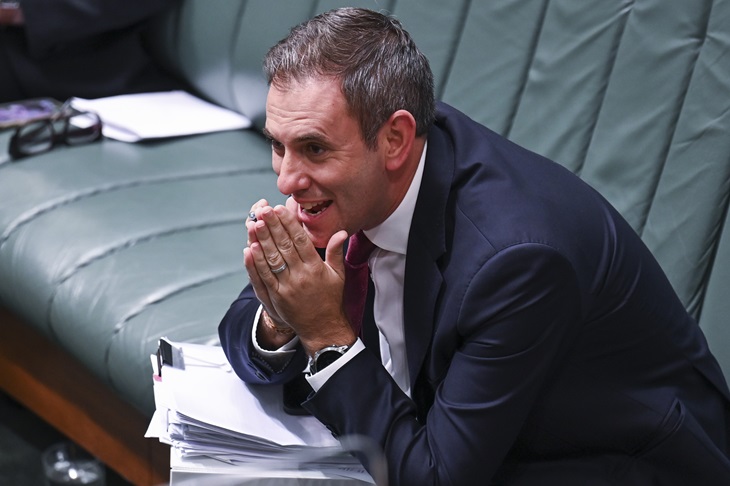
Treasurer Jim Chalmers announced a gross debt figure of $1,051 billion in the May Budget (34 per cent of GDP) and the nation collectively shrugged, returned to arguing about house prices, and ordered another round. A trillion dollars. Twelve zeros. Enough to buy every residential property in Tasmania five times over, though admittedly, nobody has ever wanted to do it once.
But the question lingers for those eccentric enough to ask it: Who, exactly, holds Australia’s debt?
The short answer is: foreigners, mostly. About 60 per cent of Australian Government Securities sit in non-resident hands. This has come down from a peak of 76 per cent in 2012, not because foreign investors lost their appetite but because Canberra began issuing debt at a pace that even the world’s most enthusiastic bondholders couldn’t match. The foreigners didn’t sell. Australia simply borrowed faster than anyone could lend.
The single largest country holder is Japan. One might pause to observe that more than 80 years ago Japan also took a keen interest in acquiring Australian assets, though the mechanism was different and the returns considerably worse. Today’s approach is more civilised: Japanese life insurers and pension funds, burdened by decades of near-zero yields at home, have bought vast quantities of Australian sovereign paper and are content to clip their coupons in silence. They have achieved through patient portfolio allocation what the Imperial Japanese Navy could not, and nobody in Canberra seems remotely troubled by this, which tells you everything about how seriously Australia takes the question of who owns its obligations.
Beyond Japan, the picture dissolves into the impressionist blur that the Australian Office of Financial Management (the AOFM, a body whose name was plainly engineered to repel public curiosity) prefers. Two-thirds of the world’s 50 largest central banks hold Australian government bonds, which means Australia’s creditors include institutions that can print their own money, lending it to an institution that can print its own money, in an arrangement that future economic historians will either celebrate as ingenious or cite in the opening chapter of a very long book about what went wrong.
The remaining 40 per cent is held domestically, and here the comedy thickens. Half sits on bank balance sheets, not out of patriotism but because post-crisis liquidity rules require banks to hold High Quality Liquid Assets, and government bonds are the regulatory equivalent of eating your vegetables. The banks do not enjoy this. They comply because the alternative is a stern letter from APRA, and nobody in Australian finance wants a stern letter from APRA.
The other domestic holders are superannuation funds, managed funds, and insurers, which means Australians are lending money to their own government through the intermediary of their retirement savings. The worker deposits her 12 per cent. The fund buys a government bond. The government spends the proceeds, partly on services, partly on submarines that may or may not arrive before she retires, and partly on interest payments to the Japanese pension fund that bought the last tranche. The worker is told her retirement is secure. It is a fiscal Ouroboros, the snake eating its own tail, except the snake has a franking credit and a Vanguard login.
Then there is the Reserve Bank, which during the pandemic purchased so many government bonds that it became the government’s single largest domestic creditor while simultaneously remaining its banker, its monetary policy adviser, and the institution notionally responsible for keeping inflation under control. In any other context, lending to yourself, advising yourself on the wisdom of the loan, and then setting the interest rate on it would attract the sustained interest of a regulator. In central banking it is called quantitative easing, and it earns you a seat at Davos. The RBA has since stopped buying and its holdings are declining, though it managed to lose so much money on the trade that for four consecutive years the central bank’s balance sheet sat in negative equity, making the Reserve Bank of Australia, by any commercial standard, insolvent. At least, in my opinion. The position is slowly improving. The government has assured everyone it never mattered. One is invited to find this reassuring.
The genuinely delicious detail is that every cent of Australia’s debt is denominated in Australian dollars. This means Australia borrows in a currency it prints. Default is nearly impossible. You can always create more dollars to repay dollars, though the inflationary consequences of doing so would, to use the technical term, rather spoil everyone’s weekend. What it also means is that Australia has persuaded 60 per cent of its creditors to lend it money on terms where the borrower controls the printing press. If a used-car dealer tried this, he would go to prison. When a sovereign government does it, all three major credit rating agencies give it a AAA. One of only nine countries on earth to hold the honour.
The deeper problem is not who owns the debt but that the political class has discovered there is no penalty for ignoring it. A trillion dollars is a number so large it has crossed from alarming into abstract. No voter can visualise it. No politician can honestly promise to repay it. No opposition can credibly attack it without being asked which hospitals they propose to close. The debt has become like the weather: always there, occasionally discussed, never anyone’s fault, and presumed to be someone else’s problem. The someone else, of course, is whichever generation is unlucky enough to be holding the parcel when the music stops.
In the meantime, if you happen to discover precisely who owns your share of the $1,051,000,000,000, do let the AOFM know. They seem genuinely curious.