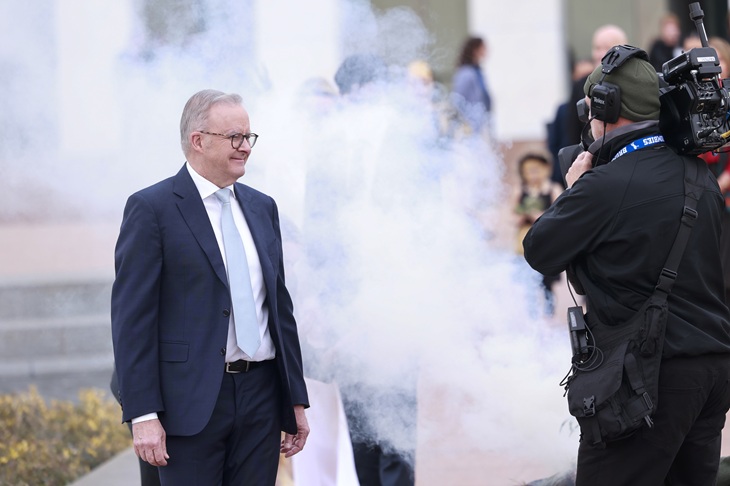
If the Lord’s Prayer is removed from each day of Parliament, it doesn’t mean there is no prayer at the opening.
In the Anglo-settler former colonies of the Antipodes and the Americas, it has become almost mandatory to start not just parliamentary meetings, but anything of any official consequence, with a secular prayer – the Acknowledgement of the traditional owners.
The Christian prayer might vacate, but it’s hard to see the secular one doing the same thing.
Prayers at the beginning of a meeting provide an essential function in directing discussion and behaviour.
When you deliver an Acknowledgement, you are doing a number of things. The first is dividing the community into two groups – traditional owners or custodians – and the rest. You are also establishing an original sin – that of dispossession. And a hierarchy of ownership and legitimacy.
These are not issues that the meeting can settle, or alter in any way, so they frame the decisions to be made, and the people who will make them, without directing them in any way how they will interact with each other or reach decisions.
It also undermines the whole legitimacy of the proceedings. You’re here meeting, but on a contested basis.
A good opening invocation ought to orient the participants toward things on which their conduct can have some bearing.
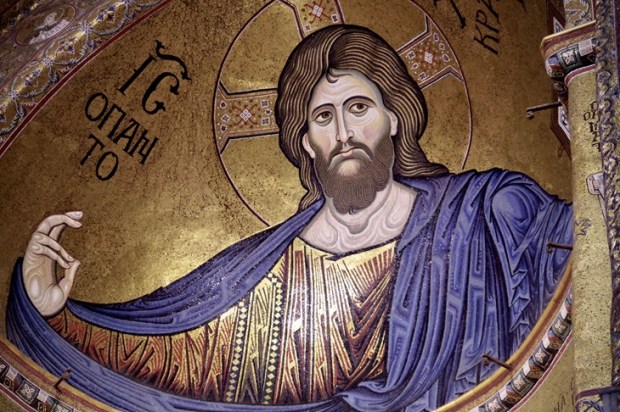
‘Our Father’ are the opening two words of the Lord’s Prayer. In opposition to the separateness of the Acknowledgement, this is inclusive language. No matter who we are, we are all children in the one family.
And our ‘Father’ is ‘in heaven’. That elevates our primary relationship beyond the here and now to something more essential. We are saying we should orient ourselves to the highest.
‘Hallowed be thy name’. Let’s give most reverence to those values that are above and around us and which inform the world in which we live.
We don’t just orient ourselves to the highest and the best, but we put the highest store and worship on it.
‘Thy kingdom come’ is perhaps the key phrase for a meeting. What are we trying to do here? Conform our decisions as closely as possible to the highest ideals so that ‘thy will [will] be done on earth as it is in heaven’.
But not everything is about the ethereal. We have earthly needs, which we share, and where our access involves some degree of fortune and doesn’t just depend on our own efforts. ‘Give us this day our daily bread.’
For those of a deeper Biblical frame of mind, this phrase will also conjure up the story of the exile in the desert where the Israelites, escaping from slavery in Egypt, were fed with manna from heaven, while they journeyed to the Promised Land, a short distance that took 40 years.
We are on a journey together, circumstances are hard, our arrival uncertain, but we still need to eat, and we have faith that somehow that will happen.
Then comes the instruction that combines the alignments – vertical to the highest values, and horizontally, to each other. ‘Forgive us our sins’ – we are not perfect, we will fail to meet the most exacting of standards.
And then the sting in the tail. Forgive us our sins ‘as we forgive those who sin against us’. If we can’t forgive, then neither should God forgive us. But if we do recognise and forgive each other’s mutual frailties, then all will be forgiven.
That is reconciliation and how different is it to the perpetual grievance embedded in the Acknowledgement? The Lord’s Prayer acknowledges wrong while supplying a mechanism for overcoming it, the Acknowledgement just hints at it and leaves it lying there.
A meeting conducted on the basis of mutual tolerance and forgiveness is going to be quite different from one that refuses to defuse grievance. Isn’t this something that we should hope for from all meetings, and a good thing to explicitly state as a goal.
Then ‘lead us not into temptation’. It would be better if there were no sins to forgive. And ‘deliver us from evil’. Evil can be something external, or internal. It can be consequence or chance.
Specific decisions may embody evil, or by lacking foresight or prudence, lead to it. Or evil may just happen. Having the shadow of it hanging over our meeting will hopefully make us more wise and careful in our deliberations and decisions.
That’s the prayer.
Generally it ends with a doxology, an expression of praise to God, but also a statement of humility – something most appropriate for a parliament filled by people, who, to be charitable, have at the least an extraordinary degree of self-confidence.
‘For thine is the kingdom, the power and the glory. Forever and ever. Amen.’
This ancient religious prayer does so many things and is radically egalitarian in a way that uniquely suits a democratic society.
The modern secular prayer dwells in the past, establishes a hierarchy within the community based on the immutable characteristic of ancestry, and says nothing about how we move beyond that, or address a multitude of pressing present concerns.
The Lord’s Prayer doesn’t pretend there are no wrongs. It assumes there will be wrongs, including our own, and gives us a way to work together despite them. The Acknowledgement identifies a historical wrong and a continuing distinction but contains no corresponding principle by which either is ever transcended.
If we have to shed one, I’d shed the Acknowledgement. But if the Lord’s Prayer has to go, the Acknowledgement should go as well.