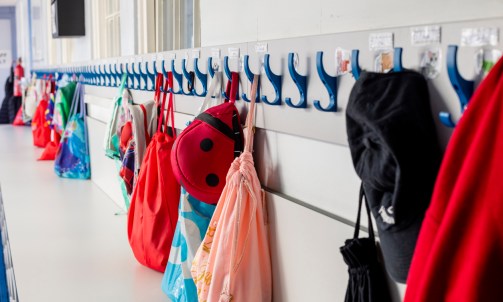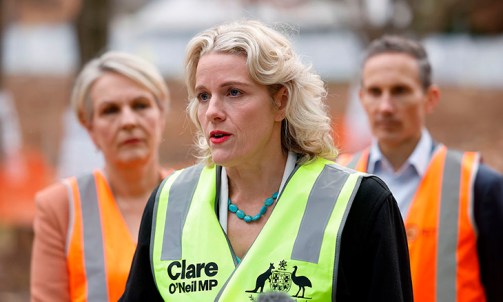
Boys are struggling in literacy, completion, and behaviour. It is no secret. In March 2026 Education Minister Jason Clare opened an inquiry into the gap and noted that at least one in three Year 9 boys could not read to the Naplan baseline. A Queensland University of Technology study of 71,955 NSW public-school students found exclusions peaked in Year 9, with boys twice as likely as girls to be excluded once, and more than ten times as likely to be excluded sixteen times or more. Homeschooling is rising. In NSW, boys now slightly outnumber girls.
Almost any man could tell you that age 14 was probably his most internally challenging.
Emasculation is the antithesis of education. Yet here we are. Many of the mothers of young boys I have spoken to are fed up with the education system. The default response from the system is suspension and exclusion. For a system that lauds its focus on inclusiveness, it is excluding boys to the detriment of our nation.
In 1980s Queensland, corporal punishment was still in place. I remember receiving six ‘cuts’ on each hand from a deputy principal who didn’t suffer nonsense. Nobody liked getting the cuts, and I daresay if my own children were being physically beaten at school, I’d take issue with it.
Punishment for boys went from the cuts to picking up rubbish, a unique form of humiliation. The new ‘New Age’ deputy principal didn’t use the cane. Instead, he would supervise the culprit who would have to collect rubbish from the grounds. The culprit’s peers would often leer and jeer as the punishment took place in the public square.
The reality is that boys will generally misbehave. Especially at age 14, I couldn’t help myself. Initially, it was pure anger. Not at anything, but the anger was just there.
I remember being grounded for most of Year 9. I could only attend football training, football games, and band practice along with any concerts we played. Of course, I skived out of my grounding and managed to see my girlfriend almost every day on the way to attending anything and everything I could. It taught me to adapt.
I’d been introduced to running by my grandfather at age 10. I was a bit like Forrest Gump in my teens. Every time I became angry (which was every day), I would run. If my sisters were annoying in the car, I’d ask Mum to stop, and I would get out and run home. It was not unusual for me to run several times a day.
Later it was lifting weights, again under the tutelage of my grandfather. Every morning I would get up with Mum as she went to her morning shift as a school cleaner. I’d go to my grandfather’s house and work out for two hours before school. I was in the First XIII for our high school rugby league team. I ended up there after my bandmaster said to me, ‘If you’re not going to be serious, why don’t you go play football?’ So I did.
I’d already been playing as a tight-head prop from age eleven, but I’d never been a fan of school football because I often played against my club teammates who were at other schools. But it was quite the thing to have a cheer squad of girls who were all the artsy types. I was surprised they were so keen on footy.
By Year 12, I cut my long hair (styled on Angus Young from when I was age 4) and determined to get myself sorted out. By the end of the year, I had an enviable tertiary entrance score that defied the music-theatre focus of my subjects.
Four days after school ended, I went off to the Cape York Peninsula as a chainman (surveyor’s assistant) to survey the three proposed sites for RAAF Scherger. I carried an axe and a brush-hook and used a chainsaw, frequently to cut saplings to create a corduroy track to get out of boggy areas.
Sitting outside the slaughterhouse at Sudley Station via Weipa, I enjoyed the last hot can of VB given to me by my mates to celebrate my 18th birthday. I rolled a cigarette using my Log Cabin tobacco (as my grandfather had taught me), and I remember feeling a quiet sense of satisfaction with the world. I had become a man.
Imagine if I’d been forced to apologise for the privilege of being a white man every day at school? Female teachers dominate the primary school workforce, and only 38.5 per cent of secondary school teachers are male. The ideal student is a girl who doesn’t misbehave, and boys are a problem to be dealt with by the system.
Imagine not working hard in the scrub, learning so much about people and becoming more efficient to conserve energy and dealing with idiot city bosses who thought they were bushmen because they’d been to Boy Scouts?
The examples I looked up to were hard men. Work hard, play hard was their motto. They were not harmless men. And they certainly didn’t suffer from toxic masculinity. Theirs was a kind of dangerous capability that was only unleashed when necessary, and never against women. Boys need to engage in rough play. This doesn’t have to mean unwarranted violence if taught properly.
It’s interesting that my mother and grandmother were the ones to teach me about being a gentleman. My great-grandmother taught me to always walk on the road-side of her, a habit I cannot break to this day. I remember once when talking with a news reporter while walking along the street in Canberra the cameraman insisted I walk on the wrong side. I cringed and apologised to the ghost of my great-grandmother who always walks beside me when I walk with a lady.
These times are not only confused, but generally corrupt. Some have referred to the current mood as ‘suicidal empathy’. It means that the empathiser, or the society doing the empathising, accepts real harm in order to be seen as kind. When empathy is unbounded and pointed at the wrong target, that compassion overrides self-preservation.
In my opinion, it stems from the undoing of liberal democracy. The catalyst of this undoing was the end of liberal education. Much like the Dark Ages, the classics have been forgotten. Aesop’s fable ‘The Farmer and the Viper’ would have warned educators away from such madness.
Aristotelian virtue has been abandoned. There is no longer a golden mean.
Instead, boys are forced to disarm themselves because of someone else’s feelings. This creates harmless men.
Our education system is not giving boys the tools they need. It is disarming them. The global order is changing, and history is replete with wars that followed a change in order.
Harmless men cannot defend their country, and they weaken it from within.
A boy given neither work nor rough play nor a hard man to imitate will never get there. That is the civilisation we are taking apart.
Dr Michael de Percy @FlaneurPolitiq is the Spectator Australia’s Canberra Press Gallery Correspondent. If you’d like to support his writing, please shout him a drink over at Donorbox.