Can mRNA vaccines weaken your immune system, making you vulnerable to certain forms of cancer? An AI-assisted search of the medical literature published in TrialSiteNews provided a disturbing answer.
It cited evidence that repeated mRNA Covid vaccination can, in certain individuals, impair immune surveillance of an existing or latent cancer. Together with reports of the reactivation or rapid progression of some immune-sensitive cancers, these findings raise a biologically plausible concern that mRNA vaccination might, under particular circumstances, allow such cancers to escape immune control.
There are now epidemiological signals as well. A 2025 South Korean study involving 8.4 million people reported higher one-year diagnoses of several cancers after vaccination, including thyroid, colorectal, lung, breast, gastric and prostate cancers. The study was observational, so it cannot establish causation, but the signal obviously warrants investigation.
These findings would come as less of a surprise to those who had been reading the articles on Covid written by Emeritus Professor Robert Clancy. There’s only one catch. You would not have seen these articles unless you read Quadrant magazine or indeed this magazine (full disclosure – the author is the editor of Quadrant magazine). That’s because Clancy, despite being a leading international authority on clinical immunology, especially mucosal immunity and respiratory infection, was cancelled academically throughout the pandemic.
Yet Clancy’s basic immunological model was sound. It meant that as early as January 2021 he accurately predicted that injected vaccines were unlikely to produce durable sterilising immunity against an airway virus; that protection against severe disease would be considerably stronger than protection against infection; that protection would wane; that variants would escape, and vaccines would therefore have to be repeatedly reformulated to chase the circulating virus.
Clancy argued that the risk-benefit calculation for children was very different from that for older people because children under twelve were at extremely low risk of severe Covid. His broader point was that Covid policy should have been based on age and individual risk, rather than a one-size-fits-all strategy.
He also argued that natural immunity was strong and durable, that people who had recently recovered from Covid should not be vaccinated, and that vaccination would not prevent vaccinated people from becoming infected and transmitting the virus.
Vitally, he warned that only a few months of trial follow-up was insufficient to establish the full safety profile of a novel vaccine technology and that adverse events would require continuing surveillance.
In October 2021, he warned that waning post-vaccine immunity would drive renewed infection and transmission. That prediction proved strikingly accurate as Omicron subsequently spread through highly vaccinated populations.
And, in November 2022, Clancy argued that repeated antigen dosing from vaccination could activate regulatory T cells, suppress Covid-specific immunity and produce what he called ‘reverse immunity’, a greater susceptibility to infection among those who had been repeatedly vaccinated. He compared the mechanism with allergen desensitisation and warned that poorly spaced boosters could produce prolonged, antigen-specific immune suppression.
Soon afterwards, experimental findings emerged that were consistent with this concern. A paper by Pascal Irrgang and colleagues in Germany was published in Science Immunology on 27 January 2023. The researchers found a striking shift towards spike-specific IgG4 antibodies after repeated mRNA vaccination.
A March 2023 Science Immunology commentary by Harvard/Ragon Institute immunologist Shiv Pillai asked what this unusual increase in IgG4 might mean biologically.
An answer came in a Cleveland Clinic study released the following month on 19 April 2023. In a large observational cohort of 51,017 employees, researchers found that the greater the number of previous Covid vaccine doses, the greater the risk of Covid infection. The Cleveland authors themselves discussed the IgG4 class switch as a possible explanation.
Thus, Clancy’s November 2022 warning could no longer be dismissed as unsupported speculation. So, like everything else that didn’t fit the establishment narrative, it was ignored. That was the most dangerous feature of the Covid pandemic. It was not the discovery of an unknown bat virus in southern China. Western medical science and public health officials were well-equipped to deal with such a challenge.
What was strange and dangerous was that sensible pandemic plans were abandoned in favour of a draconian regime of lockdowns, school closures, arbitrary distancing rules, compulsory face masks and vaccine mandates without any evidence that their dubious benefits outweighed their enormous costs.
Yet rather than allowing a vigorous debate to illuminate the best course of action, anyone who questioned the medical authoritarianism risked their career, their prestige, their licence to practise if they were a doctor, their funding if they were a researcher.
General practitioners such as Dr Mark Hobart, who issued mask and vaccine exemptions, were deregistered and are still fighting to have their registration restored.
Researchers such as Nikolai Petrovsky had their careers destroyed merely for stating the findings of their important scientific research about the origins of the virus, the efficacy of repurposed medication and the efficacy of traditional vaccines.
Laws in Australia were rewritten to criminalise doctors who criticised public health policy that was written by medically unqualified health bureaucrats.
The iniquity of that censorship has still not been acknowledged by mainstream society or academia. Sound scientific propositions such as the Great Barrington Declaration – to protect the vulnerable while allowing mainstream society to continue with business as usual – were demonised. Rational scientific discussion of a lab leak origin of the virus was condemned as a conspiracy theory.
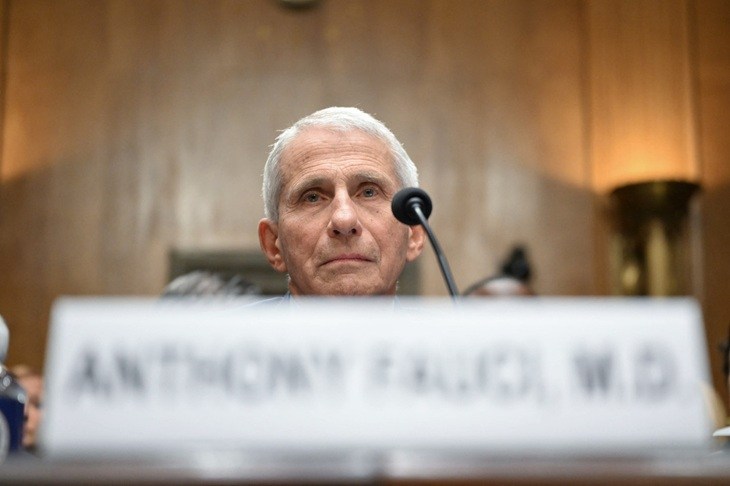
Those who led this witch hunt, such as Dr Anthony Fauci, the former head of the US National Institute of Allergy and Infectious Diseases and the leader of the US response to the pandemic, now refuse to explain their actions.
Others say that they did what they thought was best at the time and that it is only with hindsight that they can see they were wrong.
Of those who spoke out, a striking number were at the very pinnacle of the profession, such as Nobel laureate Professor Luc Montagnier, Dr Peter McCullough, Dr Thomas Borody, Dr Luke McLindon and, of course, Emeritus Professor Robert Clancy.
Clancy’s Quadrant and Speccie essays stand as a beacon of rationality in a storm of official misinformation. Reading them now, it is clear that one did not need hindsight to know that the establishment narrative was wrong on the fundamental handling of the pandemic. With the US FDA having just approved the first mRNA vaccine for influenza, Professor Clancy’s warnings are as relevant as ever. Frighteningly, he is still being ignored.
Got something to add? Join the discussion and comment below.
Robert Clancy’s Covid and the Corruption of Medical Science: A Quadrant Chronicle will be published this week and can be pre-ordered online from quadrant.org.au
You might disagree with half of it, but you’ll enjoy reading all of it. Try your first month for free, then just $2 a week for the remainder of your first year.