More than 2,500 years ago, one of history’s greatest rulers made a decision that changed the course of two peoples forever.
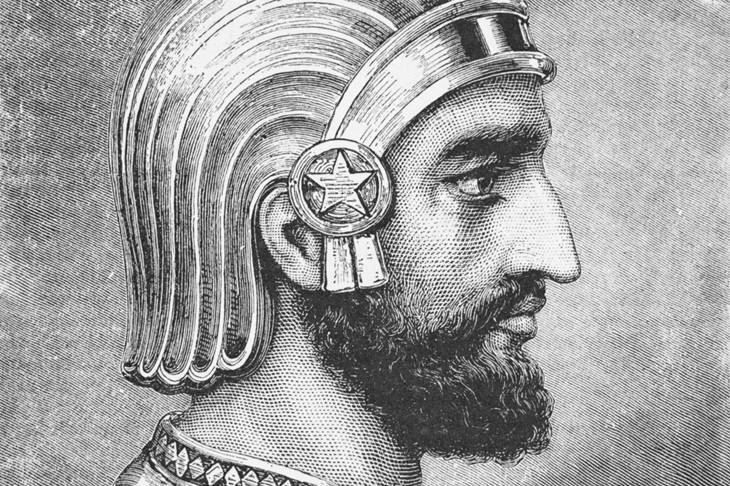
When King Cyrus the Great conquered Babylon in 539 BCE, he did something almost unheard of in the ancient world. Rather than rule through fear and subjugation, he allowed the Jewish people who had been exiled from their homeland, to return to Jerusalem and rebuild the Temple. He respected their faith, restored their freedom and gave them hope.
It was an extraordinary act of leadership. Cyrus understood a truth that many rulers throughout history have failed to grasp: empires built on oppression eventually crumble, but societies built on liberty leave a lasting legacy. It is certainly an act of leadership some in the West could learn.
For that reason, King Cyrus occupies a unique place in Jewish history. He is the only non-Jewish ruler described as God’s ‘anointed’ in the Hebrew Bible. His name has been remembered by generations of Jews not because he conquered nations, but because he chose freedom over tyranny.
Yet Cyrus’s greatest legacy extends beyond the pages of history.
His decision began one of the world’s oldest and most remarkable friendships, the enduring bond between the Persian and Jewish peoples.
I call this relationship the Cyrus Friendship.
The Cyrus Friendship is not merely a historical curiosity. It represents more than twenty-five centuries of mutual respect, shared history and cultural connection between two ancient civilisations. While governments have risen and fallen, borders have shifted and ideologies have changed, the friendship first forged by Cyrus has never disappeared.
History belongs to peoples, not governments.
That friendship remained visible even in modern times.
Before the Iranian Revolution of 1979, Israel and Iran enjoyed close diplomatic, economic, and cultural relations. Direct flights connected Tel Aviv and Tehran. Israeli tourists visited Iran, and Iranians travelled freely to Israel. Tens of thousands of Jews lived proudly in Iran as part of one of the oldest Jewish communities in the world.
The partnership extended far beyond diplomacy.
Israel sent doctors, medical expertise and humanitarian assistance following natural disasters. Iranian agricultural experts trained alongside Israelis on kibbutzim, exchanging ideas that benefited both nations. Scientists, engineers, academics and business leaders built relationships based on cooperation rather than conflict.
These were not artificial alliances created by politicians. They reflected a genuine friendship between two peoples whose relationship stretched back to King Cyrus himself.
The Islamic Revolution changed that.
For nearly five decades, the ruling regime has attempted to replace thousands of years of friendship with hatred. It has invested enormous resources into exporting extremism, supporting terrorist organisations and portraying Israel as an eternal enemy.
But propaganda cannot erase history.
The Islamic Revolutionary Guard Corps is not Iran.
The regime is not the Iranian people.
The Iranian people remain the heirs of one of humanity’s greatest civilisations, a civilisation that produced extraordinary poets, philosophers, scientists, artists, and statesmen long before the current regime came to power.
Whenever we see ordinary Iranians risking imprisonment to protest for freedom, or see Israeli and Iranian flags displayed together at demonstrations around the world, we witness something profoundly hopeful.
Those images remind us that beneath decades of political hostility lies an older truth: the Cyrus Friendship still lives.
It survives because friendships between peoples are stronger than the ideologies of governments.
That history should inspire our future.
Just as the Abraham Accords transformed relationships that many believed impossible, I believe the next great opportunity for the Middle East lies in what can be titled the Cyrus Accords.
The Abraham Accords demonstrated that peace is not achieved by waiting for hatred to disappear. Peace is built when courageous leaders choose cooperation over conflict and recognise shared interests over inherited grievances.
The Cyrus Accords would build upon that success.
They represent a vision of a free and democratic Iran working alongside Israel, the Gulf States and the United States to strengthen regional security, advance scientific and technological innovation, expand energy cooperation and create economic prosperity throughout the Middle East.
Some will dismiss this vision as unrealistic.
Many people once dismissed the Abraham Accords in exactly the same way.
Yet agreements once thought impossible became historic achievements. Even after the horrors of October 7, the belief that peace remains possible has not disappeared. If anything, the need for a better future has become even more urgent.
Hatred destroys lives.
Freedom builds civilisations.
King Cyrus understood this more than two and a half millennia ago.
Australia offers an encouraging glimpse of what that future could look like.
Across our country, Iranian and Jewish Australians work together as neighbours, professionals, community leaders and friends. They celebrate one another’s cultures, support one another during difficult times and recognise a shared history that transcends modern politics.
Here, the Cyrus Friendship is not an abstract concept.
It is something we experience every day.
It reminds us that politics can divide governments, but it cannot erase thousands of years of shared history between peoples.
History also offers important warnings.
The Iranian Revolution of 1979 demonstrates how movements that promise liberty can ultimately establish tyranny. Many Marxists, socialists, and secular revolutionaries who helped overthrow the Shah believed they were building a freer society. Instead, once the Islamists consolidated power, many of those same revolutionaries were imprisoned, executed or driven into exile.
Authoritarian movements rarely share power for long.
That lesson remains as relevant today as it was nearly half a century ago. Freedom requires not only courage to achieve, but vigilance to preserve.
Ultimately, the story of King Cyrus is not simply about the past.
It is about the future.
One day, I believe the Iranian people will once again determine their own destiny. When that day comes, they will inherit not only one of the world’s oldest civilisations, but also the opportunity to revive one of history’s oldest friendships.
The Cyrus Friendship can once again flourish openly.
The Cyrus Accords can transform from an aspiration into a framework for regional peace, security and prosperity.
From the shores of the Mediterranean in Tel Aviv to the streets of Tehran, a new dawn is possible.
A dawn where children learn about one another not as enemies, but as neighbours.
A dawn where cooperation replaces confrontation.
A dawn where scientific discovery, economic partnership and cultural exchange triumph over violence and extremism.
King Cyrus showed the world that true greatness is measured not by the power to conquer, but by the wisdom to liberate.
His example remains as relevant today as it was twenty-five centuries ago.
The future will not belong to those who spread fear or hatred.
It will belong to those who defend liberty.
It will belong to those who choose courage over silence.
And if we remain faithful to the legacy of King Cyrus the Great, I believe the day will come when Persians and Jews once again stand together as partners, not because they have forgotten history, but because they have remembered it.
That would be a future worthy of both peoples.
That would be the enduring legacy of King Cyrus.