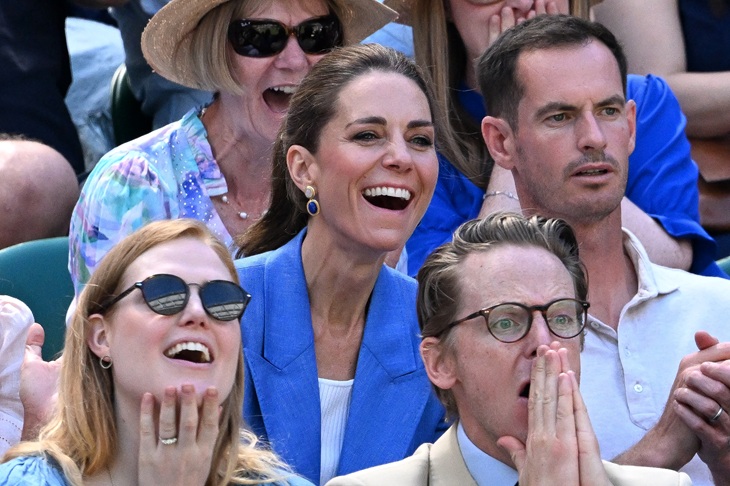
The most devastating intervention in the Duke of Sussex’s long war over his British security detail came last week, and it came without a word being spoken.
The Princess of Wales walked into Wimbledon, skipped the Royal Box, and sat in the ordinary stands on Court One to watch the tennis. Andy Murray on one side, Anne Keothavong on the other. Spectators moving behind her. No barrier. No cordon.
The future Queen of the United Kingdom, in an open seat among thousands of strangers, enjoying the match like everyone else.
She almost certainly did not mean it as a statement. That is what makes it so potent.
Meeting spectators, players and staff at the most iconic postcode in tennis at Wimbledon ? pic.twitter.com/bAfk2vhoY6
— The Prince and Princess of Wales (@KensingtonRoyal) July 2, 2026
Consider the argument Prince Harry has been pressing for six years.
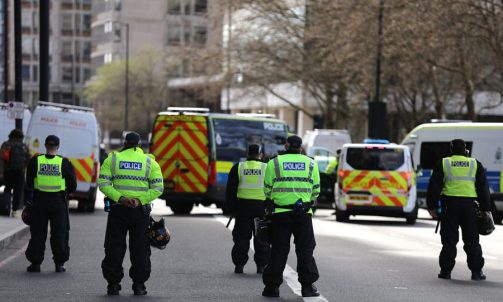
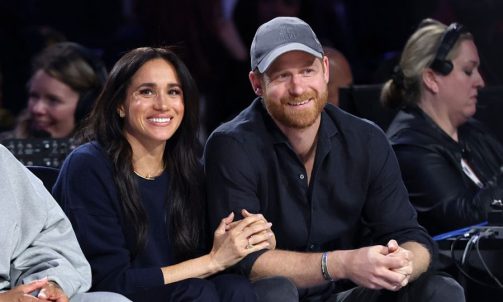
He has requested armed, taxpayer-funded police protection to set foot safely in his country of birth. Reports imply that he believes the United Kingdom is too dangerous for his wife and children without it.
He took the government to court over the decision to downgrade his security when he stepped back from royal duties in 2020, lost in 2024, lost the appeal in 2025, and has continued to debate the point through headlines instead.
This month it surfaced again: his planned July visit with Meghan and the children is reportedly in doubt because British authorities have once more declined to provide the police detail he wants. His spokesman says the Duke is exploring every possible option to allow the visit to go ahead safely.
The Duke continues to explore every available option to enable the visit to proceed safely and to give his children the opportunity to enjoy the UK. – spokesperson for the Duke.
And then Catherine sat down on Court One.
Here is a woman whose face is among the most recognisable on Earth, whose profile, by any reasonable threat assessment, sits several tiers above that of a non-working royal living in Montecito. If anyone in that family could credibly claim the country is too dangerous for open-air appearances, it is her.
Instead, she spent the day doing what working royals do. She chatted with fans in the public queue and handed out tickets. She passed up the most protected seats in the grounds for the public stands.
Weeks earlier she was at Royal Ascot, riding in an open carriage and presenting trophies before large crowds. This is what genuine royal duty looks like: showing up among the people, accepting that visibility carries risk, and doing the job anyway.
In my view, the contrast harms Harry’s case more than any King’s Counsel managed in two court hearings. Ravec, the committee that decides these matters, has always assessed protection case by case, on threat and on role. The courts upheld that approach twice. But court judgments are dry things, and the public argument had continued regardless, fuelled by sympathetic interviews and the suggestion that Britain was somehow uniquely perilous for one particular family of four.
Meanwhile, the heir’s wife sits in the open at the biggest sporting event in Britain. Her brother-in-law, who no longer performs royal duties, insists he needs a police convoy to visit his father.
One of these positions survives contact with that picture. The other does not.
None of this is to suggest Harry faces no risk. He served two tours in Afghanistan and has been the subject of genuine threats; nobody serious disputes that he deserves protection of some kind. But he has it. He is a wealthy man with private security, and the Sussexes have reportedly accepted an offer to stay on a royal estate during the visit, where police protection already applies.
It is my view that what he wants is something else: the restoration of a state-funded detail that comes with a public role he chose to give up. The deal was always clear. The protection went with the duties. His own family keeps showing, week after week, what those duties involve and how much personal exposure they demand of the people who still perform them.
There is also the small matter of audacity. The security Harry demands is provided by the same British taxpayer he has spent five years criticising from a Californian garden. The family he says he wants his children to know includes a sister-in-law who spent the past two years fighting cancer. The quiet dignity of her return to public life has been widely admired precisely because it asked for nothing: no special arrangements, no exemptions, no drama. It is hard to imagine a worse week for the Duke’s lawyers and publicists to argue that royal life in Britain should come with a phalanx of armed officers.
If the July visit collapses, the Sussex camp might say Britain made it impossible. The pictures will suggest otherwise. They will show the Princess of Wales in an open seat on Court One while the Duke of Sussex explained from 5,000 miles away why the same country was too dangerous for him and his.