None of them get it – not journalists, academics, big business, policymakers, or the major parties. One Nation supporters are Australia’s underdogs. They’re not Menzies’ forgotten people or Howard’s battlers. They’re not bound by ideology or class. Their BS meter has simply blown a fuse, and they’ve had enough.
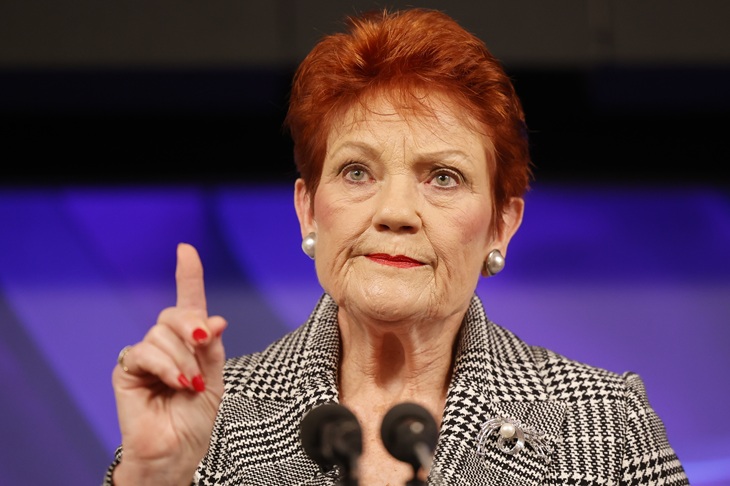
The term ‘Populism’ is often used to describe the likes of Trump, Farage, and Hanson. In some of my academic work, I adopted the definition of Populism as a set of policies driven by a charismatic leader who claims to speak in the interests of ‘the people’ and against an ‘established elite’.
Alexandra Marshall wrote recently that, ‘Populism is notoriously difficult to define, except that it provides the counterargument to Woke.’ I thoroughly agree.
But as a ‘slur’ to be hurled by the left, Alexandra argues that the term ‘Populist’ is used to mean ‘bigot’, ‘racist’, or ‘cooker’. We can see how academics in particular set up a term that can at once target politicians seen to be ‘Populist’, but also to denigrate those voters who might succumb to ‘Populism’.
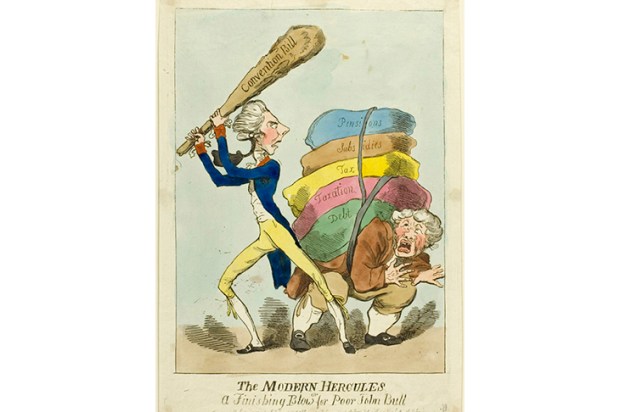
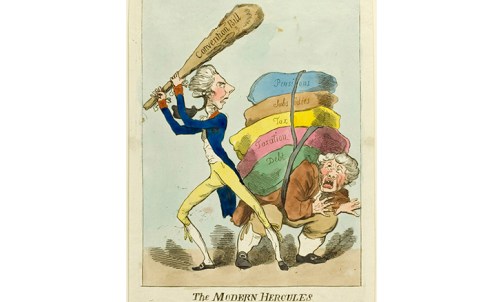
What we are seeing throughout the West is a remaking of liberal democracy. In its infancy, even John Stuart Mill was worried about what would happen if the principle of ‘one vote, one value’ was applied with universal suffrage. Imagine a dumb arse navvy getting the same vote as an educated property owner? This is the classic problem of the tyranny of the majority.
Instead of advocating plural voting, where those better-educated individuals had more votes than less-educated workers, academics have invented a shame culture that effectively does the same thing. Politicians of the major parties have given in to this shame culture by doing their utmost to avoid being labelled ‘Populist’.
For years, the left have used subtle yet effective ways of blocking dissent and any form of challenge to their policies relating to energy, identity politics, and welfare.
In May 2022, just before the Albanese government was elected, I wrote an article challenging the renewables orthodoxy and arguing for nuclear. As we did at the time, I sent my article off to be tweeted by my school at the university. Here’s the response I received from my boss when I asked the school to tweet the piece:
I’ve read the article and have reservations about claiming the government is making policy by crystal ball (they won’t like that). Energy is politics. Our government is not ideologically opposed to nuclear, but nuclear technology is prohibitively expensive and to my understanding, the main reason Australia has not adopted it so far (we’re a small country). If the cost of storing renewable energy is stressed but the cost of nuclear isn’t I see a risk of the school copping some backlash for promoting unbalanced or partisan views.
I would only be comfortable tweeting with a standard caveat that the views presented in the article are the author’s own and do not necessarily represent those of the school.
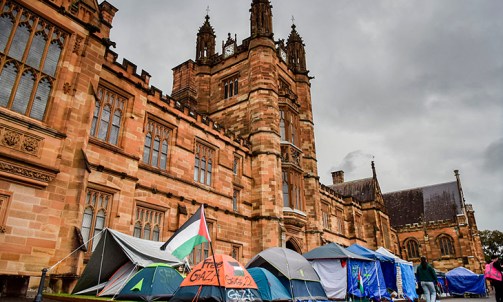
At the time, I was walking around seeing students wearing t-shirts that read ‘Aukus will F*kus’, waving Palestinian flags on stage at their graduation, and writing about the terrible ‘far right’ and how to stop it. Nobody else needed to provide caveats for their work.
A few months later, I began writing for The Spectator Australia.
Three decisions in particular have left perverse legacies: the Howard government’s decision to legislate a prohibition on new nuclear facilities in 1998, Julia Gillard’s 2013 expansion of the Sex Discrimination Act to include gender identity provisions, and Scott Morrison’s $20-million(ish) purchase of the Aboriginal flag copyright. Each opened the door for the left to advance renewables orthodoxy, gender ideology, and divisive identity politics.
One other aspect of the academic definition of Populism is that Populists stand against things. They do not stand ‘for’ anything. This makes it reasonable to refer to Populists and a protest vote in the same breath, especially when the negative framing sticks.
So, Nigel Farage was against Brexit, Trump 1.0 was against the Deep State, and Pauline Hanson was accused of being against Asians, Muslims, and so on. Their political opponents seized on the negativity of policies that could just as easily have been about a sovereign Britain, a United States controlled by the people rather than the bureaucrat-industrial complex, or an Australia that didn’t use immigration as a form of creative accounting to make the books look better than the lived reality.
I think what we are seeing now is what was being discussed in the mid-19th Century. Can you trust voters to get it right?
While Farage, Trump, and Hanson may have been elevated by the protest vote, the very things they were protesting have come home to roost. In my opinion, the UK looks like a third-world country, and the US (before Trump) was in a state of accelerating decay. Similarly, Australia is a rich country where its wealth has been hijacked by Labor, propped up by mass migration and votes wooed with costly promises.
What we are seeing now is that Farage and Trump are ‘for’ something. For a cohesive United Kingdom, and a powerful United States. Meanwhile, the polls indicate that voters are flocking to One Nation for Australia to be the best version of itself, celebrating our rich culture, strong national identity, ‘golden soil’ (before it is covered with solar panels), and ‘wealth for toil’. One Nation is promising a renewal of all that is good about Old Girty.
That desire for renewal is exactly what I’ve been hearing from ordinary people while working a few casual jobs to stay active and learn new skills – including bus driving, truck driving, and most recently as a barista in my local café.
I have never met so many people who are fed up with the way our country is being run, how the cost of living is destroying their livelihoods, and how our culture is being white-anted by the major parties.
Even some of my journalist colleagues speak privately about how they hate pronouns, Welcome to Country ceremonies, and all the other Woke rot we’ve had shovelled down our throats for years.
People no longer care about being ‘shamed’ by progressive ideas about morality. People are changing jobs. People are homeschooling their kids. People are moving to the regions. And people are seeing One Nation as a real alternative to the major parties.
The thing the major parties don’t get is that their shame tactics are no longer working. The reality of economics and national identity are front and centre and no amount of name-calling is going to keep it out of policy debates.
Nobody cares about ‘Populism’ or being called a ‘Populist’. They just know that the world is not right and they want their world to be right again.
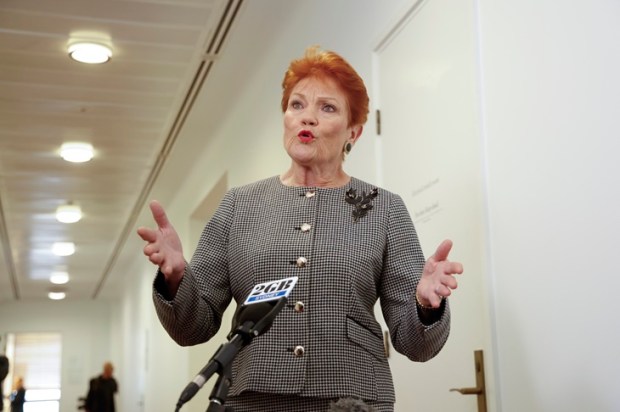
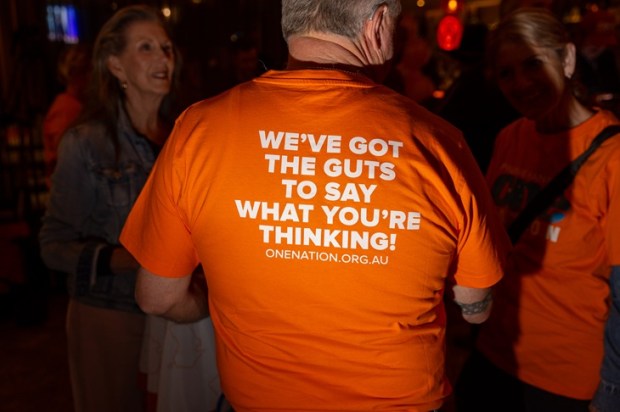
One Nation is popular because they represent the underdogs. The underdogs are those who are fed up with holding their tongues. And they’ve had enough of the ABC.
We are at a tipping point. And One Nation might just bring us into the next evolution of liberal democracy where we not only have one vote, one value, but we get to have the opinions of the underdogs reflected in public policy.
Universal suffrage didn’t lead to the end of the world. Neither will a government of the underdogs.
Dr Michael de Percy @FlaneurPolitiq is the Spectator Australia’s Canberra Press Gallery Correspondent. If you would like to support his writing, or read more of Michael, please visit his website.