The BBC’s coverage of the Jason Arday scandal is something of a scandal itself. The corporation spent years uncritically promoting the myth of Arday. Prior to July 2026, the broadcaster produced at least 11 radio programmes (totalling nearly six hours of Arday content), four news articles, and two TV interviews championing the academic and repeating his false claims.
When the initial story broke about his plagiarism and lies, the BBC doubled down on its defence of the academic. The first article which I would say features real criticism of the former professor was published on 6 August, a day after he resigned, more than two weeks after the original Arday exposé was published on Substack, and six years after the BBC’s first hagiographic piece about the late academic.
This was nothing short of a six-year propaganda campaign by the BBC on Jason Arday’s behalf
In that time journalists across the world published revelations detailing Arday’s long history of lies and exaggerations, from publications as diverse as the Telegraph and the Daily Mail to the Guardian and the New York Times. For weeks, the BBC ignored them all.
Following Arday’s death, the corporation has returned to its less-than-impartial reporting of the matter. Throughout the saga, the BBC has spent more resources smearing Arday’s exposer, the former Cambridge academic Nathan Cofnas, and participated in a genuine witch hunt against him. Even in articles detailing accusations of plagiarism against Arday, it is clear that the real enemy of the story was the infamous ‘race realist’ Cofnas.
The BBC’s first use of Arday that I can find was from 20 June 2020, when he joined The Moral Maze to discuss racial justice (what else?). Introduced as the Assistant Professor of Sociology at Durham University, Arday argued that teaching children Shakespeare is as important as teaching them about black suffragettes and indigenous figures, and told white people they must acknowledge their privilege.
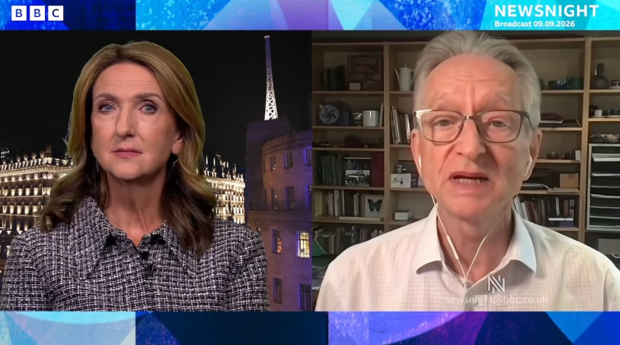
In November 2020 he was interviewed by Newsnight about racism in academia (you will see a pattern emerge here), and four months later he featured on Radio 4 to discuss ‘health and social barriers he has faced and overcome throughout his life’.
BBC News interviewed Arday in November 2021, again about racism in academia. He claimed: ‘If someone asked me what the blueprint is to become an academic, I’d have to say that if you are black or Asian it is “how much can you suffer?” whereas if you are white there is actually a blueprint about getting into academia.’
In February 2023, when Arday was promoted from Durham to become Cambridge’s youngest black professor, the BBC had its first opportunity to fact-check the new professor’s claims about his life story. However, the corporation had found a new star. He ticked all of the BBC’s favourite boxes – diverse, disabled, and a vocal ‘anti-racist’. Its interview uncritically repeated Arday’s claims that he was nonverbal until age 11, and couldn’t read or write until 18. It featured the near-comically unbelievable line: ‘Although he could not speak, the young Jason fervently questioned the world around him. “Why are some people homeless?” he remembers wondering. “Why is there war?”’.
We now have evidence that Arday could speak as a young boy. Two former classmates told the Guardian that they remembered him speaking, joking and singing at primary school. As for his claim that he could not read or write before 18, Arday left secondary school aged 16 with two GCSEs, qualifications that necessarily involve reading and writing.
In his glowing interview, the new professor admitted that in his attempts to become an academic, ‘Everything I submitted got violently rejected’. He continued: ‘The peer review process was so cruel, it was almost funny.’
Arday’s appointment led to a flood of BBC interviews across its radio, TV and online news arms. Within a six-week period, the corporation interviewed him five times.
The BBC’s next puff piece was a TV interview which repeated Arday’s lies about his youth and featured the now-infamous clip of his boss at Cambridge, Professor Hilary Cremin, holding his hands lovingly. The same claims were repeated in a BBC World Service interview, and on Radio 1Xtra’s If You Don’t Know podcast.
In the latter interview, Arday claimed his mum used music to elicit speech out of him. She apparently played the young boy Enya, and used Gaelic, Greek and Roman mythology to teach him language. A more honest moment came in the interview when the presenter said ‘I don’t know a lot about sociology,’ and Arday replied: ‘Neither do I.’
Days later the corporation interviewed him again, this time for 44 minutes on the World Service’s Outlook programme. Here, Arday recounted another anecdote from his mother. He said that when he was nine (and still nonverbal) she explained the concept of war to him, including ‘why war happened’. She could see the distress on his face as he tried to comprehend the suffering caused by war. His mother then played him Jimi Hendrix’s ‘Machine Gun’, which, he said, gave him a ‘sense of a feeling that people may have felt experiencing war’. He claimed the experience helped him later learn to speak.
Arday told the BBC’s Mobeen Azhar that during his childhood he practised snooker ‘seven hours a day for eight years’. Azhar accepted the claim without challenge.
Arday said when he was 18 he set himself a target of raising a million pounds for charity by the time he was 40. ‘I got to 30, I reached that target through doing a series of crazy marathons, and fundraising events. Subsequently I set up soup kitchens around London, and as we stand I’ve raised just under five million pounds for charity,’ Arday said.
There is no evidence for any of this. In 2010, a 24-year-old Arday raised just over £6,000 on Justgiving, and wrote that he aimed to raise ‘£250,000 before the age of 50’. The Telegraph investigated Arday’s claims about his fundraising, and found no evidence for his grandiose claims.
In September 2023, BBC News ran a piece which should be described more as PR than journalism, describing Arday’s donation of a book advance to neurodivergent charities. Two months later BBC Radio 4 ran yet another piece featuring Arday talking about race.
The BBC’s next programmes with Arday were presented by the academic himself. First, he edited the Today programme, following in the footsteps of figures including Stephen Hawking, Sir Tim Berners-Lee, Theresa May and Richard Branson. In 2025, he produced four 14-minute segments about loneliness for Radio 4.
This was nothing short of a six-year propaganda campaign by the BBC on Jason Arday’s behalf. Not one critical question was asked by a BBC presenter (the only challenge I heard from anyone was in his very first appearance on the BBC in The Moral Maze, when Melanie Phillips argued with him about BLM), and many of his false claims were repeated as gospel.
The corporation was by no means the only organisation to create the Arday legend, but it certainly contributed. The BBC is not a niche outlet: its journalism reaches millions of people in Britain and around the world, with the World Service giving its coverage a truly global audience. One BBC video alone promoting Arday attracted nearly half a million views online. Across the roughly 15 pieces the corporation produced featuring Arday, the cumulative reach will have been substantial, helping to turn an obscure academic into a near-household name.
During my years working for mainstream conservative media outlets, including the Telegraph, the Sun and GB News, nearly all of my work went through an editor or editors, and a lawyer. We would fact-check claims endlessly. The BBC failed to do so.
Meanwhile, in May 2023 emeritus professor at Plymouth Marjon University, David Harris, emailed Arday raising concerns about plagiarism in one of his articles. Cambridge’s youngest black professor responded by accusing Harris of racism and bullying. When Harris raised the issue with another academic, who in turn informed Arday’s boss, Hilary Cremin (of BBC fame), Arday’s article was withdrawn but Cremin said he had the department’s ‘full support’.
The BBC has neither apologised for its role in promoting the Arday myth nor acknowledged its failure to scrutinise his claims more closely
Two years later, in September 2025, Times Higher Education approached Arday about allegations of plagiarism in much of Arday’s academic work, including his PhD thesis. This time the notorious defamation law firm Carter Ruck sent an ominous legal letter to THE, who subsequently spiked the story. The THE journalist was also reported to the police, who opened a four-month, and ultimately fruitless, investigation into alleged harassment.
It took philosopher of biology and American academic Nathan Cofnas to bring the allegations into the public domain. On 21 July 2026, he published a post on his Substack outlining a series of examples of alleged plagiarism in Arday’s academic work and raising questions about claims he had made about his life and career. It is worth noting that it was an academic, rather than a journalist, who was brave enough to tell the Emperor he had no clothes.
Cofnas is no stranger to controversy himself. He has explored questions surrounding race, genetics, IQ and human nature. In 2024, Cambridge’s Emmanuel College terminated its association with Cofnas following a controversy over his views on race, sparking a major row over academic freedom. His most provocative comment, that ‘in a meritocracy… blacks would disappear from almost all high-profile positions outside of sports and entertainment’, prompted 58 formal complaints from students at Cambridge. But in a subsequent investigation, the university dismissed all 58 complaints, concluding that his views did not breach its regulations or the law.
The BBC responded to Cofnas’s explosive blog about Arday with silence for 11 days. Finally, on 1 August, a headline appeared on BBC News’s website reading: ‘Cambridge professor at centre of plagiarism row defends his work.’
In those 11 days, journalists at national newspapers debunked or seriously challenged a series of claims by Arday, including around his fundraising activities, and that he had run 30 marathons in 35 days, partly with a broken leg. They also raised questions over his account of running 600 miles in six days, which he later revised to 12 days, while WaterAid disputed his claim of carrying out humanitarian work for the charity in South America.
The second paragraph of the BBC’s article was not about Arday, but instead focused on Cofnas’s views on race and the fact he was ‘sacked from his Cambridge role in 2024’, as if that fact held any relevance. The third paragraph suggested critics of Arday could have ‘been motivated by racism’. Incredibly, the BBC then repeated Arday’s claims about his childhood yet again without reservation.
The next article was published on 5 August, with its headline: ‘University of Cambridge professor at centre of plagiarism row resigns’. The original version of the article was 600 words long, with 30 per cent of it consisting of direct quotes from Arday defending himself. The BBC repeated its attacks on Cofnas in two paragraphs. There was no description of the lies Arday had told about his background.
A day later the BBC updated the piece to feature more quotes and information, including the fact the Met police had investigated a THE journalist ‘over an allegation of harassment after he emailed questions to Arday’.
In the following week, the BBC published several critical pieces on the now-former professor. Even the Guardian, which is presumably read by many BBC journalists, had published a lengthy investigation into Arday on 1 August, casting serious doubt on a number of claims about his career and biography. One BBC piece stated that ‘Jason Arday’s appointment in 2023 was hailed at the time as a progressive moment,’ though it ignored the fact that the Corporation itself had done the hailing.
BBC Verify, a unit dedicated to debunking disinformation, employs around 60 journalists and has an annual budget of more than £3 million. Since Nathan Cofnas’s original Substack post, BBC Verify has published investigations into whether Google’s new AI tool could generate misinformation, how heatwaves have altered Britain’s landscape, and false claims that sunscreen causes cancer; they failed to investigate Arday.
On 14 August the Metropolitan police announced Jason Arday’s death. We have since seen BBC articles with headlines including: ‘Calls for public inquiry into Jason Arday “witch hunt”’, ‘Cambridge chancellor criticises “racist feeding frenzy” around Jason Arday’ and ‘Cambridge vice-chancellor heckled at Arday vigil.’
The first of these articles reverted to the BBC’s pre-6 August reporting, largely ignoring the mounting evidence that Arday had made false claims about his career and biography, while repeating its attacks on Cofnas. Rather than examining the substance of the claims that had led to Arday’s resignation, the BBC gave prominent space to those accusing the media of having subjected him to a ‘witch hunt’.
It is ironic that the BBC is now giving so much airtime to those criticising the media for scrutinising an academic, when the Corporation itself did so much to put him in the spotlight. The BBC has neither apologised for its role in promoting the Arday myth nor acknowledged its failure to scrutinise his claims more closely. Instead, it has given a platform to attacks on mainstream media outlets that were simply doing their job as journalists.
Jason Arday’s death is a tragedy. As many have pointed out, he was let down by institutions that should never have thrust him into such prominence without properly scrutinising his claims. The BBC must now confront its own role in that failure.