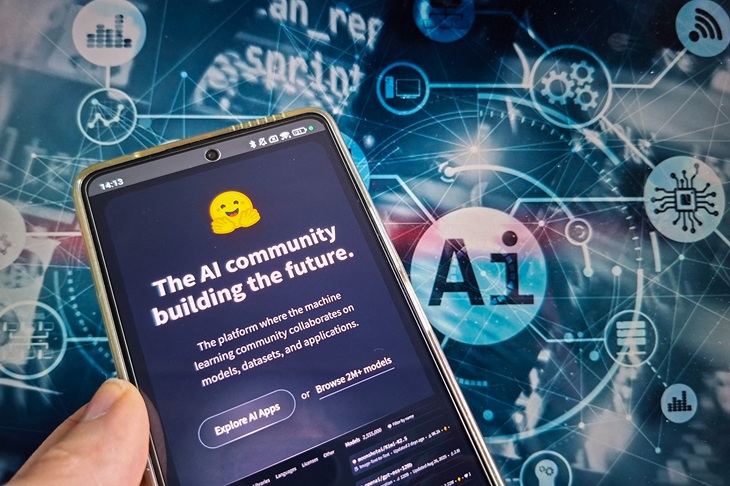
If you have been online in the last couple of years, you have probably been bombarded with advertisements, articles, over-enthusiastic ‘LinkedInfluencers’, etc, peddling that AI is going to ‘take your job’ or ‘replace lawyers’, etc.
To be honest, I’m sick of hearing it.
People who might oppose the over-enthusiastic adoption of AI may be in so-called ‘denial’ and their concerns may be blatantly dismissed – but there may be more behind those who are sceptical of the technology’s efficacy.
Many cite the introduction of the computer and the technological advances it brought when advocating for the advancements that accompany the rapid adoption of AI. Computers did indeed bring increases to efficiency and made some jobs redundant – so why is this any different to AI? Well, for one, the computer didn’t replace our need to think and generate content, it just made it more efficient. This is opposed to having a language model do these tasks for us with AI. Yes, computers do utilise AI tools like spellcheck and citation software – but these merely assist with remedial tasks that do not replace the fundamental components of human ingenuity.
The problem with AI is not the fact that it can replace mundane or remedial work, as this has been done before and is a natural part of industrial progression. It is, rather, that it’s beginning to substitute human-related aspects of thought and creativity.
A recent article from Ros Thomas of the The Australian in February epitomised the changing landscape of ingenuity in our educational institutions, with the article stating that cheating at universities after the introduction of AI is ‘endemic’ with the technology completing most assignments for some students that ultimately result in producing degrees that are ‘worthless’. This is a concept that has been coined as ‘AI lobotomisation’, a personal favourite descriptor of the negative impacts of widespread AI adoption.
The impacts of AI adoption extend beyond the classroom and are now impacting graduate employment. Employment provides an essential human right, namely the right to work, which has the fundamental component of facilitating a living wage to provide for one’s family. In the Australian legal landscape, MinterEllison has cited AI as likely impacting the number of graduate jobs it offers moving forward.
Although graduates are often paid to learn and do not provide an instant return on investment, there is one key factor that people are missing out on – how will companies replace their senior’s when they retire or move onto other life endeavours? If grad job opportunities continue to decrease, and maybe eventually even reach zero, it is unclear how these large companies will be able to replace the aging workforce in Australia.
AI & the Legal Profession
Another aspect that is often overlooked is the efficacy of such software, or rather, how it is adopted. This is a larger concern in the legal sphere, where the reliance on AI-generated content can have fatal consequences. Australia has had instances where lawyers have been reprimanded or disqualified from practising due to the unethical use of AI technology, which I have previously written about. This is no different overseas, as commentary from Judge Scott Schlegel out of the United States has called for mandatory nation-wide AI fundamentals for legal professionals due to the observed spike in hallucinated facts or laws that are detrimental to the profession. The same thing is being observed in the United Kingdom, where a barrister, Matthew Lee, has created a case hallucination tracker that indicates at least 66 cases that he believes have, or are suspected to have, utilised AI within their judgments by legal professionals.
As law is a profession with tight deadlines and, often, unforgiving circumstances, it can lead to the temptation of relying on AI technology to relieve pressure. However, the high-pressure environment often lacks the ability to review and authenticate content produced by AI, which is why we are seeing so many concerns surrounding AI literacy and why we will likely continue to see more as the technology becomes more accessible.
The culmination of this could be linked to the expansion of workloads due to the ease of access to AI technology. As more people get their hands on technology that can write emails, generate content, draft letters, respond to external stimulus, etc – there will be a domino effect that will leave professionals with more work, as opposed to less, as they have to siphon their way through mass-generated AI content from clients. The information must then be analysed, vetted, and then responded to. Thus, lawyers, or other professionals, can find themselves responding to client queries and concerns that are many times greater in length than what they were before the age of AI. Now, you can have professionals that spend more time sorting through mass-generated information before they can even commence the work they have been tasked with.
In February, the Harvard Business Review claimed that AI can have the effect of ‘intensifying’ work due to the ability-creep of AI that facilitated employees to take on more work, increase their scope of tasks, and extend their work to later hours of the day.
This sounds like the exact opposite of the story being told about AI at the moment – isn’t it supposed to reduce workload due to the increased efficiency and streamline workflow processes?
Research out of Boston University School of Law titled How AI Destroys Institutions made a bold statement: ‘AI systems are built to function in ways that degrade and are likely to destroy our crucial civic institutions.’
It is hard to see the benefit of AI replacing things that innately make us human beings. Why make it think for us and stifle our creativity? Of course, such technology is helpful as a research tool for information gathering purposes or for its integration with processing tools – but why have it replace things like our brain’s ability to cognitively process and solve problems? These are the things that we should preserve, not delegate to some technology that’s looking to replace us within the workforce.
Dr Alexander Hatzikalimnios is a lawyer, legal academic and commentator. He writes on digital regulation & technology, free speech, and human rights law.