The vibes around artificial intelligence in the workforce are becoming increasingly dystopian.
As governments around the world race to ‘win’ the AI boom, public anxiety is increasingly turning to who will share in the spoils.
Recent surveys show Australia ranks among the most pessimistic countries in the world on AI, while in the United States, seven in ten believe the technology will make finding work harder.
It’s the same in Britain, where only a quarter of respondents view AI positively, and half believe its impact could be worse than a recession.
With some of the recent headlines, it is not hard to see why.
It has been rumoured that one large AI model was allegedly trained on employee activity before slashing thousands of jobs, while the CEO of Microsoft AI predicts most white-collar work could be automated within 18 months.
Viral footage of a warehouse robot named Gary sorting packages for 200 hours straight lands differently when Silicon Valley executives simultaneously refer to workers as ‘low value human capital’.
Recent research by Goldman Sachs says that AI could even exacerbate inflation.
The anxiety is particularly acute among young people, with youth unemployment recently climbing to its highest level in years.
Where once tech leaders were celebrated at graduation ceremonies, students now boo any mention of AI.
The imminent IPOs of OpenAI and Anthropic are set to create a new generation of ultra-rich tech-bro oligarchs. But as money rains down on Silicon Valley, more people feel locked out of the gains of the AI boom.
Data centres are increasingly eating our economies, without them our GDP would be negative.
But once the buildout is finished, what next? Workers are being asked to trust that benefits will ‘trickle down’ through cheaper goods or jobs that do not yet exist.
Across the OECD, income taxes account for roughly one quarter of all tax take. But in a future where labour is increasingly automated, a system heavily reliant on income and payroll taxes from workers becomes unsustainable.
Anthropic CEO Dario Amodei has warned that AI may require progressive taxation if wealth becomes too concentrated, while Elon Musk has floated versions of universal basic income, or what he calls ‘universal high income’, in anticipation of widespread AI-driven unemployment.
What few people are willing to say out loud is that AI-led productivity growth involves eliminating jobs. That is the point. Doing more with fewer workers is the essence of productivity.
And if artificial intelligence increases productivity by replacing human labour, why should all the gains accrue solely to the C-suite?
Much of what makes these systems valuable was built on public infrastructure, publicly funded research, and vast quantities of human-created data and creativity.
All the leading AI firms are offshore companies with limited ties to Australia who pay minimal tax in Australia. Their success does not circulate back through our economy.
As a country, we’ve spent decades debating whether the profits from our natural resources have been fairly shared. We should think carefully before allowing the same thing to happen with AI.
In South Korea, where semiconductor stocks have driven markets to record highs, and the lucky employees of these companies have reportedly been panic-buying luxury sports cars, politicians are contending with similar questions.
Korean politician Kim Yong-beom recently proposed an AI ‘people’s dividend’ paid by the AI giants directly to citizens.
President Lee Jae Myung has also suggested a ‘robot tax’, like a payroll tax levied on robot workers who replace humans.
Additional proposals include super-profits taxes and targeted increases in corporate taxation for specific companies, to AI ‘token taxes’ and ‘compute taxes’ as a form of AI user charge.
How the gains could be distributed to the public are also up for debate.
One answer is a sovereign wealth fund, akin to Norway’s Oil Fund. Others have proposed direct equity ownership, giving citizens a personal stake in the companies reshaping the economy, much like ‘Trump accounts’.
The wealth fund model has particular appeal, and word on the street is that it enjoys support from some within the Liberal Party.
Rather than concentrating AI wealth in a few offshore balance sheets, such a fund could ensure ordinary Australians share directly in the productivity gains reshaping the economy.
It follows the same logic as the recent campaigns by independents and One Nation for gas export taxes, except this time what is being shipped offshore to Silicon Valley is our white-collar workforce and collective intellectual property.
Entire political movements emerged in response to ordinary people feeling excluded from the wealth they helped create.
History suggests technological revolutions do ultimately create prosperity, though not before decades of social unrest, labour conflict and political upheaval, as the Industrial Revolution demonstrated.
The AI issue is one of those rare political horseshoes, where politicians from both the left and right find common ground.
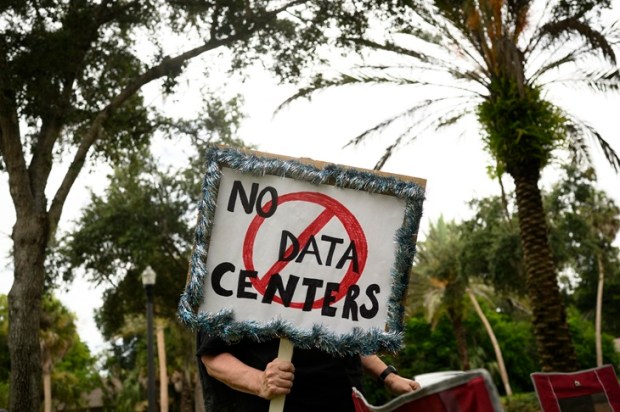
And as backlash from the public continues to grow, you can be sure the AI companies will come under increased scrutiny.
Because at the moment, it feels like the rising tide of AI wealth is lifting only the superyachts.