It sometimes seems that those people chosen to be subjects for biographies are drawn from a strictly limited cast. Every few years, another book about Tolstoy, Dickens or some other great literary figure comes along to make library shelves groan further. At a recent talk given for a new biography of George Orwell, I asked the author why he had felt a need to add to the pile, given the plethora of perfectly good existing ones. ‘Because OUP commissioned me,’ was the answer. I didn’t buy the book.
So how refreshing that Miranda Seymour should choose an absolute unknown to write about, whose life was genuinely interesting and surprising. Vera Gedroits was ‘a towering, sweet-faced, lesbian princess’ in Russia around the time of the revolution, who responded to the turbulence with considerable elán and bravery.
Inevitably, Vera fell foul of the Stalinist purges and she and her lover were seized at gunpoint at night
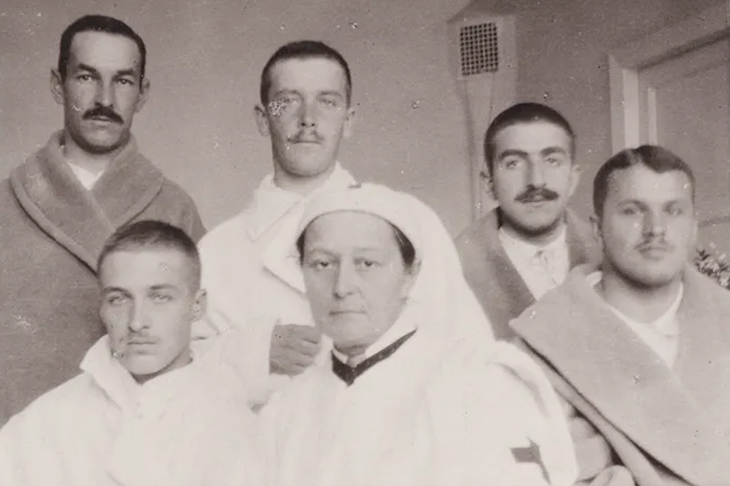
Born in 1870 and half Lithuanian, she spent a childhood entranced by stories of previous aristocratic Russian women who had cut their hair short, dressed as Cossacks and fought against Napoleon. After a marriage of convenience, aged 24, to a fellow radical, she studied surgery in Switzerland (while sleeping with her landlady’s daughter) and went to a military hospital in the Far East to help Russia in its war against Japan in 1905. Her subsequent fame brought her to the attention of the court and she was summoned to Tsarskoe Selo, where Tsarina Alexandra encouraged her to pass on her nursing skills to her daughters.
Vera kept company with the poets who had formed a literary group there, such as Anna Akhmatova and Osip Mandelstam, and who in a very recognisable way managed to mix anti-royalist sentiment with accepting government patronage. Her own poems were published in their anthologies, helped by the fact, as Seymour tartly notes, that she contributed financially to their publications.
She enjoyed hanging out in clubs such as the Stray Dog in St Petersburg, which sounds a lot of fun. Akhmatova described it as a place where ‘all of us are hookers and hustlers. We drink too much and we don’t care’ – which could be a bohemian’s charter for the ages. Vera must have been a striking presence on such occasions with her ‘great height’, man’s suits and passionate nature. At one point she tried to shoot herself on being rejected by a female lover, although with a surgeon’s precision she managed to miss.
Like many an aspiring poet, Vera was better in prose. The memoirs she left have been compared to Boris Pasternak, but they seem also to have been unreliable – she sometimes pretended to be ten years younger than she was, although she might not have been the first woman to have done so. She presents herself as an intrepid cross-dressing heroine who treated the political inconvenience of regime changes with aristocratic disdain, like a Russian version of Virginia Woolf’s Orlando. What a shame she didn’t make it to Britain. She would certainly have stirred up the Bloomsbury set.
Instead, she stayed in Russia throughout the revolution and in 1919 was sent to Kiev, where her hospital reforms, innovative work and academic papers crowned an extraordinary career. In 1929, she became the world’s first woman professor of surgery. Astonishingly, no other would be appointed for another 64 years until the UK’s Dame Avril Mansfield in 1993.
But, inevitably, such a freethinking radical fell foul of the Stalinist purges that followed. Vera and her lover, Countess Maria Nirod, were seized at gunpoint at night. When Vera was finally released, her pension was cancelled and her hospital was closed. Living in great poverty, she died two years later, in 1932, of uterine cancer, aged just 61. This is a retrieved life, since after her death the Soviets wiped her from the official records, despite her pre-revolutionary support for workers’ rights.
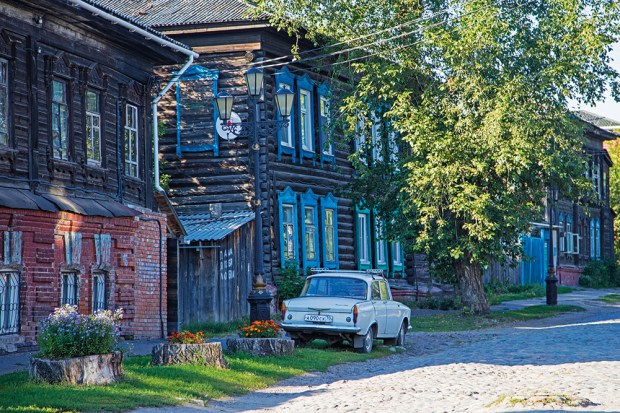
I remember driving for an entire day through silver birches in Karelia to the point where seeing the wood for the trees became impossible. Russia can seem monolithic and it is sometimes only by pursuing individual lives that one can find a way through its turbulent history. ‘Russia’s forests are vast and they are story-filled,’ as Seymour says, and she has uncovered a particularly entrancing story to beguile us with. Some of Vera’s relatives came to Britain and have flourished under the name of Giedroyc: the musical impresario Miko Giedroyc, the film director Coky Giedroyc and the comedian Mel Giedroyc, who one can only hope might end up playing her forebear in some theatrical version – perhaps needing to wear platforms to acquire the requisite height.
Got something to add? Join the discussion and comment below.
You might disagree with half of it, but you’ll enjoy reading all of it. Try your first month for free, then just $2 a week for the remainder of your first year.