Again and again, conservatives are caught off guard by another left-manufactured crisis, thinly disguised as a fight for social justice, and only later realise what has happened.
The latest example was Labor’s proposal to remove negative gearing, increase capital gains tax, and introduce a potential retrospective land tax.
Ostensibly, these measures were meant to reduce intergenerational inequality in property ownership. In reality, Labor appears to be raising taxes to mask economic mismanagement while encouraging resentment and conflict between generations.
If younger people are persuaded to see themselves as victims of their elders and turn to Labor for protection, so much the better – from Labor’s point of view.
Why Lenin Hated Social Democrats and Trade Unions
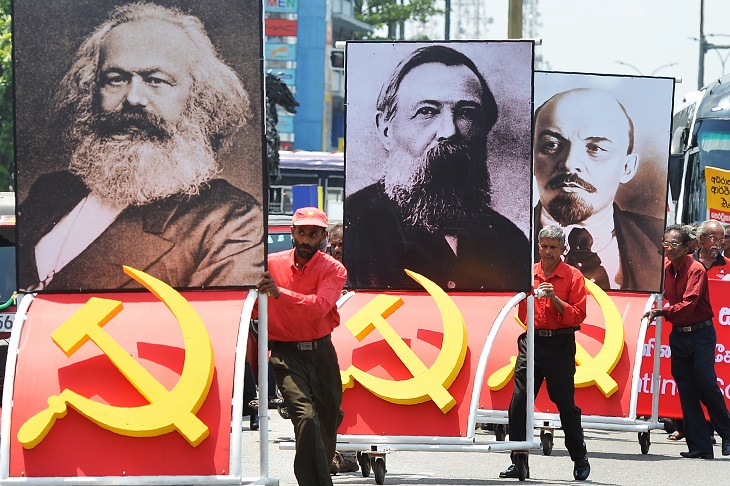
Vladimir Lenin, founder of the USSR, openly despised the Social Democrats and the trade unions. He dismissed them as ‘economists’ and accused them, in many of his writings, of distorting and diluting Marxism into reformism. Lenin understood that if social democracy and trade unionism succeeded in lifting the working class into prosperity, the revolutionary project would lose its central victim group. A prosperous working class is not eager to die on the barricades of class war.
For that reason, Bolshevik radicals sought to turn trade unions into instruments of violent political struggle. That is why Moscow maintained a training centre for radical trade union leaders from around the world. Some Australian trade union leaders were among those drawn into that orbit.
In a similar political mechanism, the old Australian Social Democrats were infiltrated by the radical Left to such an extent that the Australian Labor Party split into moderate and radical wings.
Capitalism’s success in producing working-class prosperity changed everything. The proletariat was no longer a mass of impoverished victims ready for revolution. It had become a prosperous middle class with no appetite for the barricades. It was politically useless. Other victims had to be found.
Coconuts and Watermelons
‘One of the consequences of such notions as “entitlements” is that people who have contributed nothing to society feel that society owes them something, apparently just for being nice enough to grace us with their presence.’
– Thomas Sowell
After Stalin’s death, and the exposure of the horrors of the Gulag together with the miserable failure of the socialist economy, the Left required a new story.
Nikita Khrushchev, no less bloodstained than the rest of the Soviet leadership, began this transformation out of the need to distance himself from Stalin’s crimes. Yet in doing so, he helped trigger a process that eventually discredited Marxist theory and practice in the eyes of the world.
After the initial confusion, the true believers devised a series of new schemes to whitewash Marxism and its economic failures while still claiming democratic, liberal, and freedom-loving credentials.
The aim remained unchanged: the destruction of capitalism.
These schemes took many forms – Euro-communism, the ‘long march through the institutions’, critical race theory, DEI, pro-Palestinian ‘resistance’, climate activism, radical feminism, the ‘no more oil’ movement, ‘occupy whatever you can’ protests, transgenderism, mass immigration from the third world, and others.
Each of these movements presents itself as morally urgent and claims a special right, entitlement even, to be loved and supported.
Hard-core communists changed colour and reinvented themselves as defenders of the environment, becoming enthusiastic advocates of ‘clean’ energy. They copied the tactics of the so-called ‘coconuts’ – dark-skinned politicians described by their own constituents as black on the outside and white on the inside. The communists became ‘watermelons’: green on the outside, red on the inside. But the search for new victims, and new ways to undermine capitalism, never ceased.
The Search for Relevance
The Left has always understood the political power of money in the politics of victimhood. Its search for new victims – and for new methods of attacking capitalism – changes form, but not purpose. The denigration of the family, gender conflict and transformation, social justice politics, mass immigration, gerrymandering, the abuse of social security, the indoctrination of school and university students, hostility toward Israel, antisemitism, pro-Palestinian activism, neglect of national security, cancel culture, postmodernism, and identity politics all belong to the same pattern. The list is far from complete.
Each strategy serves the same broad purpose: the erosion of liberal democracy. The most effective of all is the one that can eventually bankrupt the free world.
The Tytler Cycle
The ‘Voting Largesse’ theory is often linked to Alexander Fraser Tytler, though the quotation is frequently misattributed. Its best-known form claims that a democracy lasts only until voters discover they can vote themselves largesse from the public treasury.
The cycle is usually presented in eight stages:
- Bondage to spiritual faith
- Spiritual faith to great courage
- Courage to liberty
- Liberty to abundance
- Abundance to complacency
- Complacency to apathy
- Apathy to dependence
- Dependence back into bondage
However imperfect the quotation may be, the warning remains relevant. Democracies become vulnerable when citizens grow too comfortable with largesse from the public purse.
The Cloward-Piven Strategy
In this view, one of the most effective – and therefore most dangerous – strategies associated with the Left is the Cloward-Piven approach. It was developed by two Columbia University School of Social Work professors, Richard A. Cloward and Frances Fox Piven. Their argument was that the welfare system could be used to generate political pressure for a guaranteed annual income. However, this concept went beyond that.
They began from the gap between welfare eligibility and actual enrolment. By pushing mass enrolment and driving up claims, they proposed to overload the system, create a budgetary crisis, and force the government to replace ad hoc public assistance with a guaranteed income. In the United States, welfare caseloads did rise sharply between 1966 and 1970, AFDC rolls expanded as eligibility rules were loosened, and in New York one in seven residents came to rely on public assistance. New York City nearly went bankrupt in 1975. The result was a conservative backlash, including reduced eligibility, time limits, and stricter work requirements.
From the Left’s perspective, the strategy delivered several useful outcomes:
- Poverty became a political instrument.
- Greater dependence on public money translated into electoral advantage for those who controlled it.
- Mass migration from the third world increased dependence in some communities and therefore increased political leverage.
- Greater dependence on the public purse weakened democratic institutions, including through the financial strain it imposed.
- The manufactured crisis provided a ready justification for a radical expansion of government power.
In the Australian context, the public should watch carefully how the present government spends public money, and on whom.