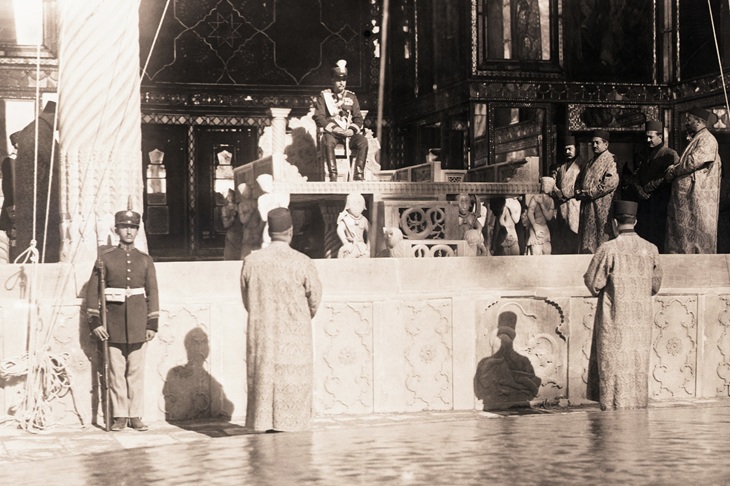
Reza Shah is considered one of the most influential figures in modern Iranian history.
In 1925, by establishing the Pahlavi dynasty, he laid the foundation for a new political structure in Iran and sought to create a centralised, modern, and independent country.
In the area of reforms, his actions were broad and multi-layered.
Establishing a modern army, centralising power within the state, developing the national railway, expanding the modern education system, and founding institutions such as the University of Tehran were part of his efforts to modernise the country.
Social reforms, including changes in the judicial system and limiting the traditional influence of certain institutions, also reflected his attempt to build a modern state structure.
However, this path was not without challenges.
Having a constitution meant taking power away from Shiite religious clerics, many of whom were also landowners. At the same time, Qajar descendants also sought to assert power and reclaim authority from both the state and the people. As a result, they extended a hand of cooperation to Russia and Britain and planned the partition of Iran, the same two countries that had occupied parts of Iranian territory.
In addition to these groups, external pressures, especially during the second world war, ultimately led to the voluntary abdication of Reza Shah in 1941.
Therefore, his legacy is a combination of rapid modernisation and political authoritarianism, which remains a subject of debate among historians, and a great source of pride for Iranians.
Prominent figures and intellectuals of the Iranian National Assembly, such as Mohammad Ali Foroughi, without delay declared Mohammad Reza Pahlavi as the Shah of Iran. After the forced abdication of Reza Shah, Aryamehr continued the path of modernisation, although the domestic and international conditions of this period were far more complex.
During the 1960s and 1970s, programs such as the White Revolution were implemented, which included land reform, expansion of education, increased rights for women, and industrial development. These measures led to significant economic growth and made Iran one of the fastest-growing economies in the region.
Urbanisation, rising literacy rates, and the emergence of a middle class were among the outcomes of this period. Art also flourished greatly during his time, and political parties and participation began to take shape. Gradually, however, traitorous statesmen, the Tudeh Party, and Islamic Marxism, along with remnants of the Qajar era, began creating insecurity within the country and the region.
At the international level, Iran became one of the key allies of the West, particularly the United States, and played an active role in regional dynamics. Ultimately, a combination of internal factors (the alliance of Islamic leftists with clerics and terrorist groups such as the MEK) and external factors, along with political crises and global developments, led to an internal uprising in 1979.
The Shah of Iran, in order to prevent the people from being killed by terrorists, declared that he did not want his crown to rest upon the blood of the nation, and in his interviews expressed his concerns for the Iranian people and the people of the Middle East.
Reza Pahlavi, as the son of Mohammad Reza Shah Pahlavi, is considered the legal king of the country because he has upheld his oath of monarchy.
In the years following the events of 1979, he has been active abroad in political and media spheres and, despite heavy censorship and numerous dangers, has not abandoned the struggle and has been a voice for the people of Iran.
Foreign politicians now present him as an advocate for a transition to a secular and democratic system in Iran. Although he is regarded as the legal king of Iran, he believes in democratic principles and introduces himself as a leader for the transitional period so that the Iranian people can freely vote and once again choose the form of their country.
He emphasises principles such as human rights, separation of religion from government, and holding a referendum to determine the future political system. He has repeatedly stressed the need for unity among different political and civil forces to achieve peaceful change.
In the cultural sphere, he has sought to highlight the importance of preserving Iran’s historical identity and connecting it to the future. Reza Shah II, through careful planning, has shown the world that with the support of the Iranian people, who have called his name empty-handed against the occupying Islamic Republic and with more than forty thousand killed, he can bring reconciliation and peace back to Iran and the Middle East.
He has called on all governments to join the allies of a free Iran, Israel, and the United States, and to take part in the prosperity of a free Iran.
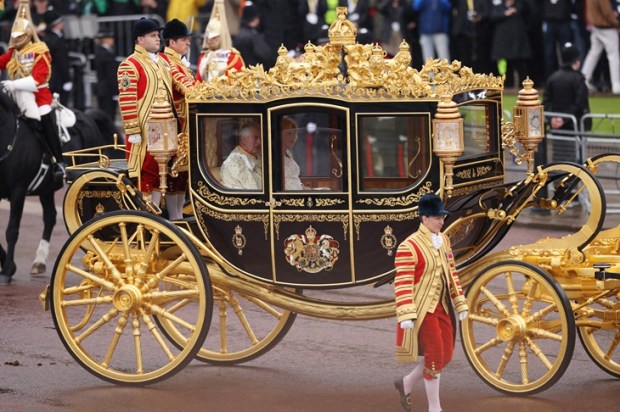
On Sunday, April 26, marches will be held around the world on the occasion of the centenary of Reza Shah the Great’s coronation.
On this day, Iranians across borders will be reminded of a period when Iran, the Middle East, and the world were in peace, and they seek to return to those conditions with the return of Reza Shah II
By Leila Naseri: Author | Composer | Social Cultural Activist