The 17.48 from Paddington does not, on first sight, seem exceptional. Over-hard seats, over-bright lights and a scrum at the ticket barriers: none of these is special. The modern Hitachi trains are solid but dull. Only Isambard Kingdom Brunel’s great arching iron roof adds splendour to the scene. But pause by coach L on the daily London to Carmarthen express and you might notice a small miracle.
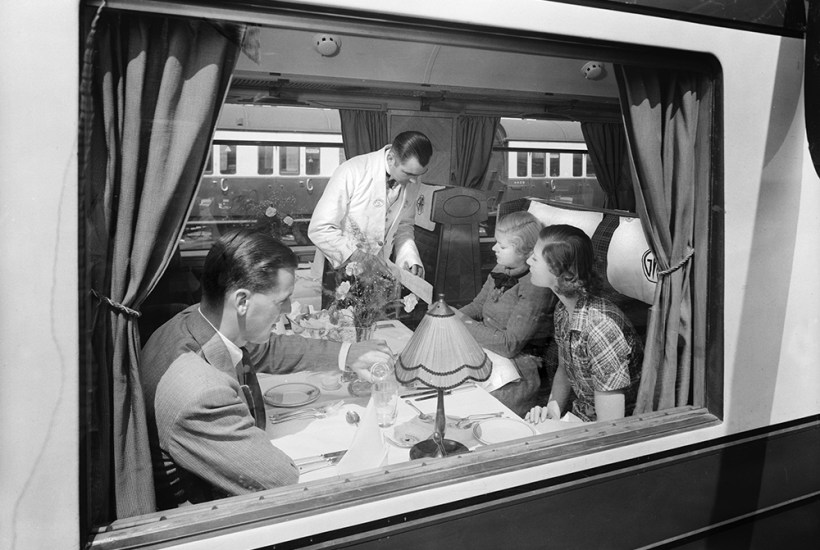
This train is one of the very last in Britain to carry a proper dining car. To its immense credit, GWR, the route’s operator, cooks and serves decent meals on six services a day: three at lunchtime and three in the evening, on its lines from London to Wales and the West Country. Tables are laid ready for three courses, glassware clinks, there’s a wine list, port with cheese, and a sense of shared adventure among those lucky and hungry enough to take part.
Anyone is welcome to join, even those with the humblest discount advance standard tickets, as long as there is space. First-class travellers can book their place in advance. Staff talk proudly of their ‘regulars’. I’m told there’s an elite WhatsApp group among Exmoor residents where you can work out who to dine with on the trip back to Tiverton Parkway from London.
Heading to Wales for work the other evening, I joined a small group of diners. Cheerful waiters with Welsh accents bustled about taking orders for wine even before we had left the platform. There’s no messing about on GWR: half-bottles are the smallest they do, though it’s thought polite to share on a table for four. The winter menu – £40 for two courses and £49 for three – offers soup, smoked salmon or chicken paté followed by Oxfordshire steak, seared hake, chicken or celeriac. It’s real cooking, not reheating.
By Reading I was on to my main course. We rattled through Swindon at speed, where, until 1895, every train had to stop for a few minutes while locomotives and passengers refuelled in an infamous scrum. Beer, mutton chops and cake were crammed down in three dining rooms, segregated by class of travel. Standards were not high. ‘I have long ceased to make complaints at Swindon. I avoid taking anything there if I can help it,’ Brunel wrote to the manager. ‘I was surprised you should buy such poor roasted corn. I did not believe you had such a thing as coffee in the place; I am certain I never tasted any.’
The Swindon stop gave way to grand GWR dining cars of which today’s Hitachi IEP units are the sole British heirs. Lunch and dinner have been served on the route for 130 years. Menus haven’t varied much. In 1926 there was fillet of sole, roast beef and apple tart. Today the chicken is ‘umami-glazed’ and the tart has given way to apple and pear crumble. The coffee has improved since Brunel’s complaint.
Even in the heyday of on-board restaurants, only the smarter expresses offered a full menu. The 4.50 from Paddington, which stars in one of Agatha Christie’s stories, ‘was not much patronised, the first-class clientele preferring either the faster morning express, or the 6.40 with dining car’. But as late as the 1980s, proper on-board meals were still common on British Rail. There were protests when kippers were removed from the breakfast menu. Privatisation brought a brief resurgence of glamour. On the east coast line from King’s Cross, one operator, GNER, offered a proper restaurant on almost every train. But cutbacks began in 2006 and by 2011 they were all gone, replaced by free food and drink in first class, served at your seat, sufficient but dull.
One by one the dining cars went, until GWR stood alone in England. The Welsh government, in a curious use of its devolved budget, continues to support restaurants on a handful of services from Cardiff to Holyhead and Manchester. Three courses with a full bottle of house wine cost only £42 which, given Pret will charge you at least £15 for a meatball hot wrap, a smoothie, a damp bit of carrot cake and a bag of crisps, is the ultimate on-board bargain.
Back on the tracks last week, my slightly late GWR express ran parallel to the Welsh service as we headed west from Newport, two dining cars side by side, a sight that’s rarer than a rhino with its horn intact. Is it one we will be able to spot for much longer? GWR backs its dining cars, but it won’t be long before the private operator has to hand over to nationalised Great British Rail.
The rumour on the platform is that Treasury bureaucrats do not look kindly on the cost of employing on-board chefs so a handful of passengers can eat properly while watching waves splash over the Dawlish sea wall. There’s talk that the last call for the dining car is about to be sounded for good. I hope it’s not true. We don’t need to make everything in our world mundane. My advice is hurry while you can to the magic of the GWR.
Got something to add? Join the discussion and comment below.
You might disagree with half of it, but you’ll enjoy reading all of it. Try your first month for free, then just $2 a week for the remainder of your first year.