I first set foot in Brunei in 2019. It was, and remains, a jewel of Southeast Asia. Verdant, orderly, and impossibly wealthy from its oil reserves. Walking along the beach during a Scorpio Moon while chatting incessantly with my girl Eliza, it remains a slice of heaven. I didn’t notice the sandflies until it was too late, but I saw the oil pumps on land and the gas fires above the oil rigs at sea. It was rather magical.
Yet daily life there carried quiet reminders of its character as a majority-Muslim sultanate. To buy bacon you drove around to the loading dock at the back of the supermarket, where it was slipped into a plain bag like contraband. A cold beer meant hiding a tinnie behind a newspaper at the bowling green, feeling for all the world like a guilty teenager. You had to travel to Malaysia to buy it.
The rules were clear, the culture unapologetic. Brunei did not pretend otherwise, and neither did its rulers. They were rich in oil and comfortable in their civilisation.
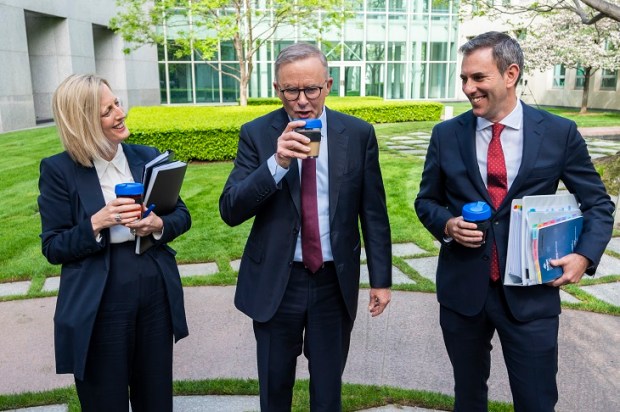
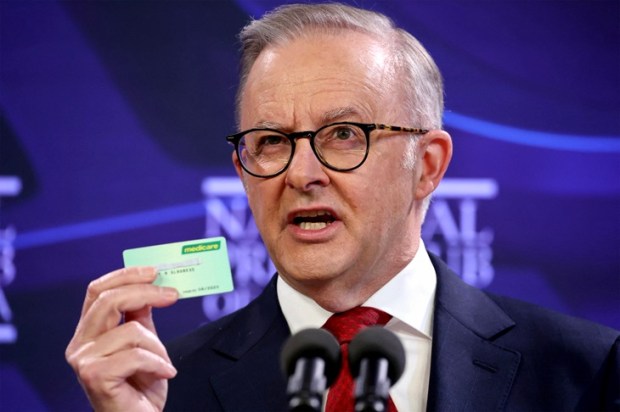
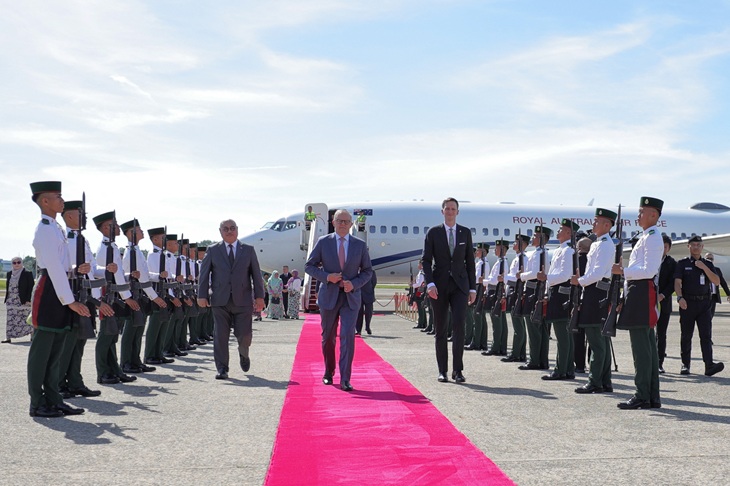
That memory returned to me this week as our Prime Minister jetted off to Bandar Seri Begawan to meet the good Sultan after Albo’s recent cap-in-hand visit to Singapore. The purpose? To beg for refined fuel Australia can no longer reliably source for itself.
Singapore’s refineries, we were politely told, can only process what they receive upstream. The message was courteous but unmistakable. You cannot refine oil you do not have.
Yet here we are, a resource-rich nation pleading with others while global supply chains buckle under the weight of conflict in the Middle East. The fuel crisis and the attendant energy price pain are not abstract. They are the lived experience of every Australian filling up at the bowser or watching power bills climb.
And they arrive as part of a perfect storm that reveals something deeper about the Albanese Labor government. A pattern of weakness that is now unmistakable.
Consider the converging crises. The fuel emergency is immediate and visceral, born of global events but exacerbated by years of domestic energy policy that left Australia exposed. The energy crisis has been simmering for longer. Policy choices that privileged ideology over baseload reliability, now colliding with external shock.
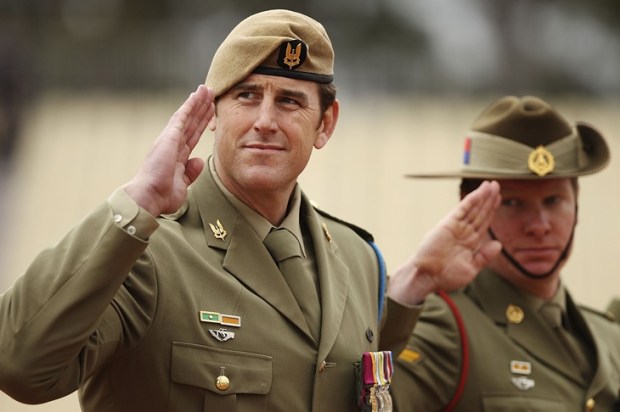
Then there is the Ben Roberts-Smith matter. Whatever one’s view of the allegations, the prosecution of Australia’s most decorated living soldier has become, in the eyes of many veterans and ordinary citizens, a proxy battle over the rule of law itself. Critics see not merely due process but a selective zeal that risks undermining the very culture that produced the courage being judged.
Many Australians perceive the government’s handling as emblematic of a deeper discomfort with the warrior ethos that once defined us.
Add to this the National Disability Insurance Scheme (NDIS), now routinely described, even by some within the policy community, as one of Australia’s largest public policy failures. Costs have exploded, rorting is rife, and sustainability is in doubt. What began as a compassionate reform has become a cautionary tale of unchecked expansion and poor stewardship.
These are not isolated failures. They form a pattern. And the pattern points to a government that, when confronted with hard choices, consistently chooses the path of least resistance.
Nowhere is this clearer than in matters of national security and leadership. This week the government announced Vice Admiral Mark Hammond as the next Chief of the Defence Force and Lieutenant General Susan Coyle as the first female Chief of Army.
I wish General Coyle well. I’m sure she will provide excellent leadership for a generational institution that is undeservedly facing immense strain. I served alongside many fine women in the ADF. Gender was never the test. Competence, character, and the ability to shoulder the burden were. I followed the best leader regardless of whether they were male or female. I had some great female leaders and some extraordinarily incompetent male leaders. I’m convinced it is about people, not their gender.
Yet under this government, symbolism often appears to take precedence over the cold calculus of merit. When appointments are framed first and foremost through the lens of identity, the public is entitled to ask, how can we be certain the right person has been chosen for the hardest job? The optics matter less than the outcome when Iranian drones or Chinese submarines are the adversary.
The same hesitation is evident in Australia’s posture toward the US. President Trump has moved decisively on the Strait of Hormuz, enforcing a blockade to protect global energy flows. Australia’s response? The Opposition is claiming that the Albanese government will not act. Meanwhile, the newly appointed senior defence leadership quietly confirms that our ships are ready and capable. I hope the good admiral will bring some long-overdue sense to Australian defence policy.
The contrast is telling. While our American ally acts to secure the sea lanes upon which our own fuel supplies depend, Canberra dithers. The message sent to allies and adversaries alike is one of reluctance rather than resolve. In the eyes of many Australians, this is not prudent diplomacy, it is the posturing of a government more comfortable surrendering Western Civilisation than projecting actual strength.
The Prime Minister’s recent travels only underscore my point.
Mr Albanese flies to Singapore, then Brunei and Malaysia, seeking guarantees for fuel and fertiliser in the same week ordinary Australians are being urged to ‘drive less’ via taxpayer-funded advertising campaigns. Indeed, 20 million dollars. We have so much capacity to produce the resources Albo is now prostituting us for it is unconscionable. Enough, already.
Brunei, the very sultanate whose cultural realities I experienced years ago, is now courted not as a fellow energy producer but as part of a broader diplomatic dance. One cannot help but notice the subtext. Labor’s long-standing emphasis on multiculturalism and outreach to Muslim communities is well known.
In Brunei, the Prime Minister will meet a sultan who rules an oil-rich but socially conservative realm. The visit is framed as pragmatic energy diplomacy. Yet it sits uneasily beside the government’s reluctance to stand unequivocally with the Western alliance that has historically guaranteed our security.
It is difficult to escape the impression that Mr Albanese is more at ease courting votes at home through symbolic gestures than he is siding unambiguously with the civilisation that produced the liberal democratic Australia he leads.
This is not mere policy misstep. It is ideological. Labor’s worldview prioritises symbolic equity, expansive welfare, and a reflexive discomfort with traditional power structures. In the meantime, it has produced a government that spares the rod at every turn.
The old proverb, stripped of any religious connotation and treated simply as ancient wisdom, holds. He who spares the rod hates his son.
A parent who withholds necessary discipline does not love the child but weakens them. It is not ‘gentle parenting’. It is irresponsible.
Applied to governance, a state that refuses to enforce self-discipline on budgets, borders, alliances, and the rule of law does not serve its citizens, it betrays them. The Albanese government’s instinct is always toward accommodation, never confrontation with hard realities. The result is weakness. Even cowardice.
One is reminded of the American Revolution and the collapse of the social contract. John Locke argued that legitimate government rests on the consent of the governed and exists to protect life, liberty, and property. When it fails, the people retain the right to resist.
It’s about the pursuit of happiness. Hands up who is happy right now?
Jean-Jacques Rousseau spoke of the general will and the danger of a sovereign that no longer reflects the true interests of the body politic. In 1776, the colonists looked at King George III, a monarch increasingly seen as remote, erratic, and out of touch with colonial realities, and concluded the contract was broken. They did not merely replace a king. They asserted a new covenant grounded in self-reliance and strength.
Australia today retains the monarchy, now embodied by King Charles III. Yet the parallel is uncomfortable. Our head of state, like George III in his time, presides over a realm where the real power lies with elected leaders who appear increasingly detached from the practical concerns of their people.
Fuel queues, the energy anxiety, the sense that veterans are being second-guessed while the welfare systems balloons. These are not abstract constitutional questions. They are tests of whether the social contract still holds.
When a government repeatedly chooses weakness over resolve, it invites the same question the American colonists asked. What is the point of consent if the sovereign will not look after its own people and hence defend the realm?
The Albanese government is not the first Australian government to face difficult times. But it may prove the most risk-averse in our history. Its response to every crisis, be it energy, rule of law, fiscal discipline, alliance commitments, has been to temporise, to symbolise, to manage decline rather than arrest it.
The ideology that drives the Labor government is not merely misguided. It is destructive.
Precisely because it flows from weakness. A strong leader disciplines the household of the nation. Our current leader prefers accommodation.
Australians deserve better. We are a resourceful, resilient people who built a prosperous democracy on a harsh continent. We do not need a government that hides the bacon at the back of the supermarket of policy.
We need a government prepared to say what the civilisation that produced us actually requires. Discipline, clarity, and the courage to choose strength over symbolism.
Until that changes, the perfect storm will continue. Not because the world is unkind, but because we have chosen leaders who lack the ticker to steer through it.
For a nation of sporting men and women, nothing could be more degrading than the circumstances the weakest government in our history has led us to.
If you don’t consider yourself a sporting man or woman, then I recommend as follows.
Dig deep within your soul until you find the Rock of Refuge. When you get there, realise it is an Australian rock. Then reflect on how you arrived at a point where you disappointed your ancestors. Now beg their forgiveness, and vow to never again hand out control over to the weakest link.
Dr Michael de Percy @FlaneurPolitiq is the Spectator Australia’s Canberra Press Gallery Correspondent. If you would like to support his writing, or read more of Michael, please visit his website.