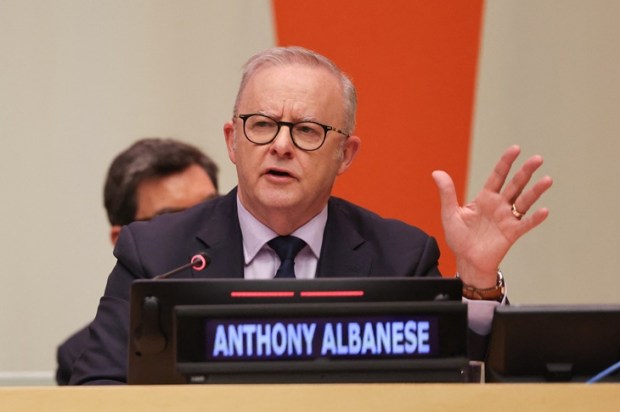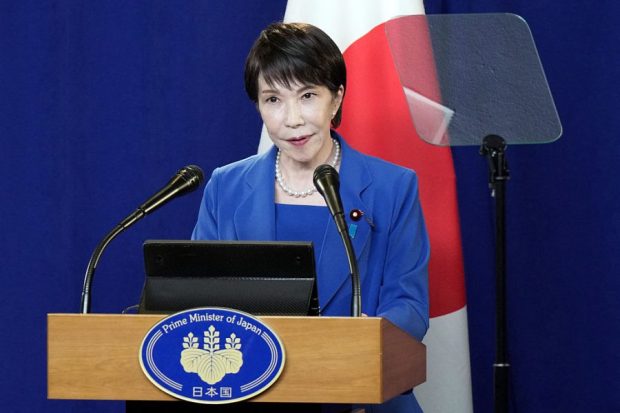
In a macabre parallel with the Easter celebration, the National Cabinet was resurrected this week, dragged back into life, ostensibly to deal with the ‘fuel crisis’ Australia is experiencing in the form of rising prices and shortages of fuel at the bowser.
First convened during the Covid era, the National Cabinet delivered some of the worst outcomes in living memory when it came to individual freedom and autonomy, all in the service of ‘the greater good’ and the collective wellbeing of Australia’s citizens.
The toll of those edicts and the political cover that was given to various state governments is still felt today.
Businesses, relationships, capital, trust, education, among others, all suffered assaults, and many people became victims of the whims of elected, and unelected, representatives. Anti-human sums up best the nature of many of the regulations we all lived through. Mourners six feet apart at a funeral? Surely, you’ve not forgotten that…
At that time, many suspected a supra-national hand setting the direction of the policies and rules. Central to this was the recognition that across the world, governments used eerily similar language and rules, regardless of individual countries’ circumstances. Stupid measures, like clear plastic screens at supermarket checkout counters, appeared all over the globe. Similar language was used too:
Staying apart keeps us together. Flatten the curve. Short, sharp, lockdown…
And how did it all work out? Everybody got sick, sooner or later. Nearly everyone survived, too. But a lot of people were hurt, devastated, and abandoned. Dobbers had a field day. Families were ripped apart. At least we have native magic money trees, which meant we could print our way out of the disasters caused by banning people from working. Except that now we have inflation. Who’d a thunk it?
This time will be different, of course. Courtesy of the National Cabinet, we now have a National Fuel Security Plan from the Department of the Prime Minister and Cabinet. This document should send the shivers down every spine that still exists in Australian citizens – which is admittedly a smaller number than I would have guessed at the beginning of 2020.
First of all, it reads like something a Year 9 student might have written; perhaps the staffers at PMC used AI to draft it with the prompt: I need a four stage plan to let the government do whatever it wants with petrol and diesel, and it should sound fair to everyone and absolve the government of any negative consequences.
Phrases that sound like pure propaganda are repeated throughout the document:
- All of us are committed to keeping Australia open, and the economy moving.
- Voluntary action, together with new supply measures, can reduce the need for stronger measures.
- All Australians are in this together. We can all play our part to make sure fuel gets to those who need it most.
- We will all work together to deliver for the community and keep the economy moving for everyone.
- All Australians are in this together, and we will need to play our part to help fuel get to where it’s needed most.
File these sorts of statements under bulldust.
Like the Covid diktats, this document sounds like it has been dictated by the UN.
‘Global shock’ is one of their favourite phrases. The introduction certainly leads me to suspect some level of UN authorship:
- Global conflict is causing an unprecedented shock to global oil and gas supply.
- The global outlook remains unpredictable and volatile.
- All governments are planning ahead so we are ready to act together to support.
- Australians through the impact of the global energy shock.
All governments? Is this a Freudian slip implying all governments around the world? Or are we just to assume it means Australian, federal, and state governments? Apart from the ambiguity, the gall to suggest that the governments are ‘planning ahead’, when it is precisely a lack of planning that sees us in this situation, is truly astounding.
As for the fuel security plan itself, it comes in four stages. Remember the ‘traffic light’ plans to get us into and allegedly out of Covid restrictions? Well, it’s like that. And we know that when you’ve got a four-stage plan, the authorities have wet dreams about stage four.
- Ongoing supply disruptions require government action to ensure critical users are protected, and the economy remains open and operating.
- All governments will work together to implement stronger demand measures, making sure fuel is available for critical users, such as life supporting services, utilities or emergency services.
- Engage further with international partners.
- In consultation with states and territories, and with agreement from National Cabinet, develop a nationally consistent framework for the prioritisation of fuel supplies to critical sectors.
- Directing fuel supply to ensure national supply is allocated fairly and effectively at the state and territory level.
- Implement the national framework for the prioritisation of fuel supplies at the local level.
- Targeted public transport solutions for key workforces and those most in need.
Some of this needs decoding. ‘Critical users’ means those people who end up on the right side of a list of every conceivable trade or profession or calling or inclination or characteristic currently being drawn up by a team of public servants. Remember Covid? Prostitutes yes, churches no. Bottle shops yes, restaurants no. It’s a big club and you ain’t in it. It is conceivable that you won’t be able to fill up to go visit your mum, or your new granddaughter. But others will.
‘Stronger demand measures’ means rationing. Some people will get bigger rations than others. But it won’t be you.
‘Engage further with international partners’ means we’ll do what we’re told by the International Energy Agency, just like we said, ‘Yes sir, no sir, three bags full, sir…’ to the World Health Organisation.
‘Allocated fairly and effectively’ means whatever it has to mean on any given day. But not you.
‘Key workforces and those most in need’ means those who work in industries with powerful bargaining power. But not you.
The best thing to do with this plan is to put it back in the tomb of the National Cabinet, roll the stone back in place, and place a guard in front of the stone.