Young Australians have realised it ‘isn’t easy under Albanese’.
Interest rates are climbing. Housing in capital cities is non-existent. Rents are unaffordable. University graduates are saddled with an education debt in the tens of thousands for a job market sold off to foreign workers. Regional Australia is collapsing along with generational agriculture industries. Tradie jobs are being undermined by fuel prices and resource shortages. Unions have pushed pay rates so far that AI will replace, reportedly, 670,000 jobs in the next few years.
Labor has created a productivity massacre.
The biggest single culprit is mass migration. ‘Big Australia’. Too many people. Too fast. It fuels everything from the university Ponzi scheme to housing shortages to job market failures.
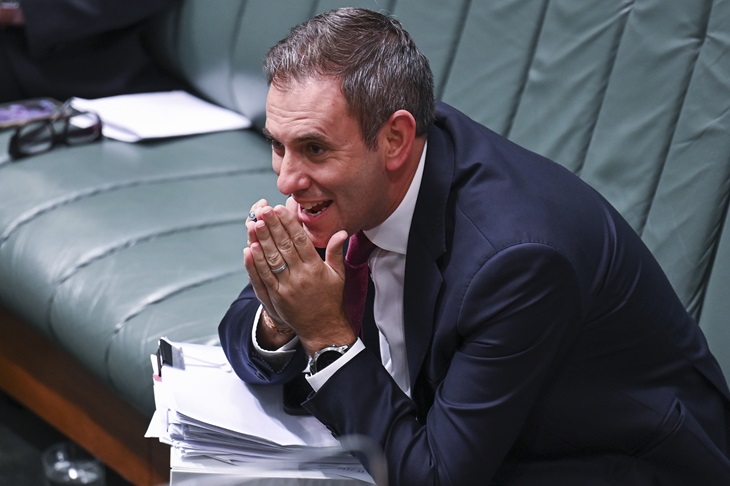
Anthony Albanese and his Treasurer, Jim Chalmers, are unlikely to admit to this.
Serious conversations about mass migration would probably impact migrant-heavy seats in Labor heartlands. This is largely due to where this migration has been sourced. Australia has gone from a European-dominant migration program to one that has resulted in India, Asia, and Islamic nations in the Middle East becoming the largest groups.
The Christian Western work ethic, and everything that comes with it, is disintegrating. Young people are not only watching their jobs evaporate … the entire culture of their country is vanishing.
Aussie kids are increasingly upset and manifesting loneliness, depression, and other anxieties.
They are isolated. Poor. And they are not economically sound enough to start families.
So much of the cheap communal joy has been taken from young people. Even the simplicity of a friendly office environment has been dismantled by dictatorial HR policies. Young Australians are not at war, yet, but they are also not enjoying their lives or seeing any purpose to the structure of working life.
The question becomes, how does Labor win back young people who have real grievances that cannot be papered-over with campaign slogans?
They are in power. These are their policies. It’s the Albanese-Chalmers era.
Someone or something else has to be blamed.
It seems Labor has decided to start an intergenerational war, blaming people’s parents and grandparents by highlighting wealth gaps.
Hinting that older generations had it easier implies that it is fair to tax them now, even though that declaration is not true. The children of war, depression, and the Keating-era interest rates did not have it easy. It was just different.
However, young Australians are primed to accept a victim-oppressor narrative and increasing numbers now believe capitalism is evil and those with money must have exploited someone to get it.
(Except the government. Government money is magical and virtuous.)
A cynic might say this tax reform approach makes sense. Older people tend to vote conservative. In today’s ideological market, the over-60s are increasingly favouring One Nation. Labor focus groups must know there is very little chance of winning these voters back and, if they don’t, who cares? As nasty trolls on social media like to remind us, ‘they’ll be dead soon’. When you start playing identity politics, voters become products with expiry dates rather than people.
Taxing ‘those Boomers’ allows the government to revenue raise off a demographic that doesn’t typically vote Left.
By the time young people are old enough to have assets to tax, if they ever manage to acquire them, there will be another group of young people to bargain with.
Young people should be reminded that their parents’ assets are their future inheritance.
Every cent the government takes off the older generation, is a cent stolen from their children and grandchildren.
Inter-generational wealth is the backbone of a free society in which each generation helps the next to climb higher. This is not possible in a society where the government holds people down by resetting the game to zero.
Allowing the government to redistribute private wealth creates intergenerational dependency.
Remember this when the government says older people should downsize their homes because they have empty bedrooms. Once gone, those are homes that cannot be passed on to their children. Rooms that cannot be filled by grandchildren. Rooms that provide padding for relatives who fall on hard times and need somewhere to stay. It means the value of that property is taxed and given to the Treasury instead of being gifted to the next generation inside the family as an asset to build on. Children, who would have been economically free, are once again thrown to the bottom of the ladder and told to climb, all because the Treasury spent its way to a trillion dollars of debt.
The same is true of investment properties. The Treasurer is considering playing around with the capital gains tax discount to ‘free up properties’, forgetting that wise investors will hold those properties and raise rents instead … making life even harder for young people in our cities who will pay for the policy. It happened before, and it will happen again.
Those enticed to buy through extraordinary government incentives, such as the 5 per cent scheme, are facing a future of rate hikes, with the RBA set to raise the rate again next week. The more they borrow, the worse off they are.
And then we hear the Treasurer might extend the capital gains tax ‘reform’ to share portfolios. People will find their investments raided and any future economic stability, which had been carefully planned, thrown away. How many more people will this push over the edge into already strained public assistance programs? Every time money is taken from people, more fall onto the public purse and add to the debt.
Worse, what does it say to young people looking to build an investment for their future?
Super taxes are changing too, if it wasn’t already enough that trillions of dollars of public money is trapped for 40-odd years, with many Australians dying before they can access money they earned.
And the plans to cut the health insurance discount? Older Australians having a discount is unfair, apparently, but how unfair will it be when the expected 40,000 are forced to drop private health cover and throw themselves onto the public system at a time in their life when they are most likely to use these services? Not only will these older people push young people out of the public health queue, Medicare levies will have to be raised to compensate. This helps … how?
Labor is teaching young people that when they are old, the government will come for their house, come for their super, come for their shares, and come for the savings they want to pass down to their kids.
Where is the motivation to work? What are young people supposed to aim for? Where are their lives going if their reward is an ever-increasing tax scale and intergenerational resentment? One day, they will be on the other side of the age bracket and find themselves the designated villain in a budgetary deficit.
The Liberal Party is right to criticise Labor for this behaviour, but not only did they play a huge role in the construction of the problem, they are offering no solutions.
They point out the inhumanity and then fudge the response with motherhood statements.
When asked what the Liberal policy would be, the answer was ‘hope’. What tax bracket do we put ‘hope’ into? What does ‘hope’ look like as a percentage of income? How is a young person supposed to visualise ‘hope’ when budgeting for their next energy bill?
Anthony Albanese insists ‘the issue of intergenerational equity is general is important’.
He’s right.
Remember kids, when the government taxes your older relatives, they are taxing your future nest egg. You saved so the government doesn’t have to.
Flat White is written by Alexandra Marshall. If you would like to support her work, shout her a coffee over at donor-box.