Some readers may remember a particularly infamous episode of The Simpsons which saw the town of Springfield descend into anarchy during their annual St Patrick’s Day parade.
As the crowds thronged Main Street, a drunken brawl erupted, prompting a shocked TV newsreader to declare: ‘What you are seeing is a total disregard for the things St Patrick stood for. All this drinking, violence and destruction of property. Are these the things we think of when we think of the Irish?’
With grim inevitably, this year’s St Patrick’s festivals around the country are no longer a celebration of Saint Patrick and Irish traditions
At the time, that episode was far more controversial with Irish Americans than people who actually lived in Ireland, who thought it was hilarious. But that was then and this is now – and the modern Irish tend to take themselves far more seriously.
If the traditional ‘Paddy’s Day’ parades around the world had a reputation for drunken rowdiness that was often associated with an Old Ireland that was largely rural, Gaelic and Catholic, the New Ireland has a much grander vision of itself. This modern, self-consciously cosmopolitan New Ireland abandoned the Church a long time ago. It replaced it and the old traditions with taxpayer-funded NGOs, blind obedience to the EU and a proudly ‘progressive’ media that longs to be seen as more European than Irish. It is they who now decide what is socially acceptable.
So, with grim inevitably, this year’s St Patrick’s festivals around the country are no longer a celebration of Saint Patrick and Irish traditions. They are, instead, far more focused on an almost triumphalist promotion of their idea of a blandly utopian society that few Irish people will actually recognise.
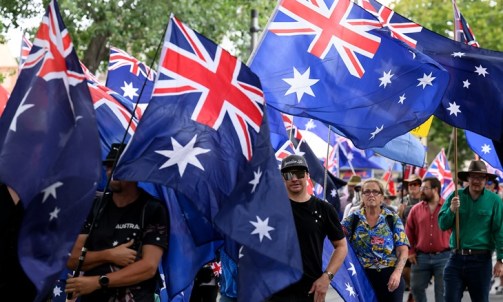
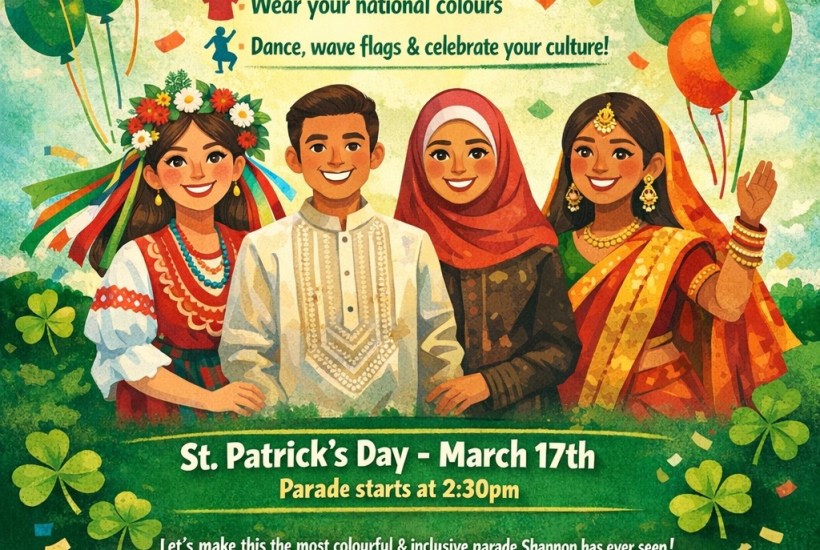
For example, county Clare has decided that this year’s parade aims to ‘Celebrate the cultures of Shannon’. Rather than the traditional parade of floats sponsored by locals businesses, GAA teams, boy scouts and girl guides, this year marks an invitation to: ‘Come along and play your country’s music, wear your national colours, dance, wave flags and celebrate your culture – show the diversity that makes Shannon special!’
That all sounds very modern and an attempt to reach the most exalted state one can achieve in Official Ireland: being multicultural. But it is, by definition, most definitely not a celebration of Ireland, Irishness, or Ireland’s patron saint.
For the last few years, most Irish people have tended to roll their eyes and mutter sullenly under their breath rather than raise any specific objection to these blandly corporate celebrations. They have learned that speaking about such topics and expressing even the mildest dissent is enough to be immediately denounced and accused of what are now considered the most mortal sins of all in polite Irish society – intolerance or racism.
They have learned that to express exasperation is to draw the ire of a collection of social media activists, journalists, politicians and lavishly funded NGOs who have been trained to immediately pounce on any deviation from the accepted mantra. The traditional fear of ‘the belt of the crozier’ has been replaced by fear of a very real form of social and professional excommunication.
But there are encouraging signs that the sullen resentment at these subtle excommunications is beginning to turn into a more vocal form of opposition.
Perhaps the most vivid example of that growing backlash came with the recent controversy which engulfed Dublin Zoo. As part of their Mother’s Day promotion, the zoo chose to use a Dublin drag queen rather than something as old fashioned as an actual Irish mother. The negative reaction was immediate.
Both the furious response from many Irish women and the swift removal of the promotion would have been unthinkable a few years ago. So it will be interesting to see if the current appetite for multicultural celebrations replacing the traditional Irish parade persists.
Few countries have seen their population and demographic make-up undergo a change quite as drastically as Ireland. That transition has, by and large, been relatively smooth, although not without several bumps along the way.
But whether it is removing the ‘Mother’ from Mothering Sunday, or the ‘Saint’ from Saint Patrick’s Day, there are unmistakable signs that Official Ireland’s desire to become just another blandly homogenous region of the EU has pushed the patience of a patient population just a step too far. Let’s hope it is just the beginning.