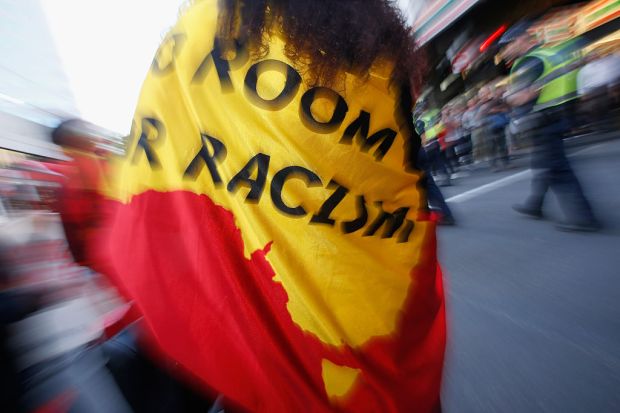
The great Thomas Sowell has stated: ‘Racism is not dead, but it is on life support – kept alive by politicians, race hustlers, and people who get a sense of superiority by denouncing others as “racists”.’
While he may have been speaking about the American context, his words certainly apply to Australians, particularly in regard to the claims of racism against Aboriginal Australians.
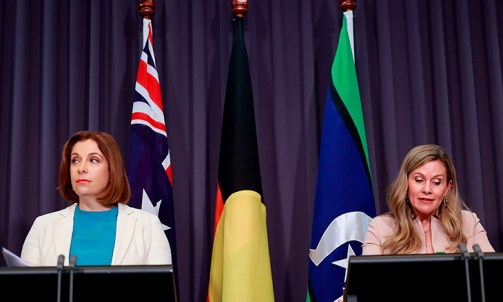
Consider that after a referral from the Minister for Indigenous Australians, Senator Malarndirri McCarthy, the Joint Standing Committee on Aboriginal and Torres Strait Islander Affairs recently backed an inquiry into racism, hate, and violence directed at Aboriginal and Torres Strait Islander People.
Mmm, a Minister of the Crown, a committee, and an inquiry. This must be serious. Or is it just more smoke and mirrors?
I do not believe this latest inquiry will be of any direct or indirect benefit to Aboriginal Australians. It may help the careers of a few leaders and academics, but I do not believe it will result in any action that helps those Aboriginal Australians most in need of help. There are better ways to help them; a point I’ll return to shortly.
Ostensibly, this latest inquiry has arisen because so many believe as an article of faith that racism is a major cause of Aboriginal disadvantage and suffering. Consider these quotes:
‘Racism is an ongoing consequence of colonisation, systematic oppression, and the exclusion and disempowerment of Indigenous Australians.’ (Australian Institute of Health and Welfare, 2024)
‘For many Aboriginal and Torres Strait Islander peoples, racism is an everyday reality and the experiences of racism in all contexts remain consistently and unacceptably high.’ (Reconciliation Australia, 2024)
‘South Australia’s Commissioner for Aboriginal Children and Young People says First Nations children’s rights are being “trampled on” by what she describes as an “institutionally racist” child protection system.’ (ABC, 2024)
‘This systemic racism – which is ultimately systemic abuse and violence – that’s playing out in the whole society that our people live and work in and raise their children in. No one’s feeling safe.’ (Lidia Thorpe, The Guardian 2026)
While I do not see these quotes as reflecting truth, my position isn’t that racism against Aboriginal Australians does not exist, but rather, that the claims of its prevalence and severity in relation to Aboriginal Australians made in the many reports emanating from government departments and universities are greatly exaggerated and unreliable. Yet too many continue to be believe that racism is the big culprit holding Aboriginal Australians back.
I offer five reasons here why I believe the highly questionable claim that racism is the major problem affecting Aboriginal Australians, is being kept alive in the minds of many.
First, most surveys on racism, at least the ones which the media like to quote when supporting their narrative that racism is rampant against Aboriginal Australians, rely on self-report data. While asking individuals about their experiences of racism has some advantages, it also has limitations. Social scientists have known for a long time that survey participants too often tend to give the answers that the survey expects of them, which may not reflect an individual’s actual experience.
Second, the definition of what racism against Aboriginal Australians is, seems to have expanded considerably over the years. For example, in 2024, a Victorian barrister was ridiculously branded a racist because she chose not to do a Welcome to Country at a meeting of the Victorian Bar Council. Further, who could forget the way that anyone expressing any intent to vote ‘No’ at the 2023 Voice referendum, was branded as racist. And have any readers here been made to feel like a racist because they celebrate Australia Day? Or, consider that backlash from the general public in response to Aboriginal leaders, commentators, or television personalities making insulting claims against (White) Australians, is automatically assumed to be racism.
Third, there has been a tendency by some to use mental gymnastics to see racism lurking in places where it isn’t. For example, the Australian newspaper in 2022 reported on Dr Fiona Stanley as saying that ‘racism was endemic in Australia and was evident in the divergent outcomes for Indigenous people in areas like health care, education, justice, and child protection.’ Nobody is disputing the appalling statistics on health and wellbeing, but there are many possible causes for these statistics. Racism may well be one of them, but surely solid evidence should be offered for such claims.
Fourth, when a claim is repeated often enough, people come to believe it as true through a process psychologists call ‘illusory truth’. Go to the left-leaning media and the Australian Human Rights Commission webpages and you will see plenty of headlines and stories, similar to the aforementioned quotes, telling us that Aboriginal people suffer endlessly from racism.
Finally, might the narrative that racism is the big culprit holding Aboriginal back prevail because it serves as a convenient smokescreen from other sources of harm to Aboriginal Australians?
Might Aboriginal people themselves be a significant source of harm to other Aboriginal people?
I recently looked at a report from the Australian Institute of Criminology on homicide in Australia in 2023 to 2024. The data show clearly that Aboriginal Australians are many more times more likely to be both victims and perpetrators of homicide.
Further, readers of The Spectator Australia would know that violence is a major problem in too many Aboriginal communities. Actually, the violence is a symptom of deeper problems such as unemployment, boredom, alcohol abuse, cultural romanticisation, substandard housing, difficulties in obtaining individual property ownership on communal land, and more.
The federal Labor government has committed to addressing some of these causes and should be applauded for doing so. They would be wise to maintain focus and not get distracted by pushing the agenda that racism is the big culprit holding Aboriginal people back.
Where ‘truth telling’ seems to be the buzz-phrase at present, let’s remember that it cuts both ways. All should be telling the truth. Unfounded claims of racism hurt us all.