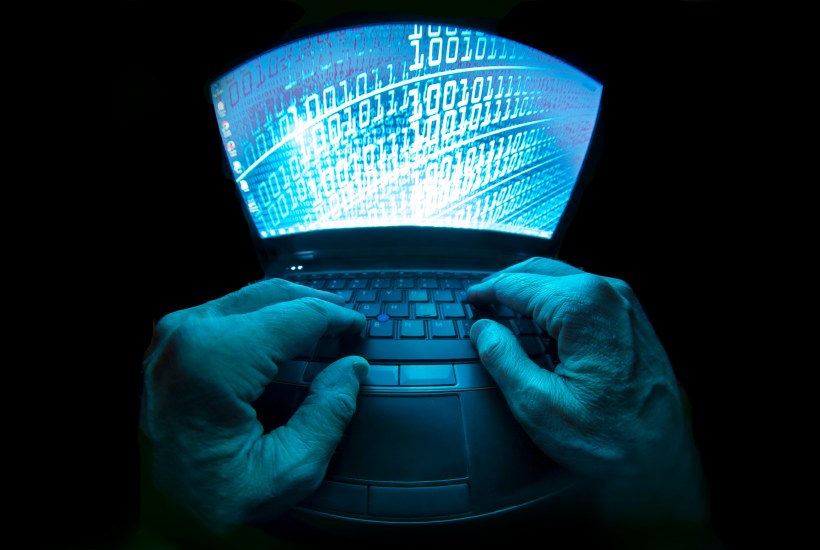
Our ABC has woken up to the fact that Chinese buses can be, in theory, switched off. This is just the tip of a technological iceberg.
The ‘goodwill visit’ of China’s number three leader in November 2025 revealed our government is wary of potential cyber attacks. Politicians and staff in Canberra were told to switch off internet, phones, and computers during the visit to Parliament, as potential cyber attacks require proximity. Part of the letter read:
Within the identified areas, internet connected devices including phones, tablets and laptops should be powered down. Where devices must be used, please ensure phones and iPads are updated with the latest software version and placed in lockdown mode, and laptops should have wi-fi and bluetooth switched off.
Once entered, digital networks can be explored and sabotage conducted when desired.
Technology can be used in a variety of conflict scenarios. In 2024, the Israeli secret service used pagers, purchased months before and armed with explosives, to attack Hezbollah terrorists in Lebanon and Syria. This attack, named Operation Grim Beeper, opened international eyes to a new type of tech warfare. Thirty-two were killed and thousands injured. Inevitably, the United Nations described these attacks against terrorists, who had fired 1,300 rockets into Israel in the previous month alone, as unlawful. The pagers had been used for communication, as they were thought less liable to tracking than standard mobile phones.
Since that event, the Israelis have advised senior officers to only carry iPhones to protect against hacking.
Is Australia taking the threat of cyber crime seriously?
Almost daily, there are reports of criminal cyber attacks on business. In the last year there were over 80,000 events reported to the Australian cyber security centre, ASC, with identity fraud being the most common. The Australian Signals Directorate reported a doubling of attacks on critical infrastructure, including two resulting in ‘extensive compromise’ the advent of quantum computing, further increases the risk of current protections becoming obsolete.
Under the auspices of the China’s Ministry of State Security, a hacking group collectively known as Salt Typhoon, discovered in 2024, is alleged to have been heavily engaged in a range of cyber activities, particularly the hacking of 200 telecommunications companies in the US, and as many as 80 other countries. Since 2021, it has allegedly concentrated on political and military targets. A report published in 2024 confirmed that nine telecom companies, broadband networks, and routers, the phones of high-profile US political figures, and the US National guard, had all been compromised.
Amongst the other targets of cyber entities are critical infrastructure, manufacturing, transport, health care, and military facilities. The frequency of attacks increased over 100 per cent in 2024. The risk of retaliation is reduced by China’s central IT controls, compared with thousands of separate systems in other countries.
At a national level, concerns of foreign interference in communication devices have grown in recent years, with a ban on some Chinese-owned and made brands. After concerns were raised regarding some devices they have been phased out across Aukus partners. They remain in the private sector.
Across the world, a new concern stems from the use of Chinese cars by government officials, with some security experts flagging the potential ability to track movements and perhaps eavesdrop on conversations.
Currently, Chinese cars have 78 per cent share of the EV market. Western governments often prioritises them. The US has plans to ban Chinese car imports from 2027, but the ‘horse may have bolted’. The Israeli Defence Force has issued its own warnings, phasing out vehicles for senior officers, and banning them from entry to bases. In a similar vein, Poland has now banned Chinese cars from military bases, with concerns their sensors could acquire sensitive information. China has called on Poland ‘not to abuse the concept of national security’.
We are now in the era of dual-use technology, fulfilling an economic function, but also able to gather and transmit information, at extreme, even capable of sabotage.
Computers are fundamental to the Australian economy. Here again, China is the main supplier, in 2023 accounting for over $4 billion of imports, of $6 billion total. There are much smaller numbers coming from the US, Malaysia, Singapore, South Korea etc. Not only personal cyber security but national security is at risk. In 2020, the establishment of a cyber security agency allowed the Australian Signals Directorate, to disrupt scams, prevent disinformation, abort terrorist attacks, and monitor criminal activity.
On an international scale, laser attacks on communications satellites are increasingly feasible. These shut down GPS and international connections has significant economic as well as military implications. China has tested a20GW microwave weapon that could destroy low-orbiting satellites.
The introduction of the Artemis Accords in 2020, was meant to regulate the peaceful use of space. A total of 56 countries have signed up, but not China, Russia, North Korea, or Iran. The Russians are also playing another game with the UK admitting they are positioning their satellites within range of UK military satellites, shadowing them to intercept or jam signals.
A recent concern involves Chinese ships sailing around Australia. Was it to assess the location of the undersea cables, which carry 95 per cent of internet traffic? Already, in the Baltic Sea, communication cables, have been ‘accidentally’ broken by ships dragging anchors.
Not only telecommunications are at risk, infrastructure for water and power generation, at home or from solar farms, is supplied with Chinese equipment. Over 90 per cent of solar panels and inverters are made in China, at least locally-made batteries are increasingly available. As these ‘renewable’ panels need replacing every 20 years, our electricity supply is at the mercy of the supplier.
Some of this equipment has an internet connection, providing both information and an external means of control. There is, at least, some alternative supply for wind turbines, coming from India, the US, and Europe, but most are Chinese.
The war in Ukraine has demonstrated the value of drones, also the need to knock them down, or jam them. As in many countries, Australia is now producing these relatively cheap instruments of observation and attack. Initially birds were trained to attack drones in sensitive areas, such as airports. Current approaches use radio-frequency jamming, electro-magnetic microwave fields, and increasingly, laser.
The increasing military use of drones, many made in China, has belatedly been recognised by the US military. The importation of foreign-made drones is now totally banned in the US. This creates a problem with pre-existing stock, and the unavailability of home-made alternatives.
In recent history, Australia has been threatened by China’s economic warfare, with electronic warfare unappreciated. ‘Old school’ approaches with nuclear or biochemical warfare result in devastation. Deactivating weapons, disseminating fake news, and switching off communications, transport, electricity, and water would rapidly bring a country down, without a shot being fired.
Even at a more basic level there are concerns. Australia has previously raised questions about the extent of infiltration, including baby cams, smart TV’s, and fridges. Those involved in cyber security tend not have smart devices in their homes. At least, that’s the rumour.
Cybernetic technology has undergone massive development, now involved in many aspects of daily life, with potential for society’s even bigger disruption. The feeling that Big Brother is watching us, is enforced by receipt of unsolicited phone messages, from who knows where, reminding us of our day’s activities. How long before, as in China, technology will tell us where we can, and cannot, go!
The most recent example of new cyber warfare was the extraction of the Venezuelan President. Whilst standard military techniques were used, they were combined with a blackout of the Capital; this was achieved by cyber malware sent to the grid, leaving defenders blind. Paradoxically, this success has revealed the vulnerability of the US to similar attacks.
As the poor state of our military is revealed, it will not be the only conflict the country faces. The word cyber, comes from the ancient Greek word, kubernao, meaning steering the ship. We must hope that our ship is not heading for the rocks.