In response to the US and Israeli attacks on Iran, Tehran has unleashed more than 1,500 drones on countries across the region, including the United Arab Emirates, Iraq, Bahrain, Saudi Arabia and Azerbaijan. But as the drone threat grows, so too do the region’s defences against these threats. As a result, it’s more than possible Iran’s drone war has now peaked.
On March 6, the United Arab Emirates published data on drone attacks from Iran. Abu Dhabi said it had detected 1,184 drones in total and 1,110 had been intercepted – a rate of around 93 per cent. The interception rate seems to be increasing. On March 6, the interception rate was 97 per cent for the 112 drones detected that day. On Sunday, only 18 drones were detected and 17 were intercepted.
Tehran has been working on drones since the 1980s. It first used drones similar to large model airplanes during its war with Iraq in the 1980s. Later, it began to copy American drones, such as the Predator, to create surveillance drones. These gave Iran a kind of miniature air force at a time when it couldn’t acquire new warplanes due to sanctions.
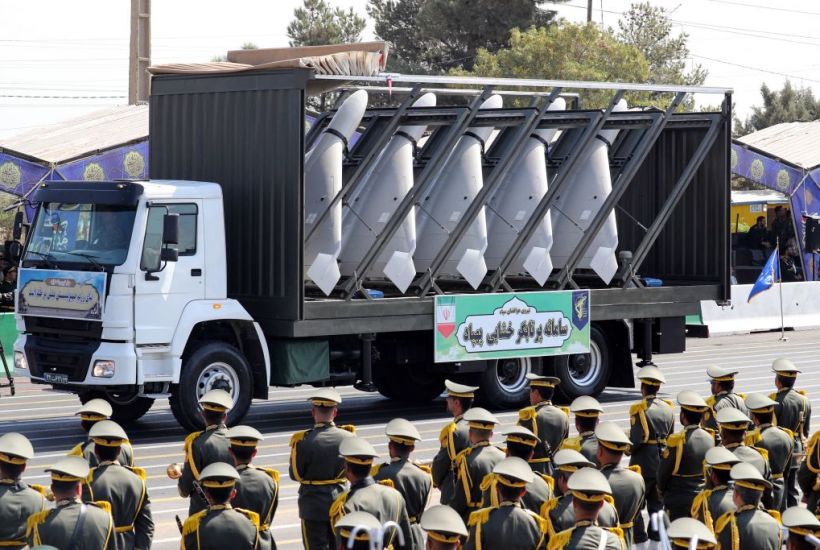
Where Iran innovated was its investment in what are called one-way attack drones. The Shahed 136 was key to this novel military technology. Around 11 feet long, with an eight foot wingspan, it weighs around 400 lbs with its 100 lb warhead. It’s small enough to fit on the bed of a truck and is easy to launch. In fact, you can put a number of Shahed drones on a single truck, disguised as civilian cargo, and then launch them and drive off.
The Shahed 136 was based on Iran’s previous, similar, kamikaze Ababil drone which it exported to the Houthis in Yemen. In 2021 the Shahed 136 first was spotted in Yemen on grainy aerial photos. With an estimated range of 1,200 miles it could hit Israel and Riyadh from Yemen. The Shahed 136 was soon in the hands of the Russians and was used against Ukraine after the 2022 invasion.
It didn’t take long for the world to take notice. These types of drones are small enough to make detecting them difficult. In addition, they are cheap, while shooting them down with Patriot missiles or other air defence systems is costly. The Ukraine war has shown that these types of drones can be intercepted most of the time. It also has shown that when they are produced in large enough numbers they can spread terror across thousands of miles.
Iran’s drones have been wreaking havoc in the Middle East ever since. In 2021 a drone, likely launched from Iran, struck a merchant tanker off the coast of Oman. The attack killed two members of the crew. In 2024, the Iranian-backed Kataib Hezbollah in Iraq also targeted US forces in Jordan with drones, killing three Americans.
In the latest conflict, Iranian drones have been the largest danger to the Gulf, especially where there are not enough air defences. It was an Iranian drone which killed six Americans at a military base in Kuwait. This shows how deadly these systems can be when they are not countered.
Yet as time goes by the Iranian drone army is becoming less effective. Countries now know how to confront the drones using air defences such as missiles – learning from countries like Ukraine and Israel. The US has even taken this one step further by copying the Shahed 136 and creating what the Pentagon calls a Low-cost Unmanned Combat Attack System, or LUCAS drone. These drones are built by a company based in Arizona, called SpektreWorks and have been used in recent operations to take out Iranian infrastructure and overwhelm its air defences.
In many ways, one-way attack drones are a resurrection of the V-1 flying bomb which the Nazis used to hit London in the 1940s. The ease of building and launching these weapons means that Iran will likely used them to terrorise the Middle East, and shipping off the coast, for years to come. But it’s increasingly becoming clear that these drones are no longer the unstoppable weapon Iran used to possess.