There’s a special kind of panic that sets in when people confuse motion with progress. Things start spinning. Jobs change hands. Titles get shuffled. Press releases multiply: And somehow, despite all the activity, the rot keeps spreading.
That is the Liberal Party in 2026.
A circus where the animals have escaped, the tent is collapsing, and management is arguing about who should hold the whip.
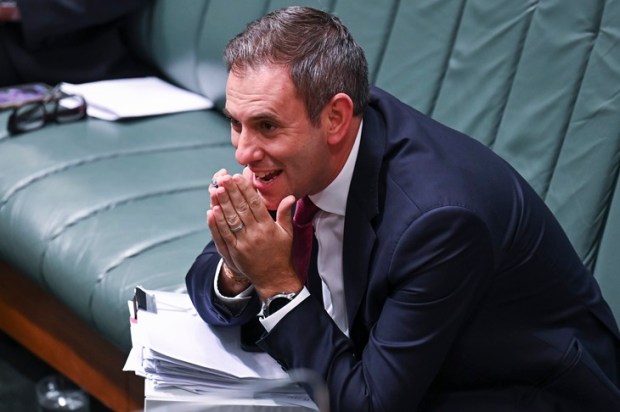
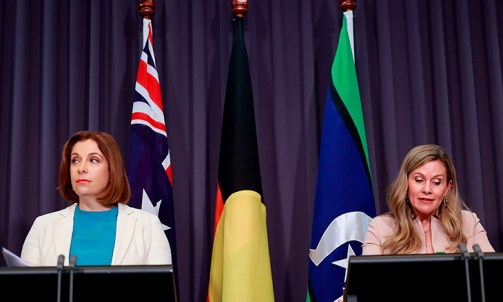
This week’s reports – Andrew Hastie politely declining the poisoned chalice, Angus Taylor eyeing it, Sussan Ley gripping it with the calm smile of someone pretending not to notice the venom – are presented as drama. They are not. They are rituals. A familiar and futile dance performed whenever a party has lost the only thing that ever justified its existence: moral confidence.
The tragedy for the Liberals is not that they are losing elections. Parties survive that. Labor has made an art form of extinction-level events followed by resurrection. No, the tragedy is that the Liberals no longer understand why they once won, or worse, why they deserved to.
The First Forgetting
The modern Liberal Party speaks of Menzies the way a failing pub speaks of the bloke who once drank everyone under the table – with reverence, nostalgia, and no intention of living up to the legend.
Menzies did not triumph because he was a conservative in a cardigan smoking a pipe. He triumphed because he understood aspiration. He understood that the post-war middle class wanted dignity, property, privacy, and distance from government interference. He did not infantilise them. He trusted them. That trust was the contract.
Across the aisle stood a Labor Party led by Arthur Calwell, a man shaped by the trauma of the first half of the 20th Century – depression, war, rationing – who could not bring himself to imagine abundance without supervision. His was a politics of protection when the country was ready for prosperity.
The genius of Whitlam – often misunderstood by both admirers and critics – was not radicalism. It was adaptation. He stared extinction in the face after the Labor Party very nearly expelled him, and he chose evolution over purity. He dragged Labor, kicking and screaming, into the aspirational second half of the century.
Parties do not die when they lose votes. They die when they lose the capacity to change without losing themselves.
Howard and the Last Purge
John Howard understood this too, though he is now spoken of as if he were an accident rather than the result of a brutal internal reckoning.
After Fraser, the Liberal Party flirted with becoming a well-dressed branch of progressive managerialism. The so-called ‘wets’ believed the government could be clever enough, caring enough, and consultative enough to improve lives by interference. They meant well. They always do.
Howard beat them, not by compromise, but by defiance. He endured ridicule, caricature, and years in the wilderness because he believed the Government should be smaller. Responsibility should sit with individuals. Culture matters. Borders matter. And when the Cafe set screamed, he didn’t flinch.
He was not glamorous, not modern but he was little Jonny with a big bag of principles that appealed to the battlers … and here is the uncomfortable truth the party no longer wants to hear. Every seminal victory worth remembering was won by leaders who held ideas even when those ideas were unpopular, and often when they were personally costly.
In his later years, he hung on too long, freezing Costello out, not because Costello lacked ability, but because Howard couldn’t bring himself to let go. The fairy godmother years – when power becomes personal property – always rot institutions from the inside.
Worse, the party and the political spectrum lost the sagacity of the Hawke-Howard era, with retirements from both sides. The Liberals lost their philosophical compass in a political rout normally saved for dictators. In opposition they confronted a ‘New Labor’ enterprise – welcome to technocracy! Their pivot wasn’t back to first principles, instead, in the lonely halls of ideological isolation, the managers and carpet baggers seized their opportunity and new lines were drawn in the sand: persuasion, argument, and reason were out and quickly replaced with burgeoning bureaucracies and a bidding war for Howard’s battlers.
Despite the best efforts of Tony Abbot to avoid ‘trenchfoot’, that rot never left.
The Fatal Conceit, Rebranded
Somewhere along the way – during the long, easy years of prosperity, when governing felt like administration and politics felt like HR – the Liberal Party swapped philosophy for process.
What replaced it was not ideology, but procedure dressed as virtue. Policy working groups. Stakeholder consultations. Frameworks. Roadmaps. White papers. A well-meaning belief that if enough clever people sat around enough tables, freedom could be engineered into existence.
Friedrich Hayek had a name for this. He called it the Fatal Conceit: the belief that complex human systems can be consciously designed and improved by central intelligence.
The modern Liberal Party does not preach small government. It practices polite government. It does not trust markets; it moderates them. It does not defend freedom; it regulates it gently, apologetically, with footnotes.
And the deserters – the self-employed, the subcontractors in fluoro, the small business owners, the pub regulars who don’t read policy but live consequence – they felt it immediately.
They didn’t leave because of one policy. They left because the party no longer instinctively recoiled from intrusion.
They wanted the government out of their lives. The party never opened that email.
The Cast of the Current Tragedy
Which brings us to the characters now circling the ring, each convinced – or pretending – that they might yet tame the lions.
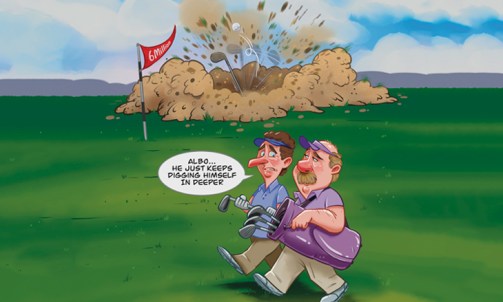
Sussan Ley is intelligent, articulate, experienced, and disciplined. On paper, she should be dismantling Anthony Albanese weekly. He is, after all, running Calwell-era policies – nostalgic statism dressed in high-vis sentimentality.
But she cannot land a blow because she does not fundamentally believe in the hard edges of principle. She equivocates with the precision of a weapons-grade diplomat. She manages, she moderates, she reassures. The deserters are not coming back for reassurance. They didn’t leave because they were frightened. They left because they were suffocated.
Andrew Hastie is the great almost. On paper, he is Richard the Lionheart: intellect, service, moral seriousness, a life outside politics. And yet, twice, when it mattered, he hesitated. Not out of cowardice – but out of loyalty to a machine that demanded silence when conviction was required.
Redemption in politics requires risk. Risk requires defiance. Defiance is now incompatible with winning inside the Liberal Party. The cruel irony is that the only path to Hastie’s political redemption may lie outside the party that dulled him – seeking revival in the afterlife of One Nation.
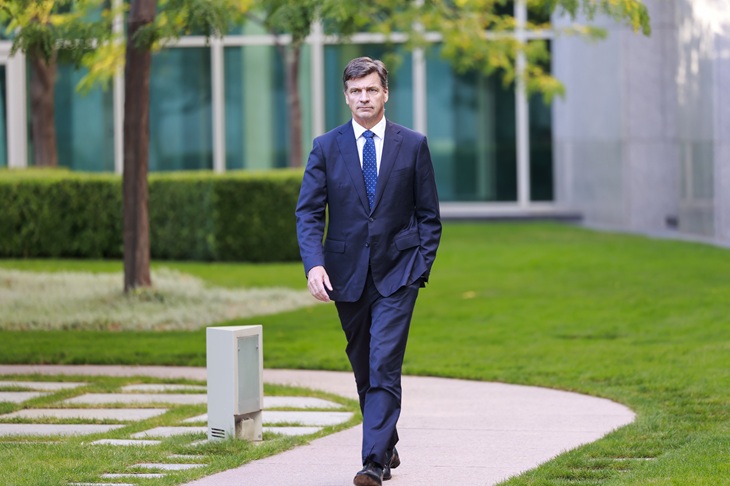
Angus Taylor is smart, capable, articulate, and financially independent. And that, perversely, may be the problem. Politics is not a CV contest. It is a contest of belief. Albanese believes in his bones because his upbringing gives him no alternative. Taylor argues well – but belief, for him, appears ephemeral.
The deserters can smell that. They always can.
None of these guys will secure the return of the One Nation hostages.
The Hostages Are Gone
The Liberal Party keeps talking about ‘winning back’ One Nation voters, as if they were customers who wandered off due to poor signage.
They are not customers. They are hostages who developed Stockholm Syndrome elsewhere because no one came to rescue them when it mattered.
You do not retrieve philosophical deserters with marketing. You retrieve them with repentance – and the party is not capable of it.
A cynical game of musical chairs will not help. Frankly, letting the music play might be kinder.
If there were honesty left, Sussan Ley would do what Cleopatra did – hand the chalice to the aspirant and watch carefully as he drinks. Then perhaps strike a deal with the Teals. At least that would be authentic. A final confession before the curtain falls.
Why the Circus Can’t Be Saved
The party cannot come back from this mudslide because it no longer possesses conservative instinct. Not in its reflexes. Not in its marrow. Not even among those whose résumés suggest it should.
Repeated offences, long after the benefit of the doubt expired, have consequences. The deserters are beyond good behaviour bonds. They are done.
And this is how I know.
I know it the way the self-employed know it when BAS time comes.
The way the tradie knows it when another regulation lands.
The way the schooner drinker knows it when politicians start talking about ‘frameworks’.
And I know it by the size of the Blue Battalion of deserters – a retreat so disorderly it makes the Italian army look like it had a forward gear.
The circus can keep spinning.
The merry-go-round can keep turning.
But the crowd has gone home.