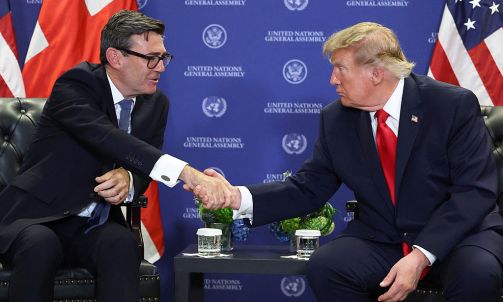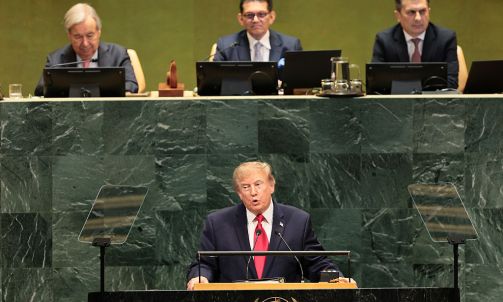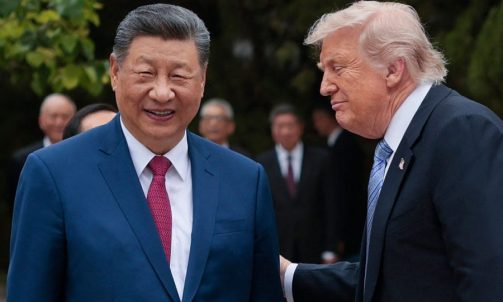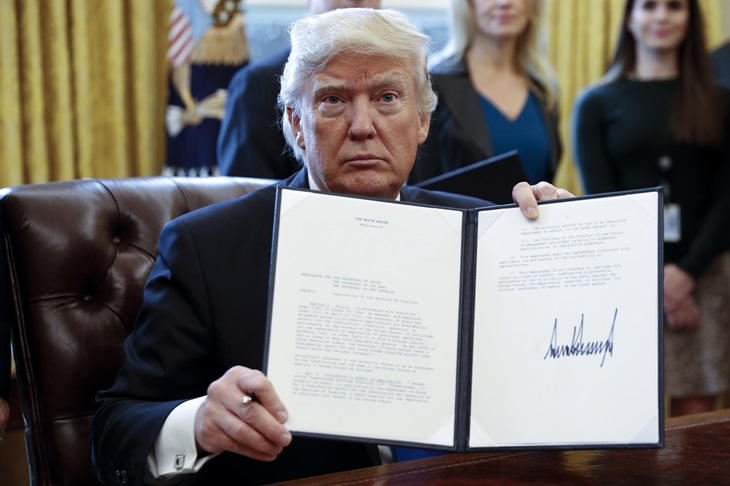
Australia is ill-prepared for major changes to US energy policy likely under incoming President, Donald Trump.
The incoming Republican has indicated his intention to withdraw the US from the 2015 Paris Agreement on climate change, which was aimed at supporting the renewables industry and restricting fossil fuels. Trump is likely to step-up support for crude oil, natural gas, and coal production while pushing for an increase in US exports of liquefied natural gas. There will be a reduction of financial assistance offered to the renewables industry and an abandonment of the Net Zero targets and greenhouse gas emissions monitoring.
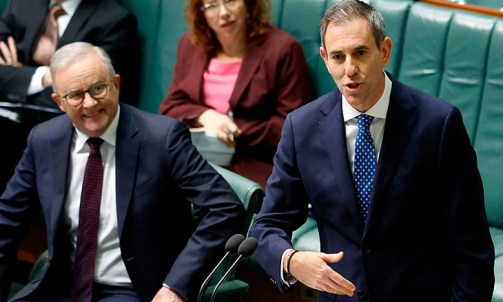
In Australia, both major parties remain committed to the Paris Agreement and Net Zero targets, as do major business organisations.
The Business Council of Australia supports ‘facilitating a coordinated transition to Net Zero by 2050’. The Minerals Council of Australia says that it ‘has a strong commitment to climate action, supporting the Paris Agreement and an industry ambition of Net Zero by 2050’. The Australian Banking Association supports ‘a balanced and orderly transition to a Net Zero emissions economy by 2050’.
These positions entail an increasing role for renewables and a declining role for fossil fuels.
Is this approach sustainable?
More importantly, can renewables do as they promise and supply reliable electricity?
Not according to the experience of Broken Hill in October 2024, when the town’s link to the main grid was broken by the collapse (resulting from a storm) of nearby transmission towers. The town had little electricity for two weeks, notwithstanding wind and solar power being available.
Broken Hill once had the dream of becoming Australia’s first carbon-free city by 2030. This dream has since been shattered.
As the mayor, Tom Kennedy, said in late October, ‘There’s no way that renewables at this time are capable of supplying Broken Hill … the reality is, it’s not consistent power … for Broken Hill, it’s almost useless.’
Then we must consider, can renewables supply low-cost electricity?
Not if our experience of the last 25 years is any guide.
In 2000, Australia ranked among the lowest electricity prices in the world. They are now some of the highest, with retail electricity prices in Australia having increased at nearly double the rate of all prices since 2000.
This is because of:
- High transmission costs for most wind and solar farms.
- Costs associated with frequency control, arising because of the need to convert direct current from wind and solar farms to alternating current required for the grid.
- The serious overbuilding required of renewables because of their intermittency (for example, to replace a 500-megawatt coal plant would require at least 1,500 megawatts of renewable facilities).