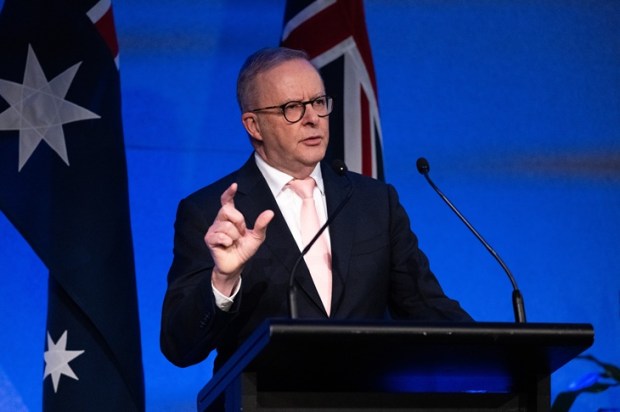
In December 2021, Anthony Albanese announced his ‘plan’ to reduce electricity prices by $275 per household by 2025. He said he was certain of such a price reduction, ‘because we have done the modelling’. According to Selectra, the average bill was $145 higher in March 2024 than in November 2021.
Government measures are targeted at the ‘energy transition’ to Net Zero emissions of carbon dioxide by replacing coal and gas with wind and solar. As a result of this support, renewable energy is forcing low-cost coal capacity out of the market. But rather than producing benefits from what politicians tell us is the lowest cost form of electricity, the wholesale electricity price has risen to over $100 per MWh from under $40 per MWh in 2015.
Direct and regulatory support for renewables (wind/solar) comes to at least $15.6 billion a year. That is equivalent to an annual cost of $1,510 per household in excessive electricity bills and taxes that subsidise wind and solar. The support for wind and solar has been markedly increased by the Albanese government. That support falls under two main categories.
The first requires electricity retailers to source increasing amounts of their energy from intermittent wind and solar, and there are associated regulatory costs of administering this. The second is support for new transmission lines and energy storage in an attempt to firm up the intrinsically unreliable wind and solar system (planned to comprise 75 per cent of supply by 2030 rising to over 90 per cent).
These are conservative numbers, since they exclude:
- Many state measures, which are now difficult to estimate because the Australian Energy Market Commission no longer compiles them, claiming it will instead concentrate on ‘modelling’ the various costs. State measures have markedly increased since 2019 and include government purchases of ‘green’ energy at premium prices, favouring wind and solar by not requiring the posting of land remediation bonds and, in the case of Victoria, punitive coal royalties.
- The additional costs of local distribution lines and the behind-the-metre facilities (like household batteries) that will be required to support the ‘energy transition’.
- The subsidies’ effect of directing otherwise productive capital into wind and solar (‘rather than crowding out capital’ says Ian Learmonth, CEO of the government’s green bank, the CEFC, ‘we are crowding capital in’).