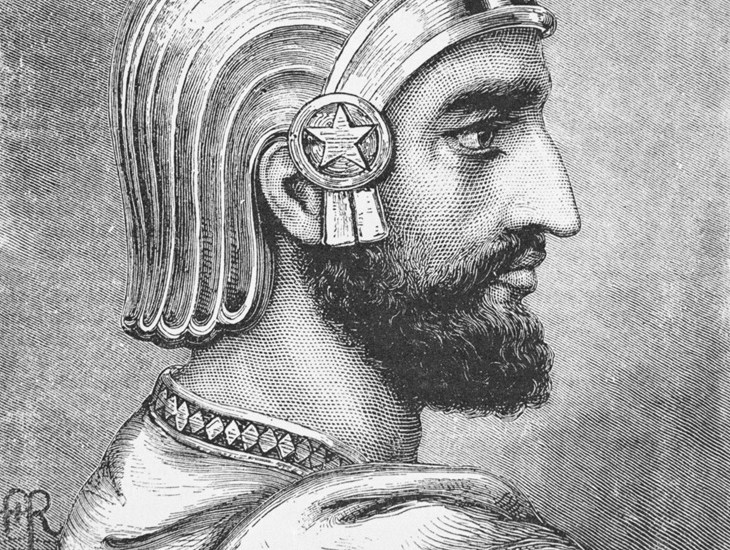
Today, I would like to write about the winged figure at Sydney Olympic Park, Australia, which is associated with Cyrus the Great.
‘I am Cyrus, the Achaemenian King.’
Approximately 175 years ago, this inscription could still be seen above the winged human figure at Pasargadae, Iran.
European travellers who visited Pasargadae in 1811, 1818, and 1840 recorded the monument through drawings and detailed observations. The winged figure was first documented during the 1811 visit by James Morier and William Ouseley. However, around 1850, during the Qajar period, the inscription above the figure disappeared. We do not know exactly how it was lost or what caused the upper section of the stone relief to break away.
The drawings left by these travellers are extremely important. They allow us to study the monument’s history and better understand why the winged figure has been associated with Cyrus the Great.
One of the most fascinating features of this figure is the combination of cultural elements from different lands within the Achaemenid Empire.
The figure’s clothing displays features associated with Elamite dress, along with a rosette-patterned border associated with Ionian art. The Ionians were one of four major groups into which the ancient Greeks traditionally divided themselves. The other three were the Dorians, Achaeans and Aeolians.
The figure also wears a distinctive Egyptian crown known as the Hemhem crown. This ceremonial crown of ancient Egypt consisted of three similar forms of the Atef crown, associated with Osiris, arranged side by side, together with curved ram’s horns beneath them. The ancient Egyptian word Hemhem meant a loud cry or shout, leading some scholars to suggest that the crown may have had associations with warfare.
The Hemhem crown was a more elaborate version of the Atef crown and is sometimes referred to as the Triple Atef. There was also an association between Heka, the Egyptian god of magic, and the wearing of this crown.
At its highest point, the crown was associated with the rising sun, which has been interpreted as a symbol of rebirth. It was mounted on a pair of long, spiral-shaped ram’s horns, and cobras were often depicted on either side. Reeds and ostrich feathers, along with feathers from other birds, were also used in its construction.
Because of its three-part design and considerable weight, the crown tended to tilt backwards when worn, unlike ordinary crowns. Another version featured three falcons instead of three solar discs. This type was associated with the kingship of Lower Egypt, while combinations of solar discs and falcons symbolised power over both Upper and Lower Egypt.
The four wings behind the figure also draw inspiration from the artistic and cultural traditions of Babylonia and Assyria. Similar winged imagery can be seen in representations of Marduk, the Babylonian god who held a central position in Mesopotamian religion. According to Babylonian tradition, when Cyrus the Great entered Babylon, he honoured Marduk and prayed for the land of Iran and his son, Cambyses.
By bringing together these diverse elements, artists created a winged figure that reflects the distinctive artistic style of the Achaemenid period.
Some researchers have also drawn comparisons between the wings and legs of this figure and those of a falcon that, according to certain modern reconstructions, may have appeared on the standard of Cyrus the Great.
As some of you may know, the Golden Falcon Standard, also known as the Standard of Cyrus the Great, has been presented in some modern depictions as the principal standard of the Achaemenid Empire. It has become a symbol associated with Cyrus the Great and the grandeur of the Achaemenid Empire. However, this historical connection has not yet been conclusively established.
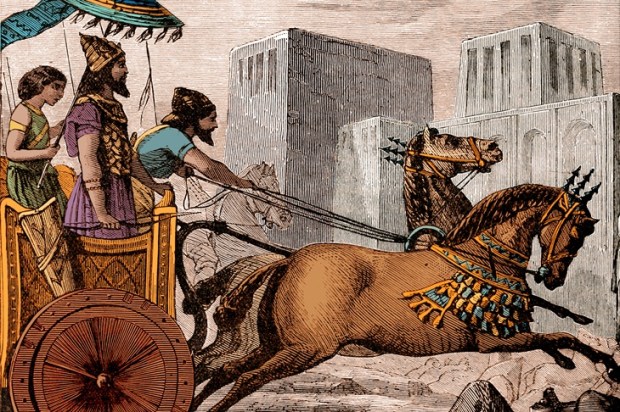
The combination of cultural elements in this relief can remind us of the way the Achaemenid Empire governed peoples from different backgrounds. One of the ideals associated with this model of rule was respect for diverse cultures, religions, traditions and beliefs. Such an approach could help strengthen unity among the peoples of different lands within the empire.
One example of this unity can be seen in Nowruz, one of the most important traditional celebrations of Iranian culture. During the Achaemenid period, representatives from different parts of the empire brought gifts to the king. These offerings can be understood as expressions of respect and gratitude, and as reminders of the security and stability associated with the imperial order. Reliefs at Persepolis also depict representatives bringing gifts to the royal court.
Imagine people from different lands and cultures travelling to Pasargadae and standing before this winged figure. Perhaps they would have recognised familiar elements of their own cultures and beliefs in its design. They might have felt that they, too, were part of this empire and its traditions. Such a feeling could have strengthened mutual understanding and a sense of belonging among its diverse peoples.
In my view, this relief reminds us of the idea that people with different backgrounds, cultures and traditions could live alongside one another within an Iranian imperial system, in peace and harmony, without war and bloodshed.
From this perspective, the royal tradition associated with Cyrus the Great can be seen as an example of an effort to promote peace, unity and happiness among the peoples of different lands.
Centuries later, the message of this monument can still remind us of the importance of respecting different cultures, living together peacefully and preserving the bonds that unite people.
These are values that connect the heritage of ancient Iran with our world today. It is therefore worthwhile for the people of Australia to learn about the history and significance of this remarkable monument. The people of Iran are waiting for the return of another Cyrus, Reza Shah II, to his homeland. Every year, on October 29 (7 of Aban), the day dedicated to commemorating Cyrus the Great, they travel to Pasargadae to pay tribute to their heritage, identity, and traditions, which stand for happiness and world peace.
By Leila Naseri: Author | Composer | Social Cultural Analyst