Every time a controversial video game hits the market, the moral panic returns.
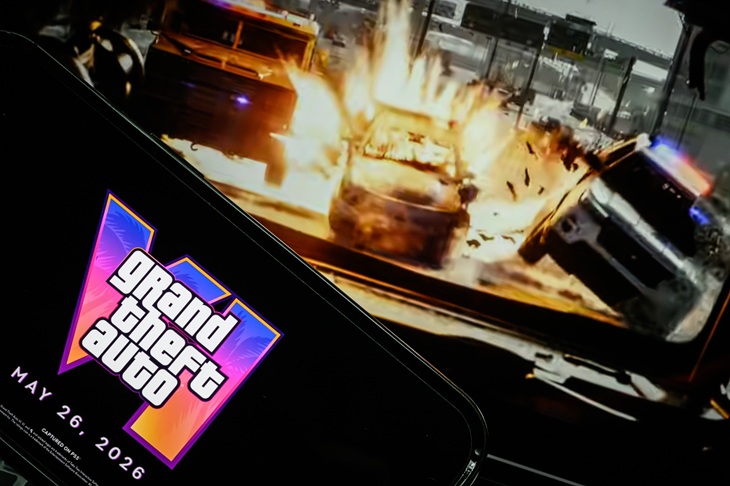
It was no different when, on International Men’s Day, Grand Theft Auto VI dropped after more than a decade of development. The game made $4 billion in 24 hours. What cost-of-living crisis, eh?
Thanks to time zone magic, New Zealand was the first nation to unlock the game, resulting in players employing the ‘New Zealand Trick’ to switch their location while the most devoted fans flew to Mordor to play it live.
Millions of men around the world were struck down with ‘GTA Flu’. The mystery ‘pandemic’ was most pronounced amongst men in their 20s, although the World Health Organisation is yet to make an official comment.
All of this is harmless.
Grand Theft Auto has been controversial since its first iteration in 1997 (MS-DOS, Windows) and 1999 (PlayStation, Game Boy). However, it was Grand Theft Auto: San Andreas (2004) that attracted serious controversy. It contained significant escalations in criminality and sexual content involving what was, at the time, hyper-realistic graphics.
This is where the conversation switched from ‘game play’ to ‘role play’. We are still having this discussion as technology creates ever-more convincing simulations of reality, especially in terms of AI generating footage of real people.
Generally speaking, Grand Theft Auto requires players to engage in mandatory activities centring on criminality: vigilante missions, pimping out women, burglary, and (obviously) grand theft auto. It also includes strip clubs and hookers. San Andreas was never accused of being ‘Woke’. Immediately upon release, it became a target for social justice activists who seemed more concerned about its portrayal of racial stereotypes than its glorification of ‘thug life’.
Most young men today grew up with Grand Theft Auto V, released in 2013, which was reviewed as ‘one of the best video games ever made’ and ‘generation-defining’.
As the most ‘morally lenient’ entry in the franchise, the game was so controversial that two major department stores in Australia pulled it from their shelves.
That sort of boycotting does not work today, where games are downloaded directly from the console. This is a shame for game stores. PlayStation announced all of its new releases will be essentially download-only. The rest of the industry is set to follow. Gone are the days where you can hold a physical copy of your games. Younger generations before digital formats. I hate them. It makes it too easy for distributers and governments to erase your purchases, introduce additional fees, or edit the content post-sale.
And who knows, how long before our eSafety Commissioner, and others like her, start monitoring in-game activity for problematic behaviour? We never thought they would do it to our social media use, and yet people are getting knocks on the door for tweets.
The prevalence of social media has meant higher visibility for the content of Grand Theft Auto VI. Clips are doing the rounds showing men walking up to women only to beat them to death, shoot them in the head, and rob them. With uncanny valley realism, video game violence makes for uncomfortable viewing.
It was easier to write-off gaming violence as harmless fantasy when it wasn’t so realistic. Does realism make these games more harmful? Maybe.
I say this as a gaming girl who grew up playing Doom II when I was seven years old and Tomb Raider not long after that. There was a moral panic surrounding those games too, but if I am being completely honest, these older video games were a very different species.
Far from ‘damaging attention spans’, early video game players often found themselves trapped in puzzle rooms for days or having to memorise hours of gameplay to escape levels with no save points. Children of my generation reported exceptional hand-eye coordination as a direct result and longer attention spans. Doom II was so convoluted that the game was not fully completed, by anyone, until Zero-Master in 2018. (I can still regurgitate these cheat codes with greater accuracy than my maths formulas.)
These games, thanks to a combination of story, graphics, and game-style, did not interfere with people’s experience of reality. The line between the game and the real world was not easily blurred for the ordinary user. In this case, I argued firmly that the moral panic over the video game era was total nonsense, just like the moral panic over Harry Potter.
These new games are not the same. They monetise and encourage short-attention spans, instant gratification, and escalations in realistic violence and criminal behaviour to generate a ‘thrill’. True problem solving is limited.
Worse, we already live in a world with a youth crime problem, largely thanks to the impact of rap culture. The concern is that games glorifying crime could make the situation worse for parents. Keep in mind, governments across the West have banned children from social media (allegedly to keep them safe from harmful content) and yet we know young boys are playing these adult-rated games.
I am a social media enthusiast and old gamer, yet I would not play Grand Theft Auto. The experience is similar to being a movie fan who does not enjoy excessive realistic gore in horror. Not all films are the same and not all games are the same.
This is not a call to ban anything, more of a conversation starter about what direction our society is heading in when it comes to its dominant form of entertainment. Why do men seek these games out. What are they getting from them as adults? Why is this game the best seller?
Normally I present an answer. On this topic, I am yet to reach one.
Gaming used to be a relatively niche group, and most gamers spent the majority of their time in the real world. The structure of society in the 80s and 90s forced young people to balance their lives between gaming, education requirements, and the responsibility of young adulthood.
We typically grew out of gaming as adult life took over.
I remain disturbed by scenes of young adults throwing violent tantrums when parents try to remove them from gaming. Or of adults ignoring their responsibility as parents to stream on Twitch for hours every day.
That sort of behaviour represents a deeper level of emotional dependency and immaturity rarely seen in classic gaming. Something has obviously changed, although I suspect soft parenting has a lot to do with the problem.
Children are biologically wired into addiction-forming habits. It is a side-effect of our species’ advanced learning ability. Extreme focus on a particular task is how humans mastered skills like hunting (before being eaten). In a modern setting, this can translate into addictive gaming and obsessive relationships when not properly moderated by parents.
Political decisions have complicated the problem for parents and children.
For kids these days, the outside world is often as dangerous as Grand Theft Auto VI. If you live in Melbourne, there’s a good chance you’ll face a machete-wielding gang of teenagers at the local shopping centre, or be woken up by child home invaders stealing keys for a bit of real grand theft auto of the family car. That is not the world I experienced as a child after a few hours playing Doom II.
What are the (mostly male) gamers learning and what sort of adults will the become?
I remember the issue being discussed when Call of Duty, and all of its sequels, came out. At least Call of Duty taught players a significant amount of political and war history. They learned the fine details of weapons and essential military information. If playing online, they organised teams in combat situations where the delegated tasks and acted as a cohesive unit. I was astonished watching a young relative of mine play this game in which he took command of an international group, running missions with extraordinary organisational skills across multiple time zones.
Those kids could tell you more about warfare than most professors (and they sure as heck did not learn it from school). War is also a likely problem many men will face, and so there is a solid argument that these games are just as beneficial as military training. Certainly, it readies them emotionally for critical thinking in tactical situations.
Heck, perhaps Elon Musk should finance the Call of Duty team to make a war game set in Mao’s revolution or life under Stalin. Set a level in the farmlands where people were buried alive or eating their own children. Host another level on Cannibal Island. It could challenge players to survive socialism, dodge the regime’s secret police, and overthrow history’s tyrannical dictators. They could call it Orwell. I guarantee it would be the fastest way to inoculate Western youth against the disease of collectivism. A viral anti-socialist game would be the end of left-wing politics.
With Grand Theft Auto, people are asking, where is the benefit of a criminal fantasy world? Escapism, perhaps. Do I think there should be guardrails? Yes. Most people do. Where is your line of decency? Beating and killing random women on the street; shooting up gay bars (as some complained they could not do); anything involving children … most people who say they do not believe in ‘lines in the sand’ actually do have them.
Despite all this, the actual response from people who are playing the game does not quite fit the stereotype. If we ignore the AI-generated rage-bait posts and feminists who oppose the content on principle, there appears to be a few observations worth making.
Many have criticised the game for being Woke. By that they mean too much of the gameplay revolves around domestic tasks while the criminality of previous games has been restrained. There are viral clips showing the main character fixing a sink or grocery shopping. One reviewer wrote:
‘I was surprised that, with about 10-plus hours of play, most of my time has been spent performing mundane tasks like home repair, grocery shopping, personal grooming, and trying to open a bank account. The realism is incredible, but perhaps too real.’
They appeared to be happy with this immersion in a fabricated world, (then again, the reviewer listed his age as 59), but other younger players were furious. It is clear that the game has embedded subliminal messaging for young men in regards to building a healthy relationship with their partner, while increasing punishments for violent criminal behaviour that dominated previous games.
With the quality of graphics and extended open maps, the experience reported by men playing together in groups is that of an alternate reality, like The Sims. (Some of you might remember when that took over people’s lives, especially young girls.)
It made me wonder how many men, starved of their masculinity in this post-feminist world, throw money at games like Grand Theft Auto VI because it is one of the last male-coded activities available to them away from the prying, judgemental eyes of the state. You cannot be judged for your behaviour while playing the game, (at least, not yet!).
I’ve read many men say how sad it is to watch adults take time off work to sit in a dark room, ignore their partners and children, all so they can role-play criminals in a game. There is some merit to that view, but it is linked to the way men feel about their jobs and future in the first place. Most Western men, particularly in countries like Australia, will never fight, never break the law, and they will probably never hold a gun. Having been exposed to superhero narratives and action movies through their childhood, their real lives can seem docile in comparison.
We return to the question: Are games like Grand Theft Auto VI harmful?
Perhaps we should ask instead: Has our society become harmful to men?
Alexandra Marshall is an independent writer. If you would like to support her work, shout her a coffee over at donor-box.