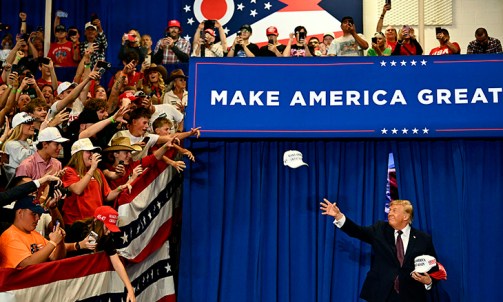
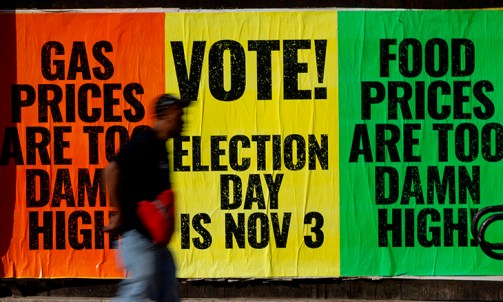
There is no running from it: the results for Republicans in the 2026 midterms were bad. Really bad.
Democrats will now control both the House of Representatives and the Senate with handy majorities and have already indicated their oversight powers will be used to go after officials within the Trump Administration. Democrats managed this feat, despite a majority of Americans holding an unfavourable view of their party.
Across the United States, decades-old voting patterns were upended, with support for Republicans disappearing, even in areas that had long been considered safe.
Nowhere was that more apparent than in the two major hubs of American conservatism: Texas and Florida.
Not since the Reagan Administration has Texas elected a Democrat to the Senate, yet State Representative James Talarico defeated Texas Attorney-General Ken Paxton with ease.
Paxton, a man who had been impeached by his fellow Republicans in the Texas Legislature and admitted to an extramarital affair with a GOP staffer, had toppled four-term incumbent Senator John Cornyn in the primaries off the back of a Trump endorsement.
Even the President’s home state of Florida, a real stronghold for Republicans in recent years, produced races which were far closer than expected.
These midterm results were undoubtedly a rebuke of the Trump Administration. Deservedly so.
But it is critically important that we don’t misdiagnose what occurred here.
Voters had been promised the ‘Golden Age of America’. They were told, in the typical populist fashion, that their concerns were being ignored by the political establishment.
President Trump first won the keys to the White House with this very message: politicians of all stripes have become entrenched in the DC ‘swamp’, wrapped up with donors and lobbyists, and they have failed to deliver for everyday Americans.
In 2024, he explicitly promised that prices would come down and that Americans wouldn’t be sent to die in yet another protracted Middle Eastern war. It was promises like these that Trump’s coalition of supporters clung on to, turning out in massive numbers to vote for in 2024.
When populist governments fail to deliver on their promised agendas, they are acutely vulnerable to a strong reaction from voters.
After all, why vote for a populist alternative like MAGA if they produce outcomes scarcely different to that of the traditional political establishment?
Without offering an endorsement of his more extreme methods, a prime example of the virtues of delivery for a populist government is President Nayib Bukele of El Salvador.
Bukele has taken the Latin American nation from one of the homicide and gang violence hotspots of the world to a state of relative security in a very short span of time. The Salvadoran President promised to end gang violence, and he has been rewarded for delivering, enjoying an average approval rating in the high 80s across his presidency and being re-elected with 84.65 per cent of the vote in 2024.
Shifting focus back stateside, according to the New York Times, young men had a swing of nearly 40 points towards the Democrats in the midterms, just two years after shifting towards Trump by 23 points.
The US-Israeli war in Iran was seen as a betrayal of them and of millions of other Americans who placed their faith in a second Trump presidency. Twenty-three US military personnel have died since the conflict began in February, and what exactly does this administration have to show for it?
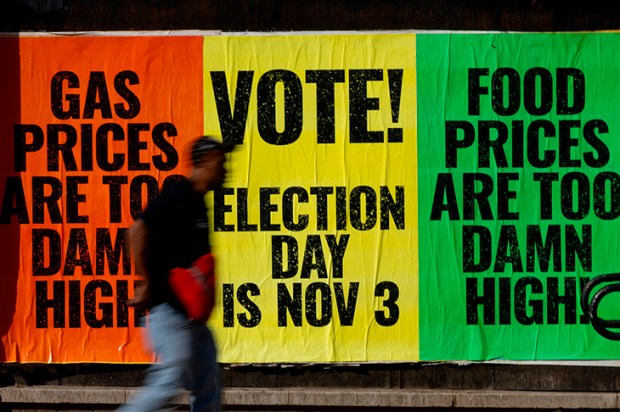
The devastating effects the Iran conflict has had on the global economy, particularly on the oil supply, have been felt acutely in the communities which had supported Trump most strongly.
They made their voices heard loudly, and they can’t afford to be ignored now.
One small consolation that the GOP can take from the midterms is that immigration remains an area of relative strength. In exit polling, immigration appeared as virtually the only issue that voters rated Republicans higher than Democrats on. The Democratic media strategy also gives credence to this, with the focus largely placed on the cost of living and tying it to the war in Iran, rather than the ICE raids seen in cities across the country.
This may indicate that, for better or for worse, the Trump Administration is seen to be delivering on its immigration agenda.
I do concede that some within the DC establishment may still attempt to use this enormous election defeat to push for a softer approach to immigration. The President himself even appeared to signal a backtrack, acknowledging in a recent 60 Minutes interview that perhaps his crackdown on immigration was ‘too tough’. However, backing down on this issue would invariably be seen as yet another broken promise to increasingly disillusioned voters.
Immigration is still fertile ground for the Republicans and must remain on their agenda for the next election.
In a similar way, plenty of conservative measures which were voted on in referenda at the state level were successful, even in states where Republican candidates fared badly. Nevada, North Carolina, and Ohio all voted overwhelmingly for voter ID, while in Arizona and Colorado, measures that protect women’s-only spaces and ban transgender surgery for children passed as well.
This certainly suggests that it wasn’t conservatism, nationalism, or the political right being rejected by voters this election; it was the failures of the Trump GOP.
Attention must now turn to the future of the Republican Party, and of course, the nominee for 2028. Vice President JD Vance and Secretary of State Marco Rubio have long been touted as successors to Trump, but are they not also complicit in this historic disaster?
Could the hawkish Rubio really be expected to regain trust from war-weary voters? Can the sitting Vice President really extricate himself from the baggage of this administration?
Have either of them really earned the right to carry the flag? At this stage, the answer is a definitive no.
In the aftermath of this loss, Vice President Vance put out a post on X outlining four main areas of dissatisfaction:
1. End the war [in Iran]
2. Focus on cost of living/inflation
3. Put America First
4. Change our relationship to Israel
While Vance himself may be too close to these decisions to avoid culpability, his instinct in diagnosing the issues that turned voters away is sound. They can provide a roadmap for a successful candidate in two years’ time.
Also on X, the Young Republicans of Texas revealed they had received a slew of new applications to join their ranks, even after Texas saw the worst result for Republicans in decades.
Many young Americans may have abandoned the GOP at this election, but this is a sign that they are not abandoning the field entirely. If you simply deliver what they voted for two years ago, that support can be regained.
Therein lies the hope for the next presidential election. End the war in Iran and avoid further entanglements, bring down costs, push ahead with action on immigration, and above all, put America first.
If these are the battlelines that are drawn, a worthwhile candidate can sweep the 2028 primaries and regain the voters that abandoned the GOP.
All is not lost.
Patriots can once again be fully in control.
Trust can be rebuilt and wrongs can be put right.
Heed the lessons of this brutal wake-up call and in two years’ time, the Republicans can win the White House.
The future of their nation, and of the West, is on the line.
Kieran Phillips works within Queensland politics and has an academic background in international relations, with particular interests in political theory and foreign affairs.