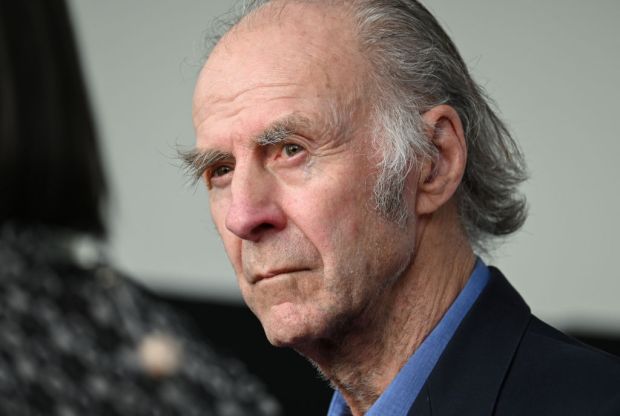
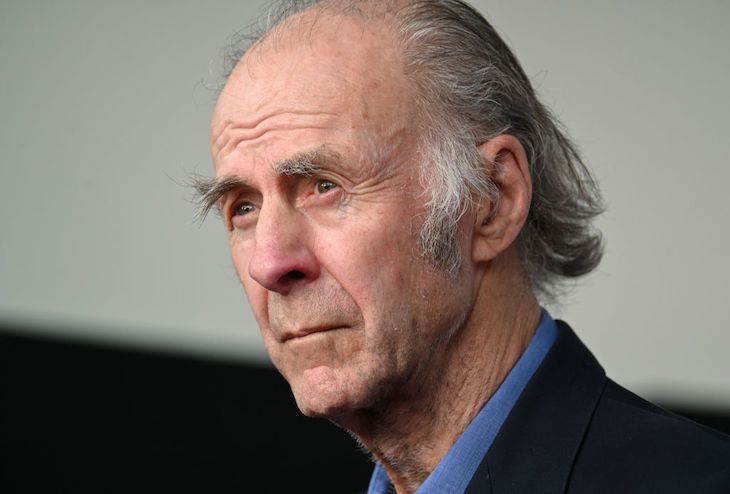
The outrage about Sir Ranulph Fiennes, and the idea that he has ‘disappeared’ from public view in his twilight years, says a lot about our confused attitudes to the elderly.
I found myself scratching my head when reading claims this week about how his wife had been managing his care, and I found less than convincing the breathless allegations in various newspapers about her being censured by a bureaucratic body for her use of Lasting Power of Attorney. If you want to cast aspersions on a woman nursing her 82-year-old husband who has Parkinson’s, then I would have thought you should proceed with caution.
If you want to cast aspersions on a woman nursing her 82-year-old husband who has Parkinson’s, then I would have thought you should proceed with caution
But there was a tone of hysteria to the outrage that greeted the allegation that Fiennes cannot be found by people who want to find him, including the King, for heaven’s sake. The idea that comes over is that because he was a great explorer he is somehow public property and should be freely accessible, even when he has Parkinson’s and might want some privacy. This seems pretty unkind to me.
‘Explorer’s friends asked the Office of the Public Guardian to investigate missing 82-year-old,’ said the Daily Telegraph. ‘The explorer’s wife has gone to extraordinary lengths to prevent contact, with even an inquiry from the King’s equerry rebuffed.’ Gosh, who would rebuff the King? (I would.)
‘Sir Ranulph has been moved from care home to care home by his wife Louise Millington-Cotes,’ the Telegraph reports. ‘The King tried to check on Sir Ranulph Fiennes’s wellbeing but was blocked from doing so by the explorer’s wife.’
Meanwhile, the Daily Mail headline screamed: ‘Ranulph Fiennes taken to isolated farmhouse behind a six foot gate!’ Yes, well, I’d want a six foot gate if the Mail was after me.
It’s all apparently based on a report that Care Inspectorate Wales, in an email obtained by the Telegraph, said Fiennes had been unlawfully deprived of his liberty by his wife placing him in a series of care homes, as if moving a loved one from one care home to another to try to find one that suits isn’t a sadly very standard occurrence nowadays.
What troubles me is we cannot know the basis of these decisions, however they are judged by inspectorates, nor can we know the dynamics in the family. But it is when one imagines the alternative that one realises that casting judgement is silly.
For the alternative is Sir Ranulph not being cared for professionally, having not been moved to a care home aged 82 and suffering from Parkinson’s, and not having a next of kin holding a Power of Attorney enabling them to make arrangements for him.
You see, I come at this from the perspective of a daughter whose father did not give her or anyone else LPA, even when he knew he had Alzheimer’s, and was my mother’s carer.
I come at it having witnessed what happens to an elderly person after they and the state preserve their freedom and autonomy to the extent that no one, not even their only living relative can help them as their inability to cope leaves them in the most undignified mess.
Fiennes has been in failing health since his diagnosis of Parkinson’s, a degenerative condition every bit as difficult to manage as my father’s Alzheimer’s and my mother’s vascular dementia. My dad, at 90, insists on continuing to be my 85-year-old mother’s carer, even though he should have 24/7 care himself.
‘How sweet!’ the bleeding heart social workers chirp whenever they call to tick the box that says they’ve done their annual check. But it’s not sweet. It’s horrendous.
My mother rings me weeping every day. I get calls from my father to say: ‘Your mother’s on the floor and there’s blood everywhere. She’s hit her head. I don’t know how.’ Or my mother will ring and say: ‘Your father has a cut. We were arguing and I was chopping vegetables.’
But the worst thing is the judgement. I have been condemned by my parents’ neighbours for the way I’ve handled all this, and their attitude to me is hostile because I have had to refuse to get too involved. A few months ago, I told their GP: ‘It’s up to you now. Don’t contact me again.’
Years and years I had spent battling my father and mother, trying to persuade them they must sign LPAs giving me the ability to make health and financial decisions in their best interests. The reason my father didn’t want to is because he deals with his mortality with denial. So the forms went unsigned.
My mother was diagnosed with dementia first, about five years ago. He then hid for over a year his own diagnosis of Alzheimer’s, and it was only revealed to me when I sent some desperate emails to his GP insisting there had to be something wrong. The GP then called the three of us in and put the letter about his Alzheimer’s in his hands in front of me, ensuring I saw it, without breaching data protection.
When it comes to elderly care, nothing is quite as it seems
At that point, you would have thought the NHS would want to help him get an LPA in place. But when my father told his GP he wanted to, and after allowing us to go home and fill one out for him and one for my mother, naming me, the GP refused to sign them.
Weeks later, when I chased the forms, she informed me he no longer had capacity. Funny how he has it to do everything else, though. It was at this point I told her fine, over to you. The state must step in. And of course it didn’t. But neither will I.
Everything they need is a fraught financial matter. In trying to book more care visits, or arrange better food deliveries, I risk censure. So I do very little.
When I visit, the neighbours make clear to me that their view is that my parents are two poor old people living alone while their daughter is living it up abroad. They regard me as negligent or callous because they do not know the inside details of the case.
The problem is, when it comes to elderly care, nothing is quite as it seems. The fraught way the law works, and how easily you can fall foul of it, means we ought not to condemn so readily.
I’d rather my father and mother had lost their theoretical liberty, and that they were now behind locked doors, safe and cared for. I also know never to look at an old person and just think ‘ah poor thing’. Their next of kin could have been through hell.