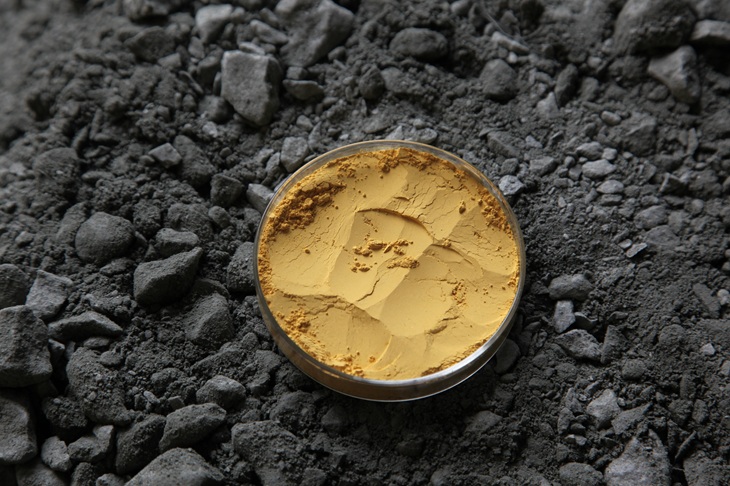
The Whitlam government established the Fox Inquiry in 1975. Two reports were released in the following year. One recommended that uranium mining could proceed safely if it was well regulated.
This assumed the export of Australian uranium would be part of the international nuclear safeguards regime supervised by the International Atomic Energy Agency within the United Nations system.
The IAEA does not have the power to approve or disapprove the international trading of uranium, so long as the transfer is for peaceful purposes and within the nuclear safeguards regime under the control of the IAEA.
Since the mid-1970s, India has regularly told Australian Ministers and diplomats that the relations between the two countries would improve if Australia allowed exports of uranium to India. Several weeks ago, the request was approved.
What has changed after five decades of denying the export of Australian uranium to India?
The most obvious thing is the political colour of the current Australian Ministers. The first requests were in the time of Malcolm Fraser as Prime Minister. The Cold War was still in full swing. World peace was the result of major powers glaring at each other threatening sometimes the release of nuclear bombs.
In the case of India, its nuclear weapons stockpile in 1980 was the sum total of one. Twenty years later, in 2000, it had 26 nuclear weapons. In 2005, it had an estimated 44. Nine years later it had 90 to 110 and by 2026 it had 150.
Its archenemy, Pakistan, has similar numbers.
The origin of India’s atomic weapons capacity was solely at the feet of Canada, a country which should have known better.
In the early 1970s, I was working as a diplomat in New Delhi. I became a friend of a member of the Canadian Trade Office whose main job was to liaise with the Indian authority which had purchased a CANDU nuclear reactor.
This reactor is different to all others because the spent fuel includes plutonium, a requisite for a nuclear bomb.
India has a relatively small amount of uranium within its own borders. This is preserved for use in its atomic weapons stockpile whereas foreign sources of uranium are used for peaceful purposes.
So, for some 50 years various Australian governments have played a straight bat. Contributing to India’s development of weapons-grade material outside the IAEA safeguards is turning a blind eye to the point of having safeguards at all.
Furthermore, it is my opinion that assurances which would have been requested by Canada and given by India have possibly been broken because India now has a nuclear weapons capacity.
What is the chance that a change in policy after 50 years of playing safe will not be abused?
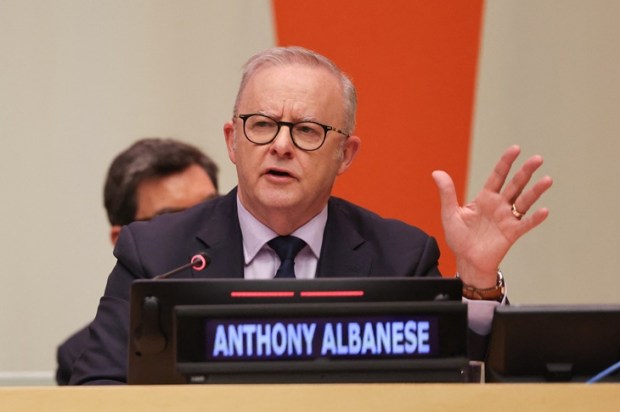
Now it is my view the Australian Prime Minister Albanese broken a 50-year policy of preventing Australian uranium by allowing India to abuse the IAEA safeguards regime – because there is no way to know how much Indian origin plutonium has been employed.
Each year the Annual Report of the IAEA uses the same wording to attest that the Agency has not discovered any known breach of its safeguards regime. This does not say whether or not breaches exist.
Roger Pescott worked with Justice Russell Fox on nuclear safeguards in 1979.