Labor politician Dave Kelly MP, Member for Bassendean, wishes for Western Australia’s Parliament to consider removing the daily recital of the Lord’s Prayer from the Legislative Assembly, a tradition that dates back to 1928.
Why would he call for such an action?
Kelly claims its recital has a ‘triggering effect on survivors when they come to this place and see that the [Legislative Assembly] starts every day with a Christian prayer’.
Kelly, who is to be commended for standing up for the plight of victim-survivors, is on the record as saying:
‘We must do everything reasonable to ensure the Parliament demonstrates to survivors that we see them and we stand with them … and that we no longer side with the institutions that are responsible for [their] abuse.’
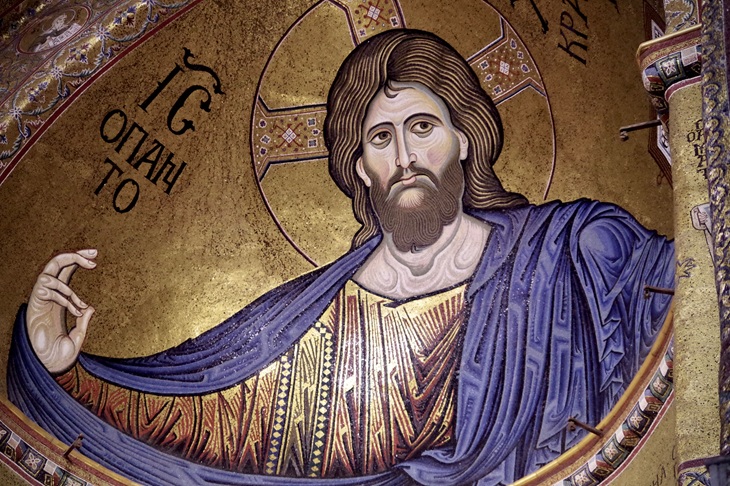
The deposit of the Lord’s Prayer into global society was not through any institution but rather from the lips of the rebellious, rejected, abhorrently wounded, and victimised Christ himself. No one’s life witnesses to the harrowing lifelong damage of abuse to the body, mind and soul like Christ’s.
Neither does any universal prayer contain as clear an outline to the necessary steps required to achieve recovery as does the Lord’s Prayer. Not even the Serenity Prayer.
WA’s Legislative Assembly initially introduced the prayer as a practice carried over from the Legislative Council, which had adopted it from Federation itself. Its sole purpose was to reflect the moral accountability expected of elected officials. Kelly’s suggested replacement of a moment of silence is unlikely to achieve the same ‘moral’ results.
I oversee possibly the largest and most active peer network of victim-survivors of childhood sexual abuse in Western Australia. Over one hundred of our members statewide, who range between 18 and 86-years-old and are from every culture, belief and non-belief, were given the opportunity to respond to Mr Kelly’s proposal. Their responses shouldn’t surprise anybody.
One male in his sixties, abused as a child within a Christian group, spoke up saying:
‘Kelly thinks he speaks for all of us survivors, but he doesn’t.
‘No one’s asking [politicians] to stand with any of the churches … but we’re not asking them to get rid of a 15-second God-slot either … this government seems to want to modernise everything.
‘Trouble is, it’ll cut off most of society’s roots in the process and then it’ll all collapse and they’ll wonder why.’
One Muslim female in her thirties retorted:
‘I would prefer to see any prayer in the parliamentary chamber than nothing at all.
‘My family migrated here because of the values in Australia. I’m sad to see these values being eroded by the very politicians who’ve been elected to safeguard them.
‘I bet I speak on behalf of all non-Christian faiths and religions in WA when I say that the Lord’s Prayer should not be touched. To exclude it is to be more exclusionary.
‘Why should nihilism, agnosticism and atheism suddenly have priority?’
Another male in his fifties, who was sexually assaulted as an adult inside a Christian community, commented:
‘[Kelly] is just wanting to enforce a decision which, by its introduction, further wounds and traumatises those of us who already experience CPTSD.
‘There are a thousand and one more important issues that Parliament should be focussing on to help victims of abuse and assault. Banning a 15-second prayer is not one of them.
‘And how many survivors of institutional abuse are in the chamber anyway when the prayer is recited? I bet there’s none.’
There is a fine line between Kelly’s attempts to defend a small select group of institutional survivors from further trauma at a distance, and him taking steps that — however well-intentioned — may potentially cause greater harm to other survivors abused within the same institutions and those outside of them which is what he is, in my opinion, inadvertently achieving by his proposal.
It is said that pride comes before a fall.
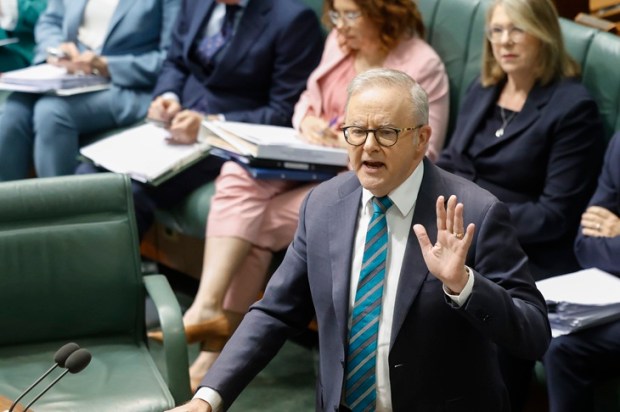
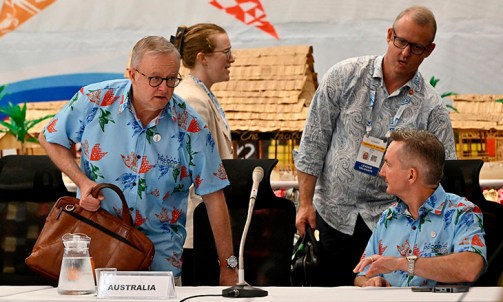
In the past fortnight, the internet has been ablaze with Prime Minister Anthony Albanese’s crass comments about Kylie Minogue, and his evidently sexual gesture when referring to Japanese Prime Minister Sanae Takaichi.
Misogyny par excellence.
Politicians like Kelly would do well to make their primary focus the clean-up of their own party.
An Indigenous male in his fifties, anguished by Kelly’s proposal, wrote:
‘Why don’t the government do something about the rise in sexual abuse in our schools, among our young people, and in the indigenous communities? … And why won’t they apply the same rules to their own parties and their staff members? This government has a lot of work to do in its own ranks.
‘As for banning prayer, it’s all smoke and daggers. Anyway, everyone knows that the majority of sexual abuse takes place away from the Christian churches and closer to home.’
If Kelly is truly committed to ensuring that Western Australia’s Parliament demonstrates to all survivors of childhood sexual abuse that ‘we see them and we stand with them’, then he will ditch his pain-filled and misguided proposal and proudly voice the words of the greatest victim known in the history of humanity as evidence of his true allegiance with the downtrodden.
James Parker is a former gay activist and survivor of extensive childhood sexual abuse. He founded, and today facilitates, the Survivors’ Support Network (AU).