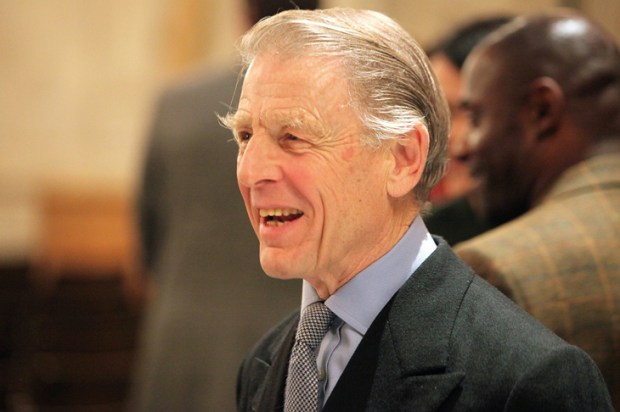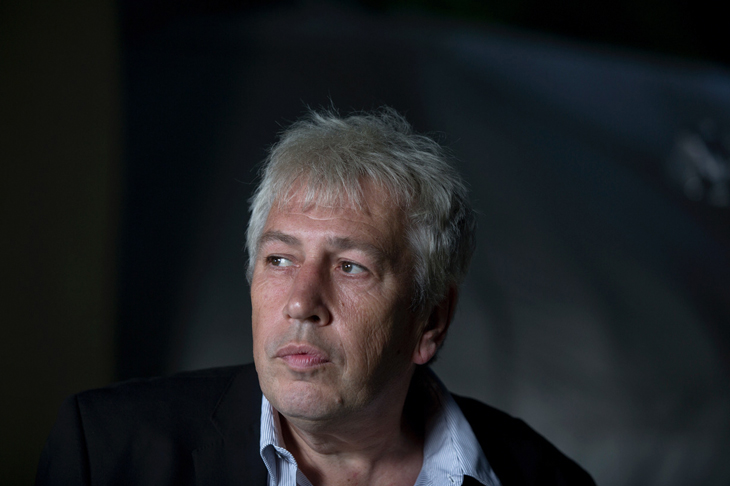
Rod Liddle, who died on 2 August, was a journalist of genius and you could only feel a bit wonder-struck to find yourself in the same publication. He was an absolute jewel in The Spectator’s crown, and part of the glorious bewilderment he caused came of the radicalism he exhibited with such shocking wit. It was Liddle, after all, who wrote that after a stint of higher education he gave serious thought to becoming a schoolmaster: captive audience, relatively high pay given the long holidays. The only trouble was he knew he’d try to shag the kids. It was Wilde, wasn’t it, who said that anyone who could read the death of Little Nell without laughing had a heart of stone. So with Rod Liddle. It could be riddlingly difficult to work out whether he was being right wing or left wing: he was so inscrutably himself and he would lead you to places where the heart has reasons beyond rational knowing.
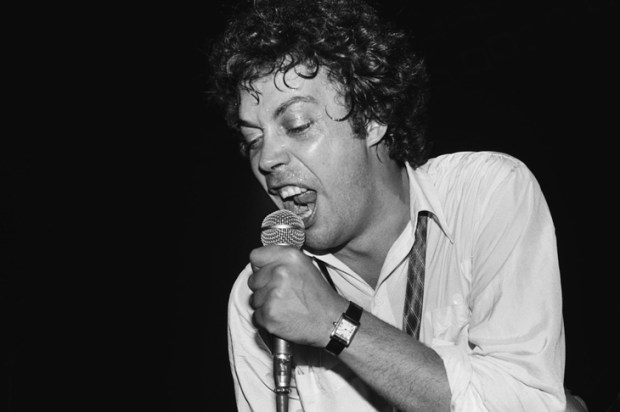
There’s the young snow-haired Liddle who looks like a rock star and therefore a wholly improbable editor of BBC Radio 4’s flagship Today programme. And then there’s the clowning Liddle you can catch a glimpse of in a Spectator tribute on YouTube doing the establishment voice of an old humbug who thinks there should have been two bites at the Brexit apple. And then there’s Liddle in that accent no one else on earth spoke in, capering in a blonde wig, making sure the vowel in class was flat and rhymed with lass. And then, in his last days, Liddle with the face gone heavy and the cigarette still going. Perhaps we come closest to Rod Liddle when we hear him reading, at a funeral, Siegfried Sassoon’s ‘The Death Bed’ with something more than an actor’s timing, with an aggravated splendour that induces awe.
He could quote Eliot with an expert familiarity but he could also produce an easy effect of high seriousness when he turned to the later Neil Young. We will not see his like again. They will look back on Rod Liddle as someone who rode the dark horse of every contradiction and could outlaugh the lot of us.
How will they look back on Kevin Spacey? The courts cleared him of everything he was charged with involving young men. We have heard him recite the shattered words of Shakespeare’s Timon of Athens. But the man who put his seal on the presidency with Frank Underwood in House of Cards, who gave more than £100,000 to the Old Vic before running it for a decade and playing Richard II there, is now an untouchable in the eyes of the media moguls.
Back in 2017 Netflix completed a film about Gore Vidal with Spacey playing the great memoirist but no one – no one – is game to show it.
Kevin Spacey, however you look at his faults (or crimes, if you like), has put his mark on the world and there’s something creepy about a brilliant career that ends not with a legal judgement but with the opprobrium of the court of public opinion. I saw Kevin Spacey being blandly suave though expert in Neil Simon’s Lost in Yonkers with the great Irene Worth in 1991 and then twenty-odd years later in Sydney in the title role of Richard III, performed not with lilting Frank Underwood whimsy but barely in control and looking for all the world as if he could kick his fellow actors in the stomach. The story goes that on the yacht he stayed on in Sydney Harbour he had a toy koala he used to punch in the face. ‘We call him Russell,’ he said.
But an artist does not have to be nice.
It’s good to see that Melbourne Opera is doing a production of Il Trovatore, one of the greatest examples of early Verdi. It was Caruso who said that all you needed for this opera of dark and sinister gypsy choruses and blazing vocal demands were the four greatest singers in the world. It also happens to be true that during the Risorgimento, Italian patriots cried ‘Viva VERDI!’ in the opera house – the letters standing for Vittorio Emanuele Re d’Italia – Victor Emmanuel, King of Italy. Visconti dramatises it in his mid-period masterpiece Senso.
The leads in Melbourne Opera’s production are Helena Dix as Leonora, Rosario La Spina as Manrico, Sarah Sweeting as Azucena, and Christopher Hillier as Conte di Luna. It runs until 30 August.
We live in an extraordinary world, performance-wise: there is a new imported production of Sleeping Beauty from the Stuttgart Ballet in October and a great surge of commercial theatre both here and in London.
It’s a funny business, the revival of commercial theatre. In November we are to see Jason Donovan in One Flew Over the Cuckoo’s Nest and in February Noel Coward’s exceptionally durable Private Lives. The surprising thing is the cast: Hugh Bonneville – Lord Grantham himself – is the kind of veteran leading man who could play the part standing on his head; Lisa McCune is perhaps a less obvious choice as the other half of the marital equation. We have seen her as Nelly Forbush in South Pacific – where she didn’t have the brassiness of Mary Martin’s original.
It would have been fascinating, in a Downton world, if Sigrid Thornton had turned up as the Australian cousin – she bears an interesting resemblance to Elizabeth McGovern, its American Lady Grantham. Just at the moment she’s starring in a national revival of Fiddler on the Roof in which she plays Yente. Troy Sussman takes on Tevye, the Zero Mostel role which was later done on screen and then on stage (in Australia among other places) by the Israeli actor Topol.
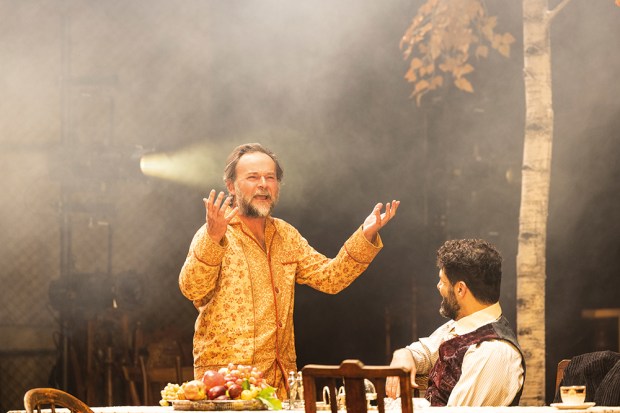
But there’s no doubt the British emphasis on commercial theatre is affecting theatre here. The Brits are staging another My Fair Lady but it would be interesting if entrepreneurs stuck their necks out and revived Lerner & Loewe’s Gigi, the great Vincente Minnelli/MGM musical with Leslie Caron and Louis Jourdan. As it is the English are doing The Silence of the Lambs which was never a stage show and Trainspotting which was. Just now Red Stitch – who have always punched above their weight – are in rehearsals with Angus Cameron’s LUKE, directed by Ian Sinclair and starring Will Lonsdale, and Olga Makeeva, as well as Dion Mills – one of the finest actors Red Stitch has cultivated in a highly competitive field. Previews begin 12 September.
Got something to add? Join the discussion and comment below.
You might disagree with half of it, but you’ll enjoy reading all of it. Try your first month for free, then just $2 a week for the remainder of your first year.