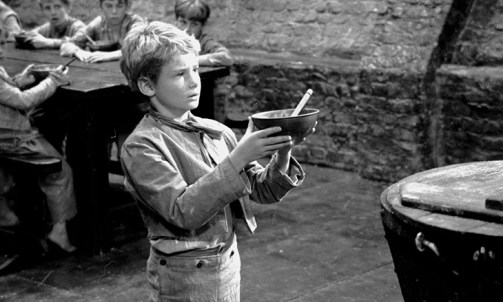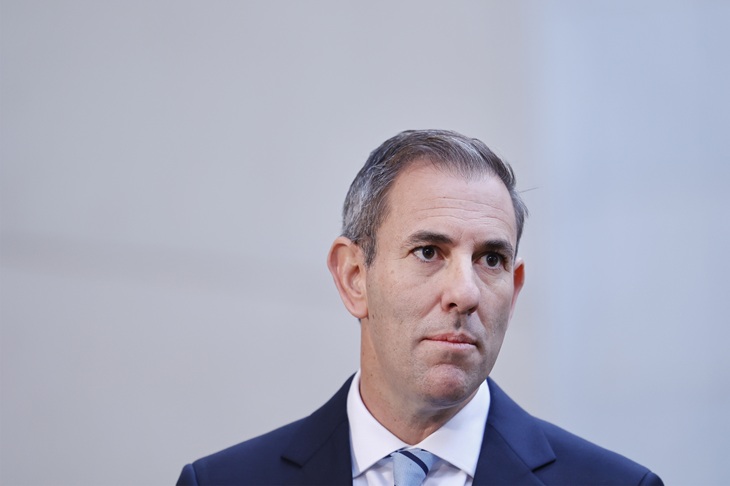
I decided to revisit Better Call Saul over the weekend. One thing that stuck out to me was the nickname the title character had as a kid – ‘Slippin’ Jimmy’.
Slippin’ Jimmy would stage slip-and-fall accidents to con unsuspecting people into paying him cash.
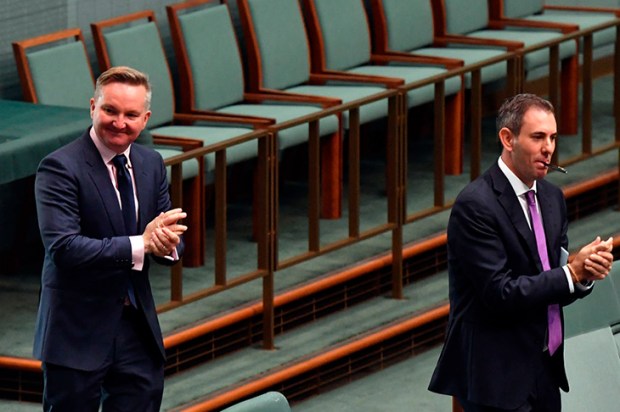
The more I watched Slippin’ Jimmy, the more it reminded me of the behaviour of Treasurer Jim Chalmers.
In recent weeks, I’ve tried desperately to avoid becoming entangled in the fallout from the budget. However, the news of a Greens-Labor deal to wreak havoc on SMSF lending rules has forced me to get back on Twitter to see what all the fuss is about.
And what did I see, but our intrepid Treasurer Jim Chalmers lauding it as a victory and calling out anyone who doesn’t support the changes.
It was a typical political wedge – a desperate attempt to make opponents look bad for not supporting tax cuts for all Australians, previously used to magnificent effect in the last election. And it is remarkably similar to the sort of confidence trick that earned Slippin’ Jimmy his nickname.
BREAKING: Labor is another step closer to delivering tax reforms for workers, first homebuyers and small businesses.
Our reforms will make it easier for Australians to buy their first home, cut taxes for over 13 million workers, and better align the tax treatment of labour and…
— Jim Chalmers MP (@JEChalmers) June 23, 2026
But from looking at the ratio on his tweet (above), the public is no longer buying what the Treasurer is selling.
Just look at the fallout from the proposed divorce and widow tax as well as the heirloom tax. Not only were these new tax laws poorly thought out, they are also being very poorly argued to the public.
The Ancient Greeks had a name for such arguments: sophistry – the use of deceptive or false reasoning that sounds good on the surface but is fundamentally unsound.
The Capital Gains Tax reforms, which were lumped into an omnibus bill under the cover of a $250 tax cut, are a prime example.
The intention from Labor, as far as I can see, is to craft a story that anyone who opposes the capital gains tax changes doesn’t support tax cuts for Australians. The sleight of hand being played lumps both concepts into the same bill and is so obvious that even Stevie Wonder can see it.
Where does the word sophistry come from? It comes from a group of travelling teachers and intellectuals, philosophers of a kind, who made money travelling across ancient Greece in the 4th and 5th Century BC teaching wealthy young men rhetoric, or the art of persuasion.
With the rise of democracy in city-states, they knew that to win power, people had to speak well in public settings. However, what they were best known for was not teaching people how to speak well, but rather how to persuade a crowd through empty rhetoric, deceptive reasoning and tricky wording to make bad arguments look good, just like with these tax laws.
At least the sophists of yesteryear possessed genuine charisma and rhetorical skill, swaying the layman to their point of view through heady rhetoric and tricky argumentation.
Our modern-day sophists can’t even muster the skill to do that, they fall back on carefully tested talking points, like ‘we came to a different view’, over and over in the hopes that this focus-group-derived platitude will help sway the masses.
In The Republic, Plato explores the issue of sophistry by asking the young men in the story whether they want to be right or appear to be right. In our current political climate, it is obvious that members of our government are not interested in being right, they are interested in appearing to be right.
Jim Chalmers, along with the rest of our political class, wants to appear to be right, knowing full well how manipulative the slogans and bad-faith callouts are to anyone who doesn’t want to ‘get on board with tax cuts for workers’.
He is, of course, not unique in his sophistry. We have the Minister for Finance and Minister for Housing telling us how many new homes are being built when we are grossly under target, while the Energy Minister tells us renewables are the lowest cost form of energy as prices rise and rise.
Different portfolios, same modus operandi: using selective arguments and carefully crafted rhetoric designed to make weak cases appear compelling. One need only tune into Question Time or a Senate Committee hearing to see sophistry on full display.
A politician with a spine, who was not a sophist, would first have taken the changes proposed in the budget to an election. Second, they would separate out the tax cuts from the rest of the legislation.
That would of course be the right thing to do, but it doesn’t help one win elections, does it? Especially in the face of horrendous legislation that is about as unpopular as the approval rating for the current Prime Minister.
Slippin’ Jimmy from Better Call Saul ran a small-time con, pretending to slip and fall so victims would hand over a few dollars.
Treasurer Jim Chalmers is accused by critics of running a far more sophisticated version: promoting tax cuts while embedding measures that critics argue increase future tax burdens for many Australians, discourage investment, and create unintended consequences for divorce settlements, widows, and inherited assets.
Slippin’ Jimmy earned his nickname honestly, never pretending to do it for the good of his victims.
Perhaps it is time our Treasurer earned one too.