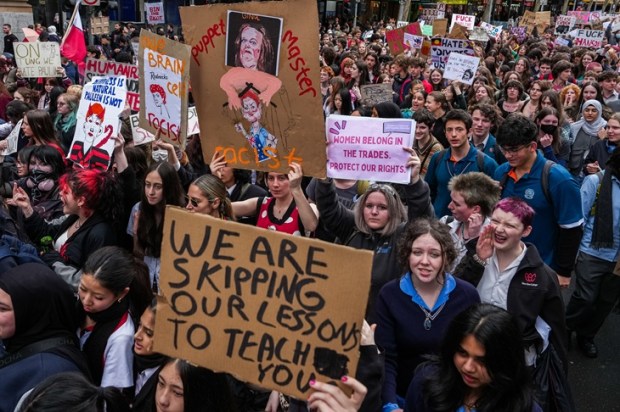
In London, where I am writing this, three topics dominate pub conversation; the demise of Sir Keir Starmer, the historically hot weather and the progress of England in the 2026 FIFA World Cup. As the Socceroos also seem (at time of writing) likely to survive the group stage of the competition, people who know I have dual citizenship ask who I would support in the unlikely event that the two teams meet in the quarter-finals. But most people I meet are more interested in my opinion of what will surely be Mr Starmer’s policy swan song: the legislation which he hopes will keep British children safe from the predations of social media. Much as his Conservative opponents have for years called for ‘an Australian style’ solution to the UK’s immigrant problems, Mr Starmer has repeatedly cited the Albanese government’s social media ban in making the case for his own. So since the British press seems not to have fact-checked Mr Starmer’s claims too carefully, I took it upon myself to write a letter which the Times was kind enough to publish in which I told its readers that less than a year after the Australian ban was introduced, its effectiveness with Australian teenagers has been such that plans are now afoot to float signs 100 metres off our most popular beaches saying ‘No sharks beyond this point’.
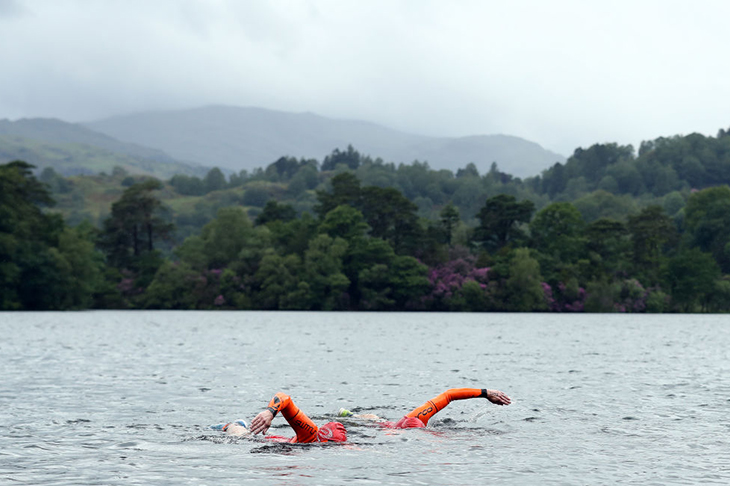
‘You should be used to this kind of heat if you live in Australia,’ said my chippy London cabbie this morning, when I asked him to turn up his air conditioning. ‘You’re lucky I’ve got it,’ he grumbled, ‘a lot of cabs don’t.’ I couldn’t help wondering if this was to soften me up for an additional levy for not delivering me to my destination drenched in sweat. But that wouldn’t have mattered much, since my destination was a new swimming pool which has just opened to great acclaim in the heart of the financial district. The Canary Wharf Lido being central London’s only outdoor 50-metre pool, and this being the hottest British June on record, it was predictably crowded, but since its filtered Thames water is not only surprisingly clean but also shockingly unheated, most patrons didn’t stay in it for very long. Which was not true of the 1000+ people who took part in the Great North Swim in even colder Lake Windermere two weeks ago. I’m pleased to report that your correspondent came sixth in his age division, swimming two miles of that freezing, storm-tossed, algae infested maelstrom in a very creditable 1 hour 16 minutes. But if I’d mentioned this to my chippy London cabbie I’ve no doubt he would have said, ‘I bet anyone in Australia could do that.’
I flew into the North of England the morning after the death one of its most celebrated sons. David Hockney’s claim to being Britain’s most popular living artist may have been the subject of some dispute amongst critics. Likewise his claim to have discovered the use of the pinhole camera by certain 17th-century Dutch masters. But his claim to being Britain’s most popular living smoker has never been in doubt, and it is to be hoped that the anti-nanny-state protest he founded – with its unimprovably Yorkshire motto ‘End bossiness soon!” – will live on without him. Hockney also had what I believe to be a unique distinction amongst artists of every age and provenance. The clothes he wore all his working life were so brightly coloured and so graphically patterned that he always looked remarkably like a painting by David Hockney.
I will be thinking about Hockney on the final stage of my trip, when I will be staying with an old friend who escaped from the London rat race some years ago and now runs landscape painting classes on a small Greek island. He tells me that most of his students are single French and Scandinavian women of a certain age, and that he will let me sit in on those classes for free if I promise to shout him dinner every night – without any limit on wine consumption – at one of the island’s many fine restaurants. What could possibly go wrong?
Got something to add? Join the discussion and comment below.
You might disagree with half of it, but you’ll enjoy reading all of it. Try your first month for free, then just $2 a week for the remainder of your first year.